
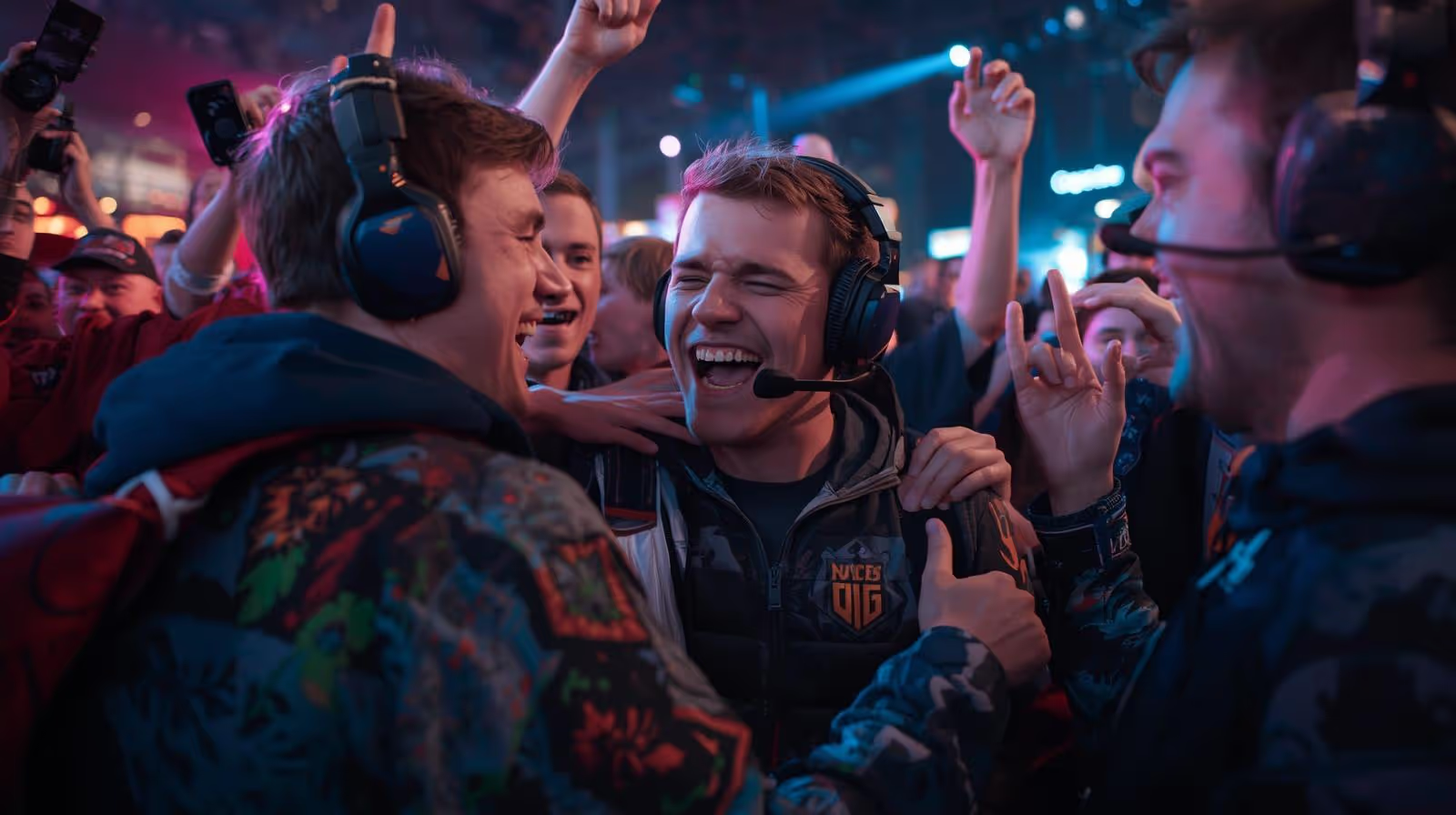

The cabin lights dim, the map on the seat screen crawls forward, and his phone stays face-down. Twenty hours of flying gives you a lot of time to second-guess a secret. He checks the time zone again, rubs sleep out of his eyes, and rehearses a normal smile like it’s a match-day routine.
Why would a top esports pro do this when scrims, sponsors, and schedules already chew up every week? Because online support can feel like background noise until it isn’t. Sometimes one name in chat becomes a steady hand on rough days, a familiar voice when the rest of the internet is shouting.
What follows is a true-to-esports story structure, built from what we know about pro travel demands and fan culture, without claiming a specific surprise visit that can’t be confirmed from public sources. It’s also a guide. If you’re a player, a team, or a fan, you’ll take away practical ways to build community without crossing lines.
How a Biggest Fan Becomes “Family” in Esports
In esports, a “biggest fan” usually isn’t the loudest person in a reply thread. It’s the one who shows up when the team is losing, when the roster is changing, and when the content is quieter. They’re there for the boring parts, not just the highlight reel.
A biggest fan learns the schedule, not because they’re keeping score, but because watching becomes part of their week. They pop into streams even when they can’t stay long. They catch the VOD later. They wear the jersey until the print starts to crack. Over time, it starts to feel less like creator and viewer, and more like two people keeping each other going.
That’s how the line “Thanks for being here” turns into something heavier. Something closer to family, in the esports sense of the word.
The small moments that build the bond (chat, DMs, watch parties, community servers)
It starts small. A hello in chat that keeps showing up. A “gg” after a rough map. A meme that lands at the perfect time. The pro notices the same username, again and again, and one day they say it out loud on stream. That’s the spark.
From there, community spaces do the rest. Watch parties, Discord servers, subreddit threads, post-match spaces, even a simple reaction to a clip. Inside jokes form. The fan knows the player’s tell, like the way they tap their desk after a misplay. The player knows the fan’s rhythm, like how they always type “breathe” when the game gets tense.
Support becomes real during losses. Anyone can cheer when a trophy is on the line. Steady support shows up when the timeline is full of “washed” comments and hot takes. That kind of presence sticks.
Still, the healthiest bonds have clear boundaries:
- Public channels first, private messages only when there’s a real reason.
- Moderators and community rules that protect everyone.
- No pressure to share personal details, ever.
- Respect for time, because streaming and competing aren’t the same as hanging out.
A strong fan relationship doesn’t need secrecy. It needs consistency and respect.
Why pros notice certain fans, even with thousands watching
With thousands of viewers, it’s easy to assume pros can’t see anyone. But they do. Not all the time, not perfectly, but patterns show up.
Hype is loud and fast. Steady support is quieter, and it lasts. A fan who posts a clip when the pro is proud, but also posts encouragement after a bad series, stands out. A fan who treats the player like a person, not a character, stands out even more.
Esports life has pressure points that most viewers never see. Burnout creeps in after long practice blocks. Roster rumors shake confidence. Travel weeks mess with sleep. Some pros have talked openly in interviews about stress and the mental load of staying sharp. In that mess, community can feel like a guardrail. Not a cure, but a reminder that the work matters to someone.
That’s the heart of it. The biggest fan becomes “family” because they keep showing up when it’s not easy to show up.
Inside the 20 Hour Surprise Flight: Planning, Secrecy, and the Real Cost of Showing Up
The idea hits like a risky play call. Simple in your head, hard in real life. Fly out, knock on a door, make someone’s month. Then reality steps in: airports, layovers, practice schedules, and the fact that you can’t just appear in someone’s life without planning.
So the pro plans it like a tournament. Quietly, carefully, and with backups for the backups.
First comes the date. Not the fan’s birthday, because that’s too obvious. Not match week, because that’s asking for disaster. A gap, small but real, between obligations.
Then comes coordination. A sibling, a parent, a close friend, someone who can keep the secret and keep it safe. The pro sends a message that reads like a spy movie, minus the drama: “Can you help me do something nice, and keep it private?”
“Twenty hours” isn’t just a number. It’s:
- A first flight where you can’t sleep.
- A layover where you eat whatever is open.
- A second flight where time zones flip your stomach.
- The moment you land and realize you still have to look human.
By the time the wheels touch down, your nerves don’t feel like excitement anymore. They feel like a tight grip in your chest, the same one you get right before a big match.
Timing it around scrims, matches, visas, and sponsor duties
Esports calendars don’t behave. Scrims are booked in blocks, and they shift when other teams change plans. Matches get moved for broadcast needs. Media days can pop up with short notice. Sponsors want content, interviews, and appearances, and those commitments often come with strict timing.
Then there’s the paperwork side. Travel isn’t just buying a ticket. Depending on where you’re going, you might need visas, letters, and approvals. Even within easier travel routes, you still have to think about:
- Passport expiration dates
- Practice schedules that run late
- Team rules about travel and rest
- Contract obligations for content and events
That’s why this kind of surprise, if it happens, is usually planned around a rare window. Not because the pro doesn’t care, but because their time isn’t fully theirs.
What pros give up to do it (sleep, routines, recovery, and focus)
A long flight steals the things that keep pros stable. Sleep first. Then food. Then movement. Your body stiffens in a seat that was never built for recovery. Your hands get dry. Your eyes feel gritty. You land with your brain in a fog, but your phone is already buzzing.
You also lose routine. A lot of pros have pre-match habits that keep them calm: a certain breakfast, a warm-up aim routine, a gym session, a quiet hour. Travel breaks all of it.
Picture a teen trying to take a math test after an all-night bus ride. Now add stage lights, a live crowd, and a game that punishes slow reaction time. That’s what fatigue does. It doesn’t just make you tired, it makes your decisions worse.
That’s the hidden cost of a “sweet” gesture. The pro is spending something real, not money, but energy and focus. When it’s done right, it’s still worth it, because showing up in person has a weight that a comment never will.
The Surprise Moment: From Door Knock to Happy Tears
They don’t show up with fireworks. They show up with a backpack, a cap pulled low, and a small gift that fits in a carry-on. A signed mousepad. A team jersey folded neatly. A controller with a short note taped to the box. Something personal, not expensive.
The friend or family member plays their part. “Hey, can you grab the package from the door?” Normal words, normal tone. The fan walks over, half-distracted, still thinking about the last match, still wearing the same hoodie they wore for every watch party.
The knock lands soft. The door opens.
For a second, the fan’s face goes blank, like their brain is buffering. Then their hand covers their mouth. Their eyes widen. The pro says their name, the real one, not the username. That’s when it breaks, because being recognized hits harder than being gifted.
Would you believe your eyes right away, or would you think it’s a prank? Most people freeze. The fan takes one step back, then forward, then just laughs, the kind that turns into tears without asking permission.
The pro looks tired up close. You can see it in the posture, in the slow blink. But the smile is locked in. Not for a camera. For this person who kept them afloat from miles away.
There’s a quiet beat after the first reaction. No screaming, no performance. Just two people breathing, and the fan saying, “You came all this way,” like it’s too big to hold in one sentence.
How to make a surprise feel safe and respectful (consent, privacy, and timing)
The best surprises protect the fan, not just the content. A surprise visit should never be a “gotcha” moment that puts someone on the spot or exposes where they live.
If a pro ever does something like this, the safe version looks like:
- Coordination with a guardian or trusted friend, especially if the fan is young.
- No uninvited drop-ins. Ever. Someone on the inside needs to approve it.
- No sharing addresses, flight info, or live location online.
- Asking before filming, and accepting “no” without guilt.
- Keeping the visit short if the fan seems overwhelmed.
There’s also timing. Don’t do it during school exams. Don’t do it during a family emergency. Don’t do it when the fan is at work and can’t step away. A “perfect” surprise is still wrong if it creates stress.
A respectful surprise says, “I thought about you,” not “I need a viral clip.”
Why the moment went viral, and what clips never show
When these moments hit social media, they spread fast for a simple reason: the story is easy to understand. A pro flew forever to thank the person who never left their side. No complicated context needed.
The shareable parts are small and human:
- The split-second of disbelief
- The shaky laugh
- The quiet “thank you”
- The gift that looks used, not staged
But the clips never show the full cost. They don’t show the pro sweating through a layover, trying to nap sitting up. They don’t show the nerves before the knock, when your stomach feels like it did before your first LAN. They don’t show the fan’s fear of looking “too emotional,” because the internet can be cruel about sincerity.
They also don’t show the private choices people make to stay safe. Sometimes faces are blurred. Sometimes the location is hidden. Sometimes the video doesn’t get posted at all, because the moment mattered more than the metrics. That’s a good ending too.
What This Story Teaches Esports Players, Teams, and Fans
A 20-hour surprise flight is extreme, and it shouldn’t be the standard for gratitude. But the story still points to something useful: community isn’t extra in esports. It’s part of the product, part of the culture, and part of why people stay through losing seasons.
It’s also a reminder that boundaries aren’t the enemy of closeness. They’re what make closeness safe.
For pros: how to give back without burning out
If you’re a pro, you don’t need to cross an ocean to make a fan feel seen. Consistency beats intensity. One honest gesture can mean more than daily access.
Ideas that work without draining you:
- Short video messages after a big milestone, like a thank-you for a year of support.
- A moderated community night, limited time, with clear rules.
- A scheduled Q and A with questions collected ahead of time.
- A small surprise merch drop for long-time supporters, handled through your org so you’re not managing addresses.
- A handwritten note added to a prize, even if it’s just one sentence.
The key is planning. Put it on the calendar like practice. Build in recovery time. Don’t promise what you can’t keep. Fans who care about you would rather have you healthy than constantly available.
For orgs: how to design fan moments that are authentic, not forced
Teams love “fan engagement,” but fans can smell a scripted moment fast. Authentic beats polished, every time.
If an org wants to support real fan moments, the best moves are behind the scenes:
- Travel support that doesn’t steal from practice time
- Security and privacy planning for meetups
- Clear rules for filming, posting, and getting consent
- Staff who can coordinate logistics so players don’t carry it alone
- Long-term storytelling that highlights fans with respect, not pity
Some of the strongest esports brands have built loyalty through community work, charity events, and official meet-and-greets that require serious travel. When those events are done with care, they don’t feel like stunts. They feel like the team understands who keeps the lights on.
Conclusion
That 20-hour flight mattered for one plain reason: someone felt seen. Not as a username, not as a number, but as a person who showed up when it counted.
Esports is built on community, and the healthiest moments protect both sides. If you’re a fan, keep supporting in ways that add light, not pressure. If you ever plan a surprise, make it safe, planned, and consent-first, because the best memories don’t need risk to feel real.