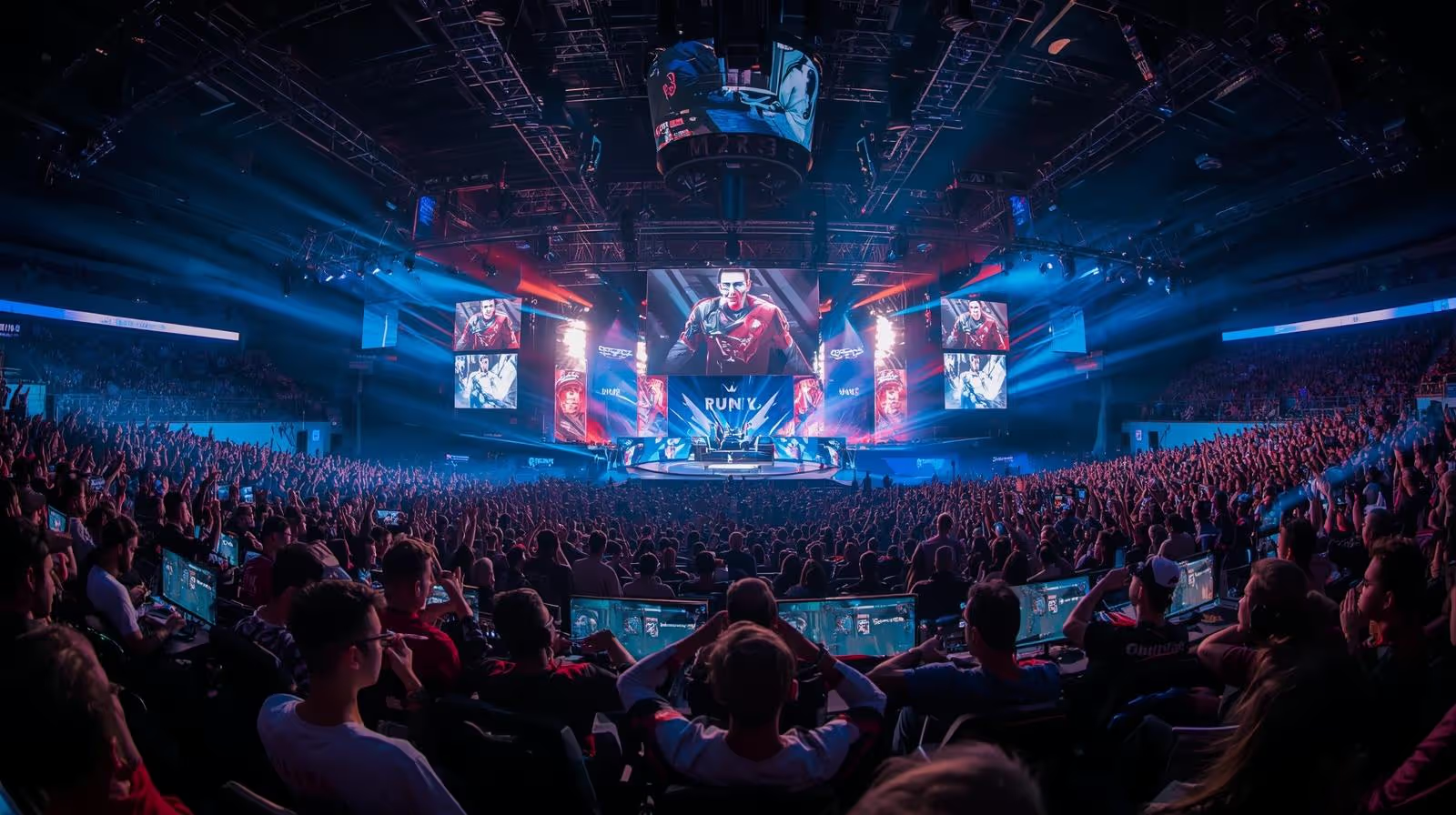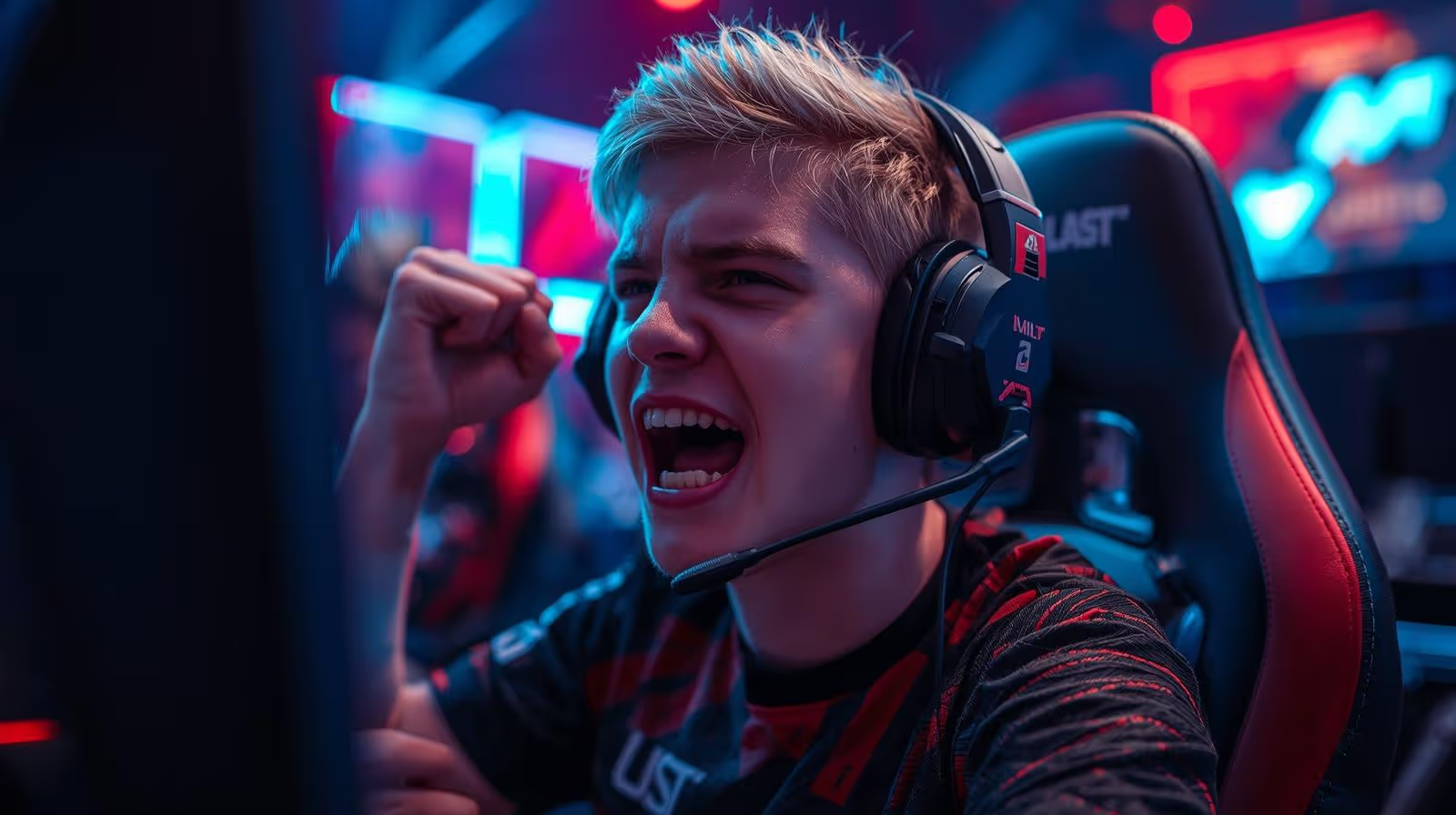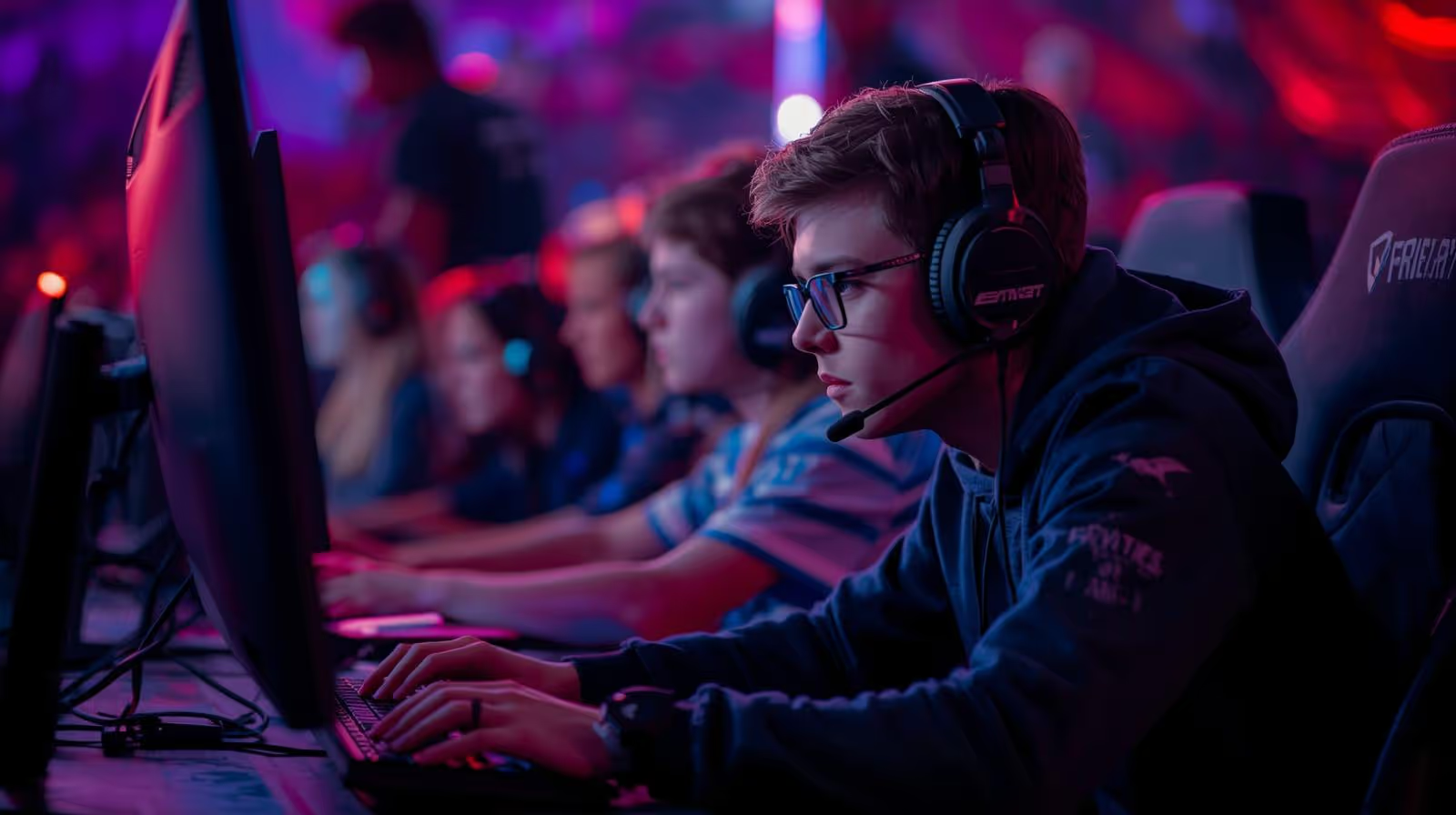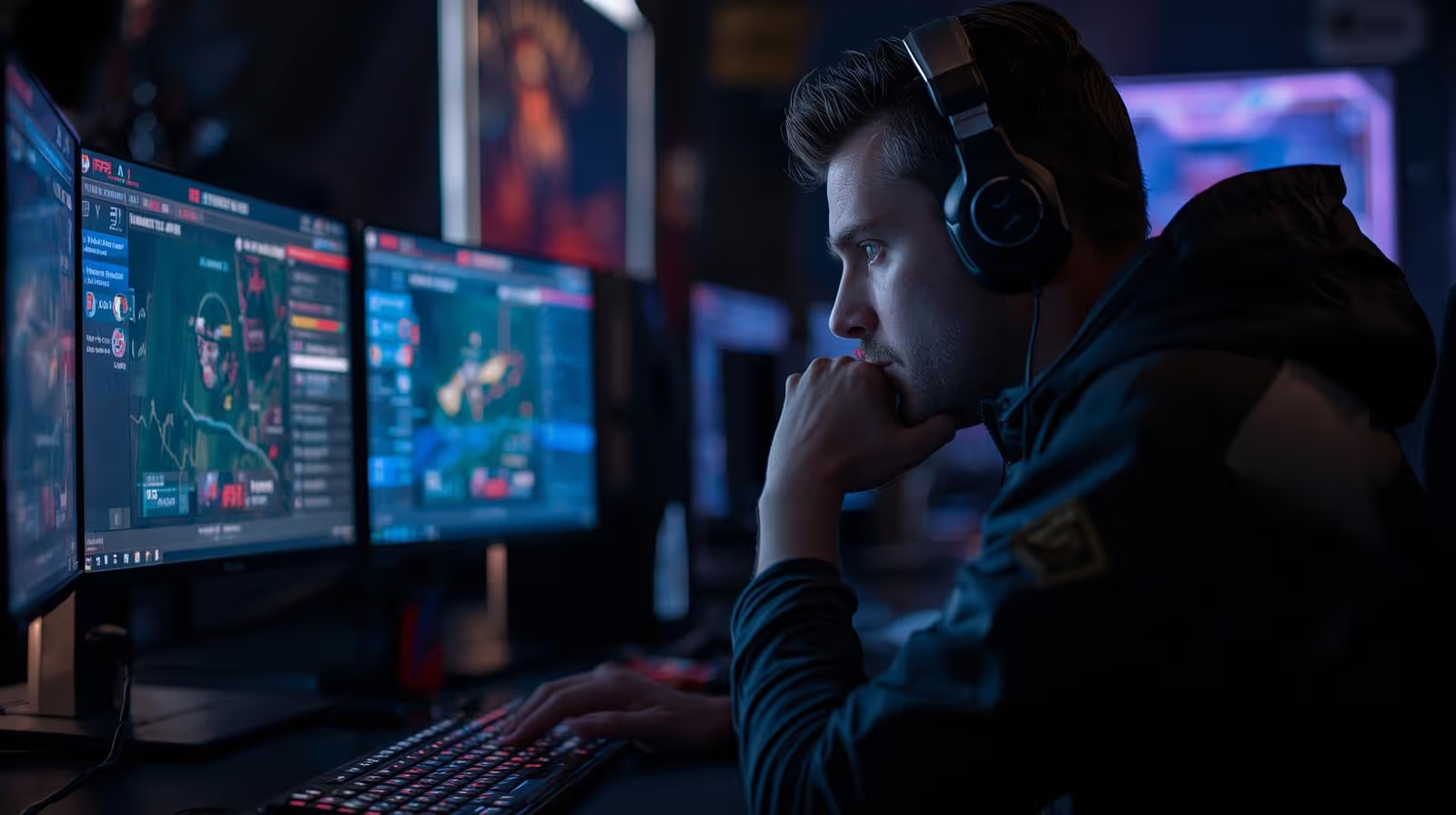



You walk into the practice room and it hits you fast, the hum of PCs, the click of keys, the low chatter in headsets, and that first sip of coffee that says, “We’re doing this again.” A pro esports bootcamp isn’t glamorous hour to hour. It’s focused work with short breathers, stacked into a day that leaves no room for drifting.
This is what a full bootcamp day looks like, from warm-ups to two scrim blocks, VOD review, coaching talks, and the small breaks that keep the team sharp. Scrims are scheduled practice matches against other teams, played with serious comms and goals. VODs are recorded game videos the team watches back to spot patterns and fix mistakes.
If you’ve ever wondered how pros get better so fast, it’s not magic. It’s structure.
What a Pro Esports Bootcamp Really Feels Like (and Why Teams Do It)
A bootcamp is when a team trains in the same place for a stretch of days or weeks, usually before a big event or after a rough split. The point is simple: remove distractions, tighten teamwork, and speed up learning. Online practice works, but being together changes everything. Calls get cleaner. Bad habits show up faster. Small issues stop hiding behind “lag” or mixed energy.
It also feels different than a normal grind. A bootcamp day has a beginning, a middle, and a hard stop. That schedule matters because pros can waste time too. Without structure, practice turns into random queueing, messy reviews, and frustration that lingers into the next day.
Most bootcamps revolve around a few goals:
- Cleaner teamwork, so trades and follow-ups happen without thinking
- Faster calls, so mid-round plans don’t arrive late
- New tactics, so the team isn’t solved by the same prep
- Fixing repeat mistakes, like bad rotations or sloppy utility
It’s not only the players shaping that day. You’ll usually see:
Players: They execute, give comms, and own their roles.
Coach: They run the plan, keep feedback direct, and manage pressure.
Analyst: They pull clips, track trends, and turn chaos into clear notes.
Manager (sometimes): They handle logistics, meals, and time, so the team stays on track.
The vibe can be intense, but not loud all day. The best teams don’t live in panic. They work in cycles: focus hard, reset, then focus hard again.
Scrims vs ranked, why practice matches matter more than pub games
Ranked can sharpen mechanics and confidence, but it rarely teaches a team how to win together. In solo queue, you can gamble on ego plays, ignore a plan, and still climb. In scrims, those habits get punished fast.
Scrims come with things ranked can’t guarantee:
- Planned opponents, often near your level
- Agreed rules, like map sets and start times
- Full comms, with roles and a shot-caller structure
- Clear goals, like testing a new comp or a new default
In Valorant and CS2, scrims are where teams test executes, anti-eco plans, mid-round calling, and trade spacing. In League of Legends, it’s where they stress test early-path plans, objective setups, and lane swaps without panicking after one bad fight. In Overwatch, it’s where ult plans and engage timing get drilled until they feel automatic.
Nobody’s trying to look flashy in scrims. The win matters less than the lesson, and that’s the whole point.
The hidden goal, building trust and fixing tilt before it spreads
Every team says they want better strats. What they really need is better trust.
Tilt is when frustration takes over your decisions and your voice, and it spreads fast. One player sighs, another stops talking, someone starts blaming, and suddenly the team is playing two games at once: the match and their own mood.
Bootcamps are built to stop that chain reaction. Coaches listen for tone as much as content. Is the comm short and useful, or sharp and personal? Are players asking for help, or arguing about the last mistake?
Teams build reset routines for a reason. A short break, a quick breath, a “next round” script, even a set way to call a timeout, all of it protects the team from spiraling. The goal is calm execution under pressure, not perfect vibes all day.
Morning to Midday: Warm-Ups, First Scrims, and the First Coffee Reset
A bootcamp morning usually starts earlier than fans expect. Not because pros love mornings, but because a longer day needs clean edges. If the first hours are messy, the rest of the day pays for it.
The flow is simple: wake up, eat, warm up with purpose, then jump into the first scrim block like it’s match day. After that comes the first real reset, often with coffee, water, and a short break away from screens.
Warm-up routines that actually translate in match play
A good warm-up isn’t a two-hour aim grind. It’s a short ramp that turns your brain on and puts your hands in the right gear.
Most players keep breakfast easy and repeatable, then do quick setup checks. They don’t want surprises mid-scrim.
Common pre-scrim checks look boring, and that’s why they work:
- Audio levels, mic gating, and push-to-talk
- Mouse feel, sens, and desk space
- Chair height, posture, and monitor distance
- A quick hand and wrist warm-up (nothing extreme)
Warm-ups depend on the game:
In Valorant or CS2, it might be aim trainers, then deathmatch focused on crosshair placement and first-bullet calm. In League of Legends, it might be last-hit drills, short lane practice, or champion labs for matchup spacing. In Overwatch, it might be hero labs, tracking drills, and movement patterns that match the day’s comp.
“Good warm-up” has three traits: it’s timed, it’s focused, and it’s tied to a skill goal. If today’s goal is cleaner trading, the warm-up might include holding angles and timing swings with a partner. If the goal is cooldown tracking, the warm-up might include calling key timers out loud, even in solo practice.
Scrim Block 1: How teams run practice like a real series
The first scrim block often runs around three hours, with short breaks built in. It’s long enough to settle in, but short enough to keep intensity high.
Teams treat these games like official matches in the ways that matter:
- Everyone is on time and ready, no slow starts
- Comms follow the team’s rules, not whatever feels good
- Players stick to their roles, even when it’s uncomfortable
- Notes are quick, so the schedule doesn’t collapse
Between maps, there’s rarely a deep talk. It’s usually a tight exchange: what’s the one thing we’re changing next map, and what stays the same?
Role focus changes by genre:
In FPS, you’ll hear about entry timing, trade distance, late lurks, and how utility sets up the first duel. In MOBAs, it’s wave timing, vision lanes, objective setups, and when to stop chasing and take the map. In hero shooters, it’s engage speed, ult tracking, and how to hold space without feeding.
A coach might say something like, “We’re losing the first 20 seconds because we’re split,” or, “Stop over-calling, give one plan and trust it.” It sounds simple, and that’s the trick. The best reminders are short enough to remember mid-round.
Coffee break and reset habits that prevent sloppy games later
After a hard scrim block, the team’s focus dips even if nobody admits it. You can feel it in small things, late reactions, missed info, sloppy spacing, and tiny arguments that shouldn’t exist. That’s why a coffee break isn’t laziness. It’s performance maintenance.
A typical reset is 10 to 30 minutes. Players step away, grab coffee or tea, drink water, and eat something light. Many teams add a short walk, a stretch, or just a quiet minute without comms.
A few reset tips that work at any level:
Change your input: Stand up, look far away, relax your hands.
Hydrate first: Caffeine without water is a trap.
One-sentence reset: “Next block is about X,” then drop the last game.
Keep it light: Save arguments for review, not the snack table.
If you’ve ever played worse the longer you queue, you already know why this matters. Focus is fuel, and breaks refill it.
Midday Reviews: VOD Breakdown, Strategy Talks, and Fixing Mistakes Fast
Bootcamps aren’t only about playing more games. They’re about learning faster per hour. That’s why VOD review can be more valuable than another scrim, especially when the same mistake keeps showing up in different forms.
A solid review session doesn’t try to watch everything. Most teams pick two to three moments that explain the whole story, like a key lost round, a missed objective setup, or a repeated mid-game collapse. It’s quality control, not entertainment.
Feedback also has to be delivered the right way. Pros don’t need a lecture. They need clarity and a plan.
What coaches and analysts look for in VOD review
Coaches and analysts hunt for patterns that repeat across maps and opponents. The goal is to fix the system, not roast one player.
Common buckets they watch:
- Positioning and spacing (too stacked, too far, no crossfire)
- Timing (late rotates, early engages, slow trades)
- Comms clarity (too many voices, missing key info)
- Utility or ability usage (wasted, late, or overlapping)
- Objective setup (bad lanes, no vision, no staging)
- Decision speed (hesitation, no commit, half plays)
The examples change by game, but the feeling is the same. A bad rotate in LoL might be a late collapse to a dragon setup. In Valorant, it might be a slow flank that arrives after the hit is over. In Overwatch, it might be using two ults when one would win the fight, then losing the next push with nothing left.
You’ll hear phrases like “We didn’t trade,” or “We didn’t layer abilities,” or “We didn’t set up the fight.” Those are team problems, not personal flaws.
From “we lost that round” to a clear fix everyone can repeat
The difference between a messy team and a pro team is what happens after a mistake.
A weak review sounds like, “We threw that.” A strong review turns it into a repeatable rule. The best fixes are short, measurable, and easy to call in real time.
Examples of simple team cues:
- “Call info in three words,” like “two A main”
- “Hold until second ping,” so nobody swings alone
- “Save ult for next fight,” and commit to it as a group
- “Default for 20 seconds,” before any big move
Then the team picks one focus for the next scrim block. Not five. Not a full essay. One priority that shows up in the first minutes of the next game.
Sometimes there’s quick homework too, like watching how a likely opponent plays a map, learning one new setup, or practicing one execute until it feels normal. Small tasks compound fast in a bootcamp.
Afternoon to Night: Second Scrim Block, Health Breaks, and the End-of-Day Debrief
By late afternoon, the day has weight. Hands are warmer, reads are sharper, but fatigue starts to sneak in. This is where discipline shows. Many teams can play well fresh. Fewer can stay clean when tired.
The second scrim block is often where changes get tested for real. After that comes a longer recharge, then a short debrief to close the day without carrying stress into tomorrow.
Scrim Block 2: Testing changes under pressure (and tracking progress)
The second block is where the morning’s notes meet reality. The team tries the fixes from review and watches what breaks.
Progress tracking isn’t always fancy. It can be simple and still honest:
- Fewer repeated mistakes in the first 30 seconds
- Cleaner mid-round calls (one voice, one plan)
- Better objective setups (arrive earlier, hold space)
- More consistent trades (no solo swings, tighter spacing)
Not every new idea works. Pros don’t panic when something fails. They isolate variables. If a new comp looks bad, was it the comp, the timing, or the comms? If a new execute fails, did the utility miss, or did the entry go early? That mindset saves weeks over a season.
Some teams keep a shared doc with a few bullets per map. Others keep it verbal and tight. Either way, the goal is the same: stop guessing, start measuring.
Recharge period: gym, walks, and wrist care that keep pros playing longer
Esports is physical in a quiet way. Wrists take hits. Backs tighten. Eyes get dry. If a bootcamp ignores health, performance drops, and injuries show up at the worst time.
Many teams build in a recharge window after scrims. It might be a short gym session, a walk outside, or simple mobility work. Nothing extreme. Just enough to reset the body so the brain can keep working.
Practical habits players use:
Posture checks: Feet planted, shoulders relaxed, wrists not bent.
Eye breaks: Look far away for a short minute, blink more than you think.
Hydration: Water during scrims, not only after.
Light movement: Walk, stretch hips, open shoulders, loosen hands.
This isn’t about looking athletic. It’s about playing the late maps with the same control you had early in the day.
Night debrief: how teams end the day without carrying stress to tomorrow
A good debrief is short and respectful. It closes the loop and protects the next day.
Many teams end with a quick meeting that covers:
- One or two wins from the day (something the team wants to keep)
- One or two issues (something the team wants to fix)
- One clear goal for tomorrow (simple enough to remember)
The tone matters. If the debrief turns into a blame session, sleep gets worse, and the next morning starts with tension. Coaches often set rules like “criticize the play, not the person,” and “no arguing after the decision is made.”
Teams also set boundaries for extra play. Some players want to grind solo queue all night. Others need a clean stop. Bootcamps work best when sleep is protected and stress doesn’t follow players into bed.
Then comes the human part: dinner, a little downtime, maybe a short chat that isn’t about the game. That’s not wasted time. It’s how a team stays steady through many days, not just one hype session.
Conclusion
A pro bootcamp day runs on rhythm: warm-up with purpose, scrim hard, take a real coffee reset, review key VOD moments, scrim again, recharge the body, then debrief and shut it down. Pros improve fast because they practice with a plan, and they recover with a plan too.
If you want your own mini bootcamp day at home, keep it simple: do a 20-minute warm-up with one skill goal, play a focused block (scrim if you can, ranked if you can’t), review two clips right after, then take real breaks away from your screen. That mix of intent and rest is what turns time played into progress.