

If you hang out in esports circles long enough, you hear a spicy claim: esports is bigger than the Super Bowl.
Then you see a TV rating, notice that no esports final comes close to that massive football audience, and think, “Wait, is someone lying?”
This piece is the reality check. No single esports event has more total viewers than a recent Super Bowl. The big game still wins that one-night, one-screen contest by a wide margin.
But if you zoom out and look at global reach, time watched, culture, and future growth, the story flips fast. In those areas, esports has already pulled ahead, often by a lot.
If you love esports, this shows you why your hobby is not niche anymore. If you are a traditional sports fan who is curious about gaming, this will help you see how esports turned into a mega industry without most TV viewers noticing.
Let’s unpack what “bigger” really means.
What People Mean When They Say Esports Is "Bigger" Than the Super Bowl
People toss this line around in threads, highlight videos, and news headlines. It sounds bold and clicky, which is why it spreads so easily.
The problem is, everyone is talking about different scoreboards.
Some people mean raw TV viewers. Others mean global fans, total time watched, or cultural buzz online. Those are very different things, yet they often get mashed into one vague claim.
Instead of arguing in circles, it helps to split it out.
Viewers vs Fans vs Culture: Three Very Different Scoreboards
First, think about viewers. The Super Bowl is a single TV event that pulls in around 120 million average viewers in the United States, plus streaming, in just a few hours. That is a monster rating.
Now think about fans. Esports is not one show, it is a whole scene. League of Legends, CS, Dota, Mobile Legends, VALORANT, PUBG Mobile, and more all run big tournaments across the year, plus countless regional events and qualifier streams.
Then there is culture. Super Bowl memes take over social media for a weekend. Esports clips, drama, and storylines run every day, around the globe, in many languages. If your feed is full of Twitch, YouTube, and TikTok, you see that nonstop.
So when someone says esports is “bigger”, what are they really measuring, a single night on TV or a year of global attention spread across games, creators, and events?
Why Esports Numbers Sound Confusing (And Sometimes Misleading)
Esports stats often come with terms many casual fans are not used to.
You will see things like “peak concurrent viewers”, “average concurrent viewers”, “hours watched”, and very big claims about “unique viewers” that do not always explain how they were counted.
The Super Bowl, on the other hand, usually gets reported as an average total audience. For recent games, that has been in the 120 million range in the United States across TV and streaming, with an even higher peak at the most-watched moments.
So if an esports event claims “6 million peak viewers”, and someone throws that number at you with no context, it can sound like a direct faceoff with the Super Bowl. In plain terms, it is not. It is a different metric on a different platform.
Understanding the scoreboard helps you see where esports still trails, and where it already wins.
How Super Bowl Viewership Actually Compares To The Biggest Esports Events
Let us line things up cleanly.
Recent Super Bowls have pulled around 125 million average viewers in the United States across TV and streaming, with peak moments around 135 million or more. That is a one-night audience most TV producers can only dream of.
The largest esports events reach global peaks in the low to mid millions of concurrent online viewers. League of Legends Worlds finals sit in the 6 to 7 million range for peak concurrent viewers outside China. The Esports World Cup and top mobile titles reach around 3 million.
So on pure one-event audience, esports is still far behind. But that is not the whole story.
Super Bowl: The One-Day TV Giant
Super Bowl ratings come from traditional TV plus official streaming platforms. Measurement companies track how many people are watching at a given time, then report an average number for the whole game, as well as a peak.
Picture it like this: you have a packed country-sized stadium pointed at one screen for about four hours. Recent Super Bowls have had average audiences around 125 million people in that window.
Compare that with a top esports final that peaks around 7 million concurrent viewers online. Even if you round that up a bit, the Super Bowl can still be more than ten times bigger on that one-night graph.
If the Super Bowl is still that far ahead on raw viewers, how can anyone claim esports already “won”?
Esports Peaks: Worlds, Esports World Cup, And Other Record Streams
Now look at the best esports events.
Recent League of Legends Worlds grand finals have hit peak concurrent audiences in the range of 6 to almost 7 million viewers outside China. That makes Worlds one of the most-watched live online events on the planet.
The Esports World Cup has pushed some mobile titles to around 3 million peak viewers, with tens of millions of hours watched over the course of the event. CS and Dota majors often hit the low millions or hundreds of thousands at their peak. Even mid-tier tournaments regularly pull numbers that would make many traditional cable channels jealous.
These are huge live online audiences, spread across Twitch, YouTube, co-streams, and regional platforms. They simply do not yet match the Super Bowl if you insist on a one-event-versus-one-event total audience comparison.
Why Peak Concurrent Viewers Do Not Tell The Whole Story
“Peak concurrent viewers” sounds fancy, but the meaning is simple.
It is the highest number of people watching at the same time, usually for one minute. If a Worlds final peaks at 6.8 million concurrent viewers, that is the single busiest moment.
Across the whole event, more people will drop in and out. The total number of unique viewers is always higher than the peak, but platforms do not all report that in a consistent, trusted way.
TV ratings for the Super Bowl, on the other hand, are designed to tell advertisers how many people watched at any point. Until online platforms share audience data in a standard way for every region, we cannot do a perfect apples-to-apples comparison.
What we can say is simple; by current public numbers, no esports final has beaten the Super Bowl in raw total audience yet.
The Day Esports Actually Became Bigger Than The Super Bowl (Just Not How You Think)
So if the big game still wins on one-night viewership, where did esports “pass” it?
There was no magic day when one esports stream suddenly topped the Super Bowl’s total audience. Instead, there was a turning point when the whole esports ecosystem quietly grew wider, louder, and more global than one national football broadcast.
Call that the day esports actually became bigger, not as a single show, but as a place where people spend time, attention, and money all year.
When A Year Of Esports Started To Outweigh One Night Of Football
Imagine you have two graphs.
On one, you plot the Super Bowl. It shoots up for one night, then drops flat for the rest of the year.
On the other, you plot esports. Worlds, big majors, mobile finals, local leagues, watch parties, co-streams, creator events, ranked grinds, and content drops. The line jumps up and down, but it never really hits zero.
Across thousands of hours of streams and tournaments, esports and gaming content add up a staggering amount of watch time. Events like Worlds or the Esports World Cup rack up tens or hundreds of millions of hours watched on their own.
If you care about where people spend their time every week, not just one night in front of a TV, who is really winning?
The Global Army Of Esports Fans vs One Country’s Big Game
Here is another key difference.
The Super Bowl is mostly a United States event with some international interest. Its ratings are measured around one country’s media system, even if a few viewers tune in from abroad.
Esports lives on global platforms from day one. Fans in Korea, China, Europe, Latin America, Southeast Asia, the Middle East, and beyond all watch in their own languages, on their own platforms, often on mobile.
In many regions, American football barely registers. Esports, on the other hand, is mainstream. Mobile esports can fill arenas, dominate local streaming charts, and create celebrity players who are recognized in the street.
When a single game like Mobile Legends or PUBG Mobile pulls millions of peak viewers from regions that do not care about the Super Bowl at all, “bigger” starts to feel very different.
From Niche To Normal: When Esports Hit Mainstream Culture
Think back to the early days of internet cafes and tiny LANs. For a long time, esports felt underground.
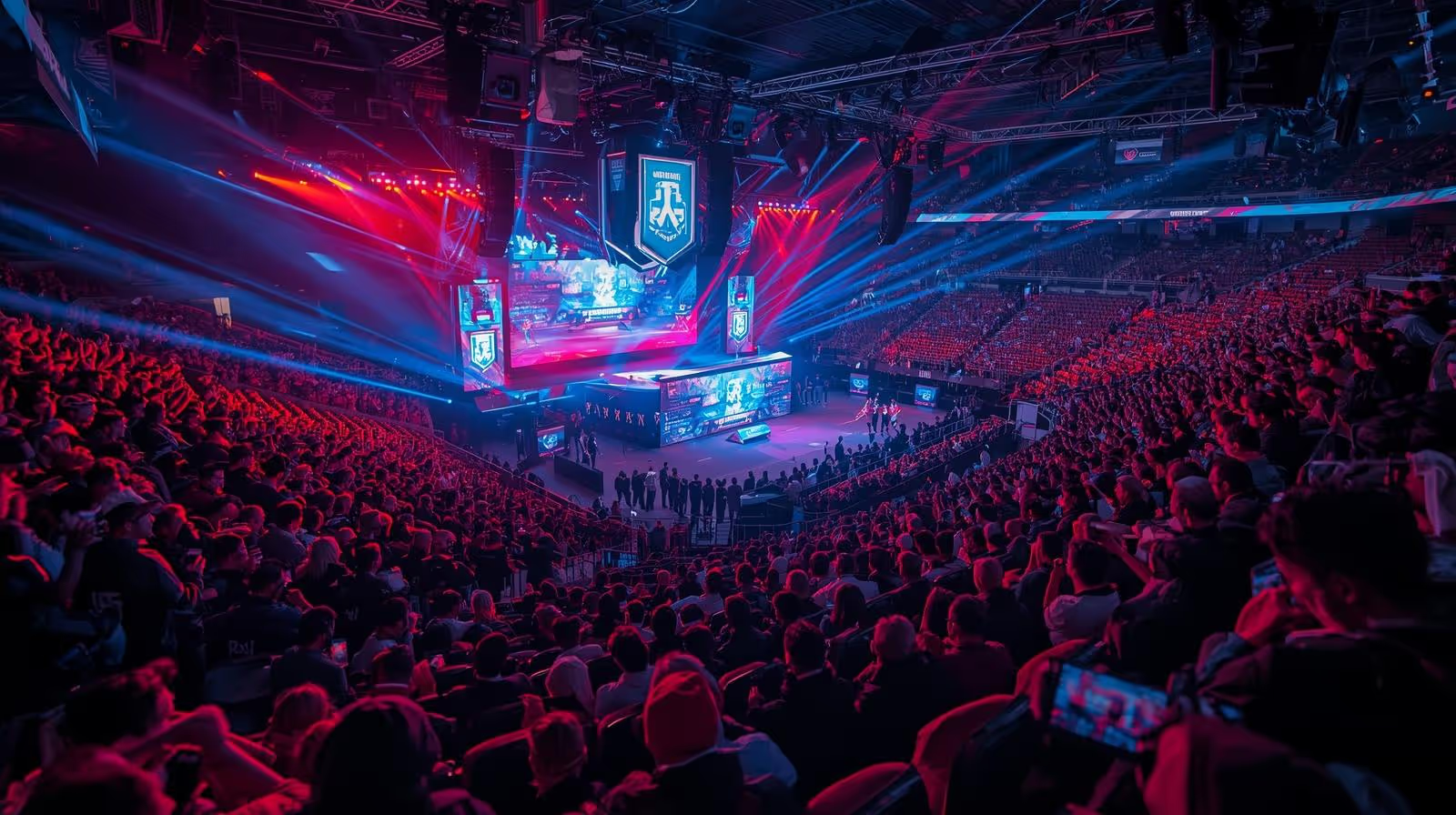
Now look at where we are. Worlds finals in sold-out arenas. Massive LED stages and opening ceremonies that look like music festivals. Prize pools that change players’ lives. Brand deals with car makers, food and drink companies, fashion labels, telecoms, and more.
Esports shows run on huge streaming platforms every weekend. Top players and creators sit on talk shows, appear in music videos, or land cameos in traditional sports content.
For a lot of younger fans, a LoL Worlds final or a huge CS event trends harder in their group chats than the Super Bowl. In culture, whose clips are your friends sharing more?
Why Esports May Soon Challenge The Super Bowl In Ways That Matter
Right now, the scoreboard is simple.
On one specific metric, average viewers for a single live broadcast, the Super Bowl still wins by a lot. On several other metrics, esports is already ahead or catching up fast.
What happens next depends on how young viewers watch, how platforms change, and where brands spend their money.
Young Audiences, Streaming Habits, And The Death Of "Appointment TV"
Ask any teenager how they watch content and you will hear the same names: Twitch, YouTube, TikTok, Instagram, Discord.
They follow creators, teams, and games, not channels and time slots. They watch on phones and laptops, not scheduled cable. They expect chat, memes, and instant clips, not just a one-way broadcast.
The Super Bowl still benefits from old-school “appointment TV”, when whole families plan their night around one channel. That model is already fading for younger groups.
If a whole generation grows up never caring about cable at all, what happens to the Super Bowl’s main advantage?
Brands, Sponsors, And The Money Trail Into Esports
Money follows attention.
As more people spend their time on streams and esports events, brands want a piece of that attention. That is why you now see non-gaming sponsors on jerseys, banners, and desk segments.
Music artists perform at esports finals. Luxury brands drop collabs tied to popular games. Fast-food chains, car makers, energy drinks, and phone companies sponsor leagues and content.
This money helps teams sign better players, lets organizers produce higher-quality shows, and funds creator content around the tournaments. When talent, budgets, and creative energy move into esports, the whole space grows, even if a single TV rating looks smaller than the Super Bowl.
Could An Esports Final Ever Beat The Super Bowl In Raw Viewers?
Let us hit the core search question head-on.
Has any esports event actually beaten the Super Bowl in total viewers? Based on trusted public data, no. Recent Super Bowls are still way ahead.
Could that change one day? It is possible, but a few things would have to happen.
Esports would need truly global, coordinated distribution so that all regions, including China, are counted in a transparent way. Measurement would need to be standardized so that TV, streaming, and regional platforms line up on the same kind of metric. The event itself would need to pull in casual sports fans and gamers at the same time, not just the core esports audience.
Even if that historic moment never comes, esports does not have to “win” that one stat to matter. It is already winning on time watched, global reach, and youth culture.
Conclusion: Bigger Is About More Than One Night
Here is the simple answer.
No esports event has beaten the Super Bowl in total viewers yet. The big game still rules the one-night TV rating.
But in other ways, esports is already bigger. Across a full year, esports pulls more total watch time, spreads across more countries, reaches younger fans, and shapes online culture in a way one TV broadcast cannot match.
If you want to understand where attention is really going, stop looking only at a single Sunday and start looking at how people spend their time every day, on every screen.
Esports is not a fad that might “catch up someday”. You are still early enough to watch it grow, but late enough that the scene is already massive. The next time a big event pops up on your feed, maybe tune in and see for yourself how big it feels from the inside.