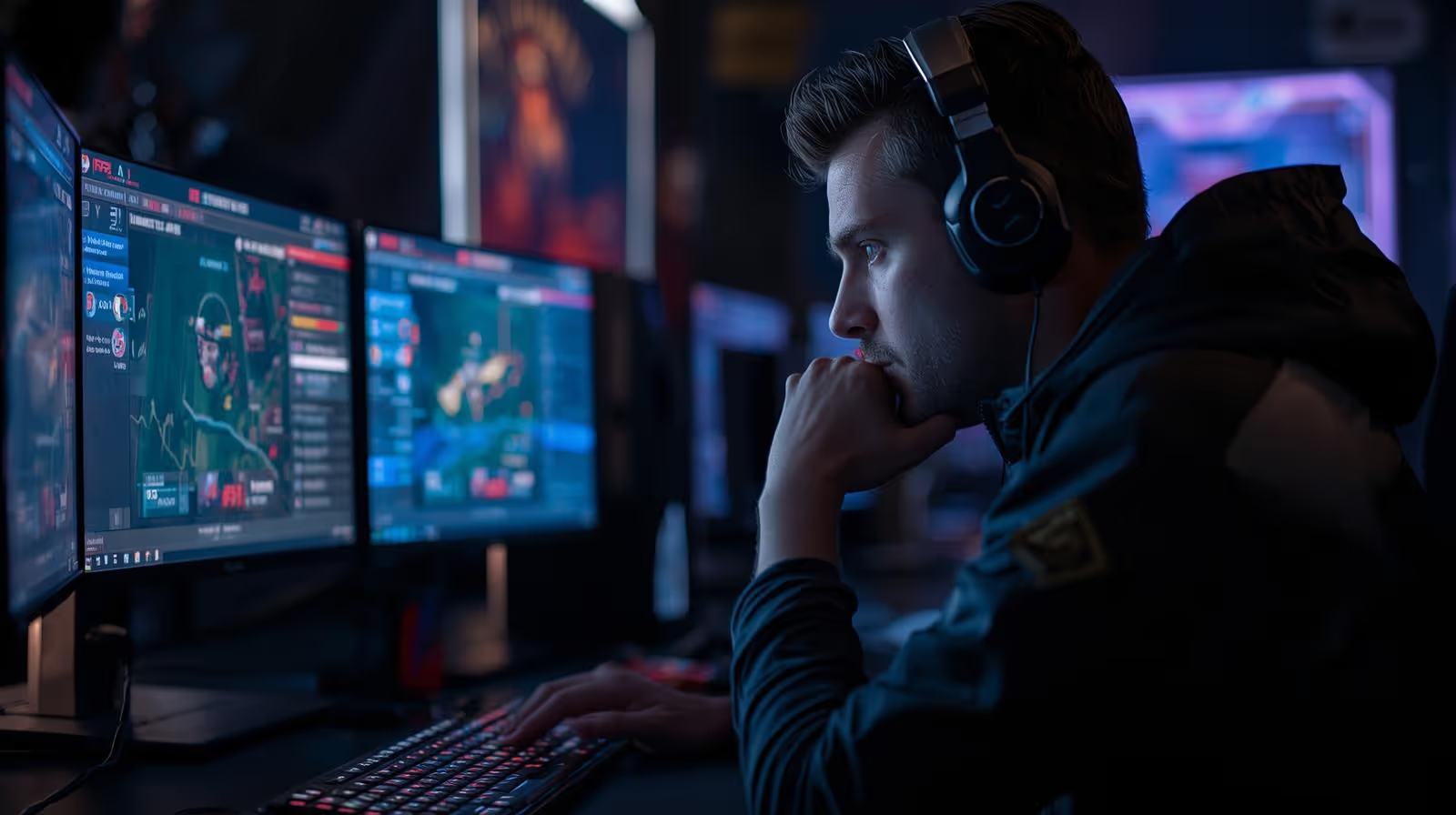



Health & Fitness for Gamers: Sleep, Posture, and Hand Injury Prevention (Built for Esports)
You can have perfect crosshair placement and still lose rounds to something you don’t see on the scoreboard: your body shutting down mid-series. In esports, health and fitness for gamers isn’t about looking like a gym ad, it’s about staying sharp in game five when everyone’s tired.
What happens to your aim when you sleep four hours and slam an energy drink? Why do your wrists start to burn right when the match gets tense? The good news is you don’t need a total lifestyle makeover. Small routines, done consistently, can protect reaction time, reduce pain, and keep your mechanics stable across long scrim blocks.
This guide covers three pillars that matter most for competitive players: sleep, posture, and hand injury prevention, with simple steps that fit real practice schedules.
Sleep for gamers: build a routine that boosts focus, mood, and reaction time
Sleep is your nightly reset for attention, reaction speed, and emotional control. Miss it, and the symptoms show up fast: slower reads, more missed trades, worse comms, and tilt that feels “random” but isn’t.
Most esports players don’t need a perfect schedule, they need a repeatable one. Aim for 7 to 9 hours when you can, and keep timing consistent so your body knows when to power down and when to ramp up.
Here’s how sleep loss tends to show up in game:
- Micro-delays: you feel a half-step behind on swings, peeks, and punishes.
- Messier decision-making: you force plays you’d normally skip.
- Lower frustration tolerance: small mistakes feel huge, and comms get sharp.
- Worse learning: you grind hours, but improvements don’t stick.
The esports sleep schedule that actually works (even with late matches)
If you only change one thing, anchor your wake time. A fixed wake time is the steering wheel for your sleep schedule. Bedtime matters too, but wake time is the part you can keep steady even when scrims run late.
How to set it up
- Pick a wake time you can keep at least 5 to 6 days a week.
- Shift bedtime in 15 to 30 minute steps every few nights until you’re closer to 7 to 9 hours.
- Keep weekends close to weekdays (try within about an hour). Big weekend swings feel fun, but they often turn Monday practice into a fog.
For travel, LAN days, and stage matches
- Protect wake time first, even if bedtime wasn’t perfect.
- Get morning light soon after you wake up (a short walk outside helps). Light tells your brain it’s daytime.
- Use a short wind-down routine at night, even if it’s only 10 minutes. Familiar cues help you fall asleep in unfamiliar places.
A realistic goal is “stable enough,” not flawless. If your schedule is chaotic, your gameplay usually is too.
Pre-bed routine: screens, caffeine, and a calm-down plan
Late gaming is a double hit. It keeps your brain alert, and it often comes with bright screens and stress spikes. You don’t need to fear screens, but you do need a plan.
The 60 to 90 minute rule (best case)
- Stop intense gaming and ranked grinding 60 to 90 minutes before bed.
- If you must be on a screen, reduce brightness and use night mode or blue-light reduction.
Caffeine timing that won’t sabotage sleep
- Try to cut caffeine 6 to 8 hours before bed. If that sounds impossible, start with a smaller step: no caffeine in the last 4 hours, then move it earlier.
- Watch the “hidden caffeine” trap. Pre-workouts, energy drinks, and strong tea add up fast.
A calm-down plan that doesn’t feel like homeworkPick one or two options you’ll actually do:
- A warm shower
- Light stretching (neck, chest, hips)
- Reading a few pages (paper beats phone)
- 3 to 5 minutes of slow breathing (long exhale, relaxed shoulders)
Nap rules for esportsNaps can help, but only when they’re controlled.
- Keep naps 20 to 30 minutes.
- Avoid late afternoon naps if they ruin bedtime.
- If you nap after a short night, treat it like a patch, not a new habit.
Sleep is the closest thing esports has to legal performance boost. If you want more consistent mechanics, start here.
Posture and ergonomics for long sessions: stop neck and back pain without losing speed
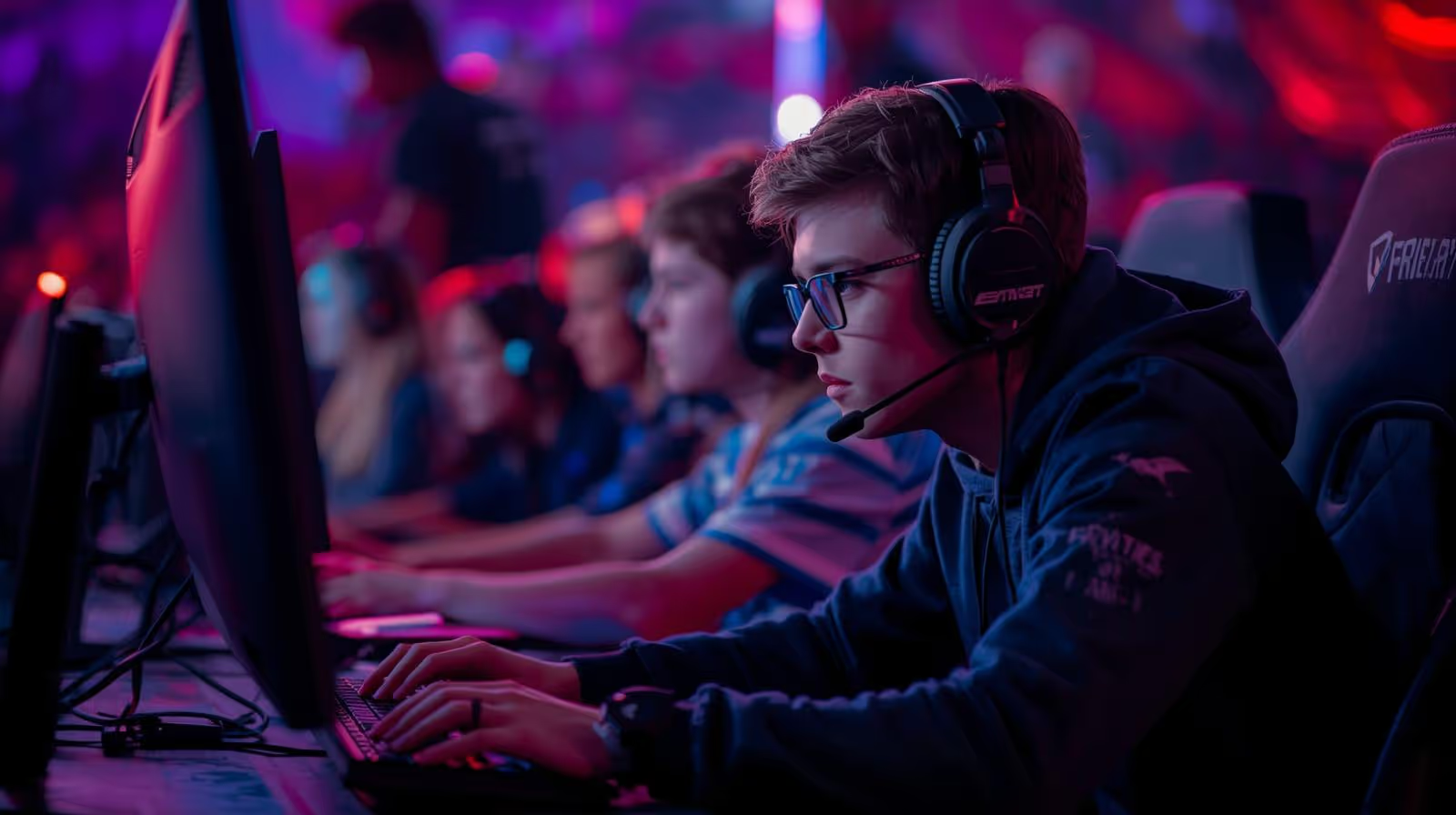
Posture isn’t about sitting like a statue. It’s about stacking your joints so muscles don’t have to fight gravity for six hours. When you slouch, your neck cranes forward, shoulders round, and your upper back gets stuck in a stressed position. Over time, that tension can creep into your hands and aim.
Think of posture like sensitivity settings. A small change can make your whole system smoother.
A “neutral posture” for gaming usually means:
- Head balanced over your shoulders (not drifting forward)
- Shoulders relaxed (not shrugged)
- Low back supported
- Elbows and wrists in comfortable, repeatable angles
Dial in your setup: chair height, lumbar support, screen level, and arm angles
You don’t need an expensive chair. You need the right angles.
Chair and hips
- Sit with your butt back in the seat, not perched on the edge.
- Aim for hips slightly higher than knees.
- Feet flat on the floor (or on a stable footrest).
- Add lumbar support if needed (a small cushion or rolled towel works). Your low back should feel supported, not forced.
Upper body and shoulders
- Keep shoulders down and relaxed.
- Keep elbows close to your sides when possible.
Monitor placement
- Put the top of the screen at or just below eye level.
- Keep it about an arm’s length away, then adjust for comfort and clarity.
- If you use a laptop, consider a stand plus an external keyboard and mouse. Laptop posture pushes your neck forward fast.
Arms, wrists, keyboard, mouse
- Elbows around 90 to 110 degrees.
- Forearms roughly parallel to the floor.
- Wrists neutral (not bent up, not collapsed down).
- Keep mouse and keyboard close enough that you don’t reach.
Fit matters more than brandA mouse that’s too small can overwork your fingers. A mouse that’s too large can force awkward grip tension. If your wrists feel jammed, an angled keyboard or split keyboard can help some players, but only if it keeps wrists neutral and doesn’t force weird shoulder positions.
Micro-breaks that do not break your flow: the 20 minute reset and the hourly move
You don’t need long breaks to protect your body. You need frequent resets that keep small problems from becoming big ones.
Every 15 to 20 minutes (30 to 60 seconds)Do a posture reset between queues, during a death timer, or while loading:
- Unclench jaw and drop shoulders
- Sit tall for three breaths
- Open and close hands slowly a few times
Every hour (5 to 6 minutes)Get out of the chair. Blood flow is part of performance.
- Walk to get water
- Do a gentle hip stretch
- Shake out arms and roll shoulders
A few easy counter-moves that work well for gamers:
- Chest opener: clasp hands behind you, lift gently, breathe
- Shoulder blade squeeze: pull blades back and down, hold 2 seconds, repeat
- Stand tall reset: feet under hips, ribs down, head stacked, 5 slow breaths
- Gentle hip stretch: short lunge stance, light stretch, no forcing
Sit-stand setups can help some players, but ramp up slowly. If you stand too long too soon, you can trade back pain for foot and knee pain.
Hand, wrist, and forearm injury prevention: protect your mechanics and aim longevity
Esports injuries often start quiet. A little wrist ache. A mild burn in the forearm. A finger that clicks. Then one day you can’t play your best, or you can’t play at all.
Common issues for competitive gamers include:
- Wrist and finger tendon irritation from repeated clicks and key presses
- Outer elbow pain (often called tennis elbow)
- Numbness or tingling from nerve irritation in the wrist or elbow area
Prevention is simple in concept: warm up, manage volume, build strength on both sides of the forearm, and avoid positions that pinch nerves.
Warm up and during session hand care: 3 minutes before queue, 30 seconds between games
A warm-up doesn’t need to be dramatic. It should increase blood flow, reduce stiffness, and wake up the muscles that stabilize your wrist and fingers.
3 to 5 minutes before you queue
- Wrist circles (both directions, slow and controlled)
- Finger spreads (open wide, relax, repeat)
- Gentle wrist flex and extend (no pain, no forcing)
- Forearm rotations (palm up, palm down)
- Light squeeze on a soft ball or rolled sock (easy effort)
Then do a short, low-stakes in-game warm-up. A few minutes of aim drills at low intensity helps your hands ramp up without shock.
30 to 60 seconds between games
- Shake out hands
- Open and close fists 10 times
- Quick wrist mobility (gentle circles)
- Drop shoulders and breathe
This isn’t superstition. It reduces the “cold start” effect that makes tendons cranky.
Load management, strength work, and gear choices that reduce strain
Most hand pain spikes after one thing: a big jump in hours or intensity. A new season grind, a new team, tryouts, or a new aim routine can double your volume overnight. Tendons hate surprises.
Load management that works in real life
- Increase total hours gradually when possible.
- Break long blocks into smaller ones with short resets.
- Plan at least one lower-intensity day each week (review VODs, strategy work, or lighter mechanics).
Simple strength plan (2 nonconsecutive days per week)Keep it light at first. You should feel work, not flare-ups.
- Wrist curls (slow up, slower down)
- Reverse wrist curls (extensor focus, slow down phase)
- Grip holds (moderate squeeze, timed)
- Finger extensor work (use a rubber band around fingers, open against it)
The goal is balance. Gaming often overuses finger flexors. Extensors and wrist stabilizers need attention to keep wrists centered and calm.
Gear and settings that reduce strain
- Use a mouse that fits your hand size and grip style.
- Tune sensitivity so you aren’t doing huge, tense movements all day.
- Keep your mousepad space consistent, and avoid cramped angles that force wrist bend.
- Wrist rests are best during pauses, not while actively aiming. Resting on a hard edge during motion can irritate tissues.
Compression sleeves or a splint can sometimes calm symptoms during a flare, but they aren’t a long-term fix. If you rely on gear to push through pain, the problem often grows.
A simple weekly health plan for esports players (sleep, posture, hands)
Consistency beats intensity. You don’t need to overhaul everything in one week. You need a repeatable loop that supports practice instead of fighting it.
Here’s a simple structure that fits most scrim schedules:
- Before sessions: quick setup check, hand warm-up, water ready
- During sessions: micro-resets, hourly movement, keep shoulders and grip relaxed
- After sessions: short cool-down, stop caffeine late, start wind-down
- Rest day or lighter day: strength work, walk, mobility, early bedtime
Hydration helps more than people admit. Dehydration can increase fatigue and headaches, which can look like “bad focus” in game. Keep water within reach, and take a few sips between maps.
The pre-scrim checklist and the between-maps reset
Make this team-friendly. If everyone does it, nobody feels weird.
Pre-scrim checklist (2 to 5 minutes)
- Adjust chair height and lumbar support
- Set monitor to eye level and correct distance
- Relax shoulders, check wrist position
- 3 to 5 minute hand warm-up
- Water nearby
Between-maps reset (60 to 90 seconds)
- Stand up
- Quick chest opener
- Shoulder blade squeeze 5 times
- Shake out hands
- Gentle wrist mobility
It’s short, repeatable, and it protects you when emotions run hot.
When pain is a red flag: stop early and get help
Esports culture rewards pushing through, but pain is not just “weakness leaving the body.” Some symptoms are red flags.
Stop early and get checked if you have:
- Pain that doesn’t improve with rest
- Numbness or tingling in fingers or hand
- Weakness, dropping items, or loss of fine control
- Symptoms that last more than a week, even after reducing play
A physical therapist, sports medicine clinician, or hand specialist can help quickly when problems are new. Early care often prevents long-term issues, and it protects your career.
Conclusion
Better esports performance often looks boring from the outside: consistent sleep, neutral posture with smart breaks, and hands that are warmed up and strong. If you want a simple start, pick one change today, set a steady wake time, raise your monitor to eye level, or do the 3-minute hand warm-up before queue. What would your gameplay look like after two weeks with fewer aches and cleaner focus? Stack small habits, keep what works, and let your body support the hours you put in.