

Southeast Asia is famous for mobile esports. So how did Vietnam become the region’s most reliable home for high-level PC League of Legends?
When people say “strongest SEA LoL region,” they usually mean a simple mix of proof: teams that keep earning top Pacific spots, squads that don’t look lost on international stages, and a local scene that feels stable enough to keep producing new pros. Vietnam checks those boxes more often than its neighbors, and it’s done it without needing constant headlines.
This didn’t happen because one roster got hot for a month. It’s the result of a strong domestic system (VCS roots), a huge player base, a ruthless solo queue culture, improving org support, and a fanbase that treats big matches like national events.
What “Strongest in Southeast Asia” Looks Like in League of Legends
“Strongest” can sound like trash talk, so it helps to define it in ways fans actually care about.
For Vietnam, strength shows up in three places:
- International access: getting into the Pacific pathway and showing up at major Riot events through that system.
- Stage competitiveness: even when Vietnam doesn’t go deep, it often forces stronger regions to play seriously, draft carefully, and respect the tempo.
- League stability and depth: when a scene keeps producing new starters, it usually means the pipeline is real.
Vietnam doesn’t need to be the best region on Earth to be the best in Southeast Asia. In practice, it means Vietnam is the SEA region most likely to send teams that look prepared, decisive, and fearless, not just hopeful.
International results that made people take Vietnam seriously
Reputation in League of Legends can change fast. One upset doesn’t rewrite history, but it changes how opponents draft, how analysts talk, and how fans watch the next match. Vietnam has stacked enough “you can’t ignore this” moments that teams now treat Vietnamese seeds as dangerous, not decorative.
Flagship brands matter here. GAM Esports has become shorthand for Vietnam’s identity: confident skirmishing, sharp mechanics, and a willingness to fight in spots other teams would back off. Team Secret (and the broader Secret Whales story that fans connect with) has also helped keep Vietnam visible in the Pacific race, reinforcing the idea that Vietnam is not a one-team region.
Even when results don’t end with a trophy, the pattern matters. Vietnam keeps placing teams into high-pressure environments, and those reps build players who don’t panic when the map explodes at ten minutes.
VCS viewership and crowds, the “hidden power stat”
Crowds don’t win games, but they do something almost as important: they make winning valuable enough for teams to invest properly.
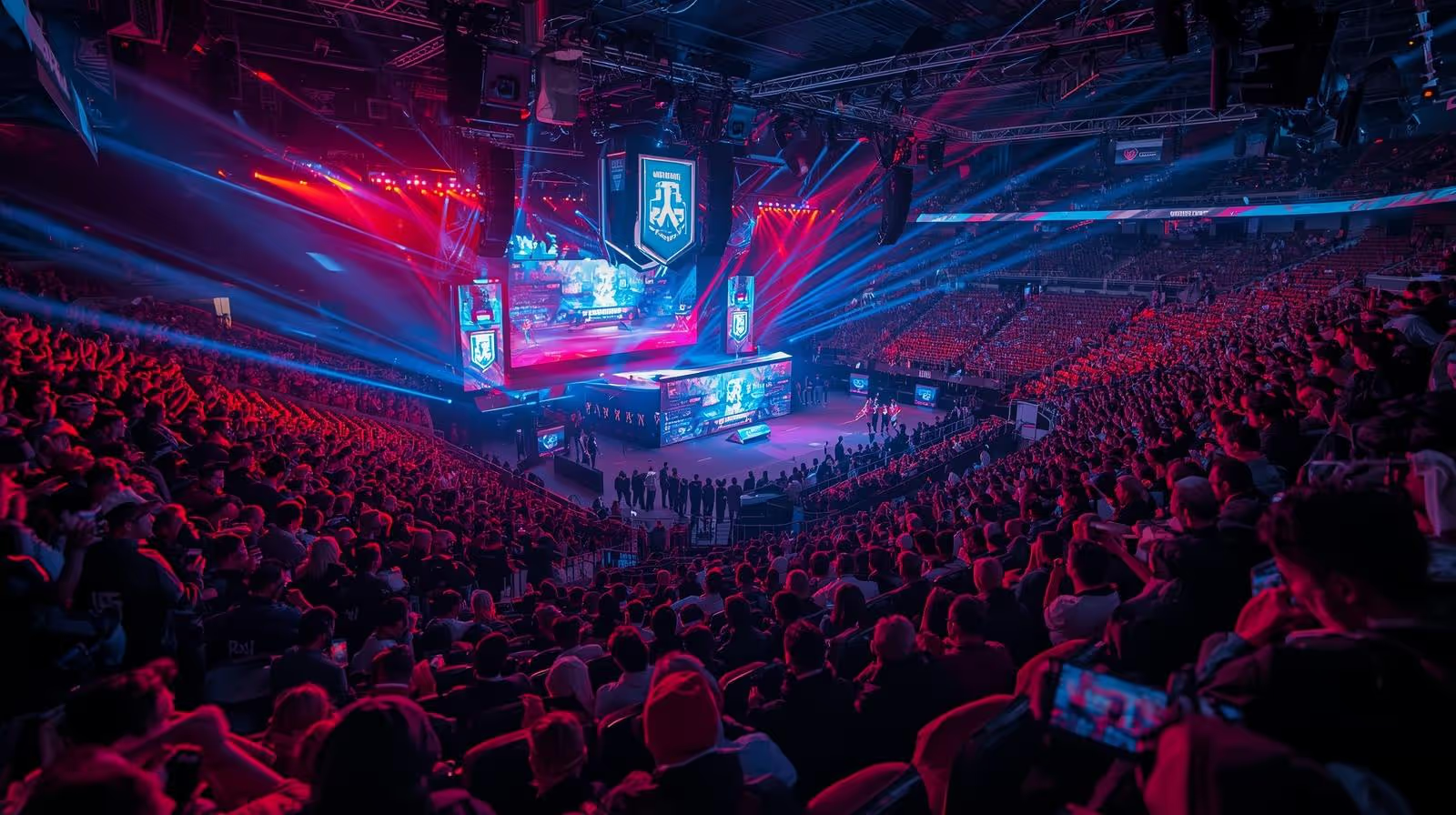
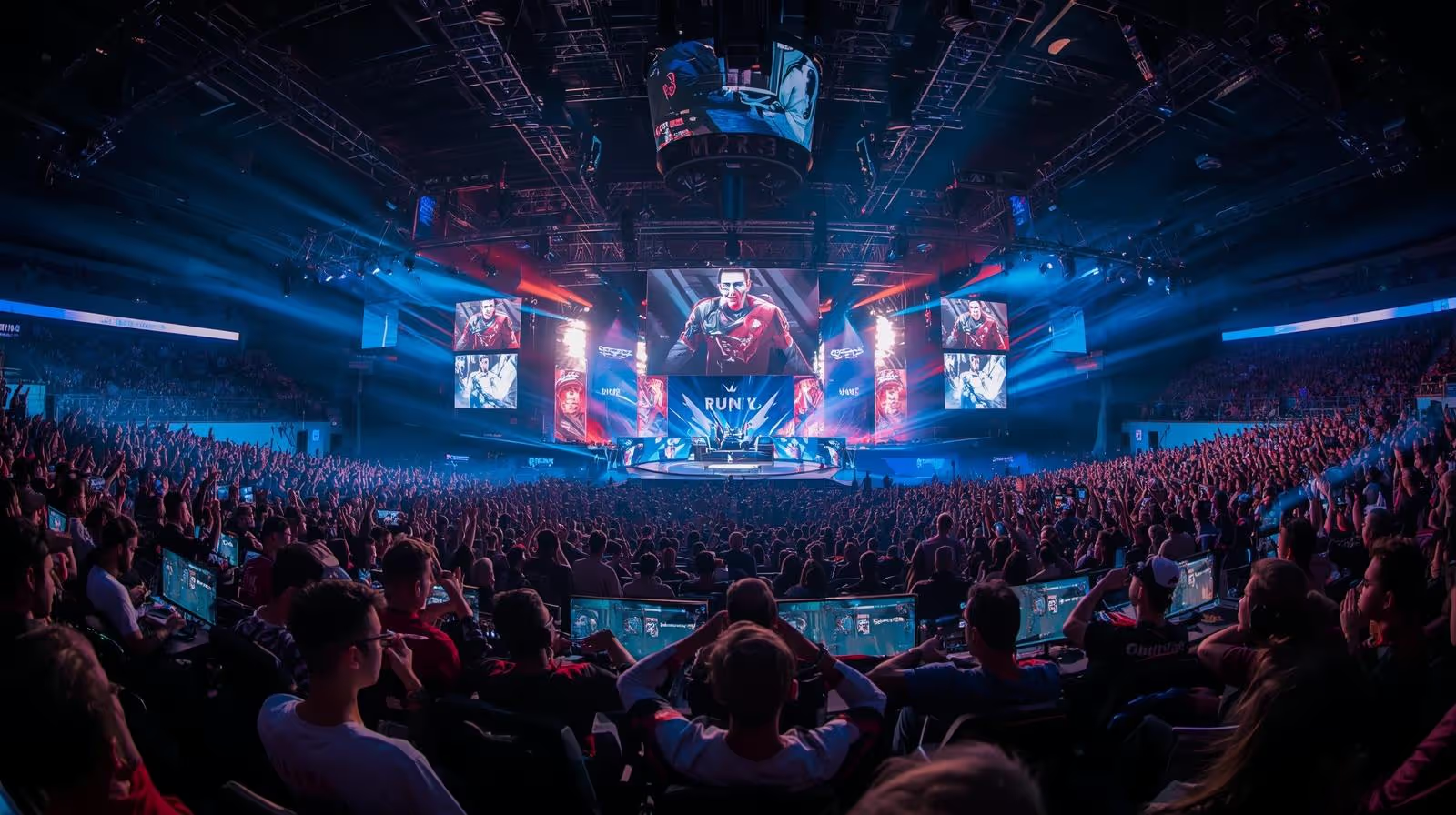
Vietnam’s LoL scene has long been fueled by a fan culture that shows up loudly, online and offline. When arenas fill and watch parties pop off, sponsors notice. When sponsors show up, orgs can pay players on time, hire staff, and keep rosters together longer. And when rosters stay together, teamwork improves, drafts get cleaner, and mid-game calls stop sounding like five people arguing in voice.
There’s also pressure. A quiet studio match can feel like scrims with cameras. A loud venue turns every misplay into a moment you carry for weeks. That kind of pressure can sharpen players fast, because nobody wants to be the reason a whole crowd goes silent.
The VCS System That Turns Raw Talent Into Pro Teams
Vietnam’s strength is built at home first. It’s not imported. It’s not patched together from five countries. It comes from a domestic competition culture that’s been organized enough to turn talented solo queue players into stage-ready pros.
While the ecosystem has shifted under a broader Pacific structure (with Vietnam teams competing alongside other top areas in the region), the core VCS lesson stayed the same: if your local league is serious, your teams get serious.
A strong system creates habits:
- You practice like your job depends on it, because it does.
- You scout constantly, because there’s always someone hungry behind you.
- You respect match prep, because your opponents punish laziness.
A concentrated player base and a grind-heavy solo queue culture
Vietnam has a massive esports population, and local reporting has placed the country among the biggest communities in the region. That scale matters, because it changes how quickly talent surfaces. In smaller scenes, a promising player can stand out for a long time without being tested. In Vietnam, someone new can appear, climb fast, and get noticed before the wider region even learns their name.
The solo queue culture also shapes style. Vietnam is often associated with an “always fighting” approach, but it’s not just mindless brawling. It’s more like street basketball at a packed court. If you hesitate, you lose your spot. Players learn to take space, scrap for waves, and trust their hands under pressure.
That attitude spills into pro play:
- Early jungle fights become routine, not a risk.
- Skirmish-heavy picks feel comfortable.
- Teams trust their ability to outplay, even when the map state looks messy.
When a whole region grows up on that tempo, it becomes a shared language.
Better team structure, coaching, and clearer paths for rookies
Raw mechanics are common in Vietnam. What turns that into wins is structure.
Better Vietnamese orgs have treated player development like an assembly line, not a lottery ticket. Instead of hoping a star appears fully formed, they build the steps: tryouts, role coaching, review habits, and real practice schedules. A rookie doesn’t need to become a shot-caller on day one. They need a plan for what to improve this week, and someone who holds them to it.
Clear paths also reduce panic roster moves. Flashy signings can look great on social media, but stable practice is what builds teams. When a lineup gets time to learn each other’s tendencies, mid-game calls become faster. Everyone knows who’s taking the risky angle and who’s covering the exit.
If you’ve ever watched a team fight where one side commits instantly and the other hesitates, you’ve seen the difference stability makes.
Riot plus local operators raising the league’s production and rules
Fans love highlights, but pro scenes are held together by the boring stuff: consistent formats, fair rulings, reliable scheduling, and broadcasts that don’t feel thrown together.
Vietnam benefited from a partnership model where Riot works with local operators and esports institutions to run competition. When tournament operations are clean, teams can focus on improvement instead of chaos. Coaches can plan practice blocks. Players can treat the season like a real job, not a series of surprises.
Better broadcasts help too. Strong production gives sponsors something they can trust, and it gives players a stage that feels worth climbing. The result is a league that looks professional, which attracts more professional behavior.
Why Other SEA LoL Regions Fell Behind While Vietnam Pulled Ahead
It’s not that other Southeast Asian countries lack talent. Plenty of players from across the region have great mechanics and strong game sense. The difference is often ecosystem gravity: where the money goes, where the audience goes, and where young players think their future is.
Vietnam kept building around PC League of Legends while much of SEA shifted attention elsewhere.
SEA is mobile-first, but Vietnam kept a serious PC LoL identity
Mobile esports can dominate a country’s esports calendar. It pulls sponsor budgets, steals prime venue dates, and becomes the default game for new fans. In many SEA markets, PC LoL ended up competing for oxygen.
Vietnam is different because PC gaming culture stayed visible. PC cafés remained a social hub, and League of Legends stayed a status game for many competitive players. That matters more than outsiders think. A game doesn’t grow only through marketing. It grows because it becomes part of someone’s routine, the place they go after school, after work, or with friends on weekends.
When that routine exists at scale, a region can keep producing:
- More ranked grinders
- More amateur teams
- More local tournaments
- More streamers and community voices
It creates momentum that’s hard to replicate with a single sponsor deal.
PCS and “split attention” problems, Vietnam’s focus advantage
Large, multi-country regions can be strong, but they also face a branding problem. Fans want storylines. They want rivalries. They want local heroes. When a league tries to serve many places at once, it can struggle to build one unified identity.
Vietnam’s single-country focus makes it easier. The scouting is simpler. The fan narratives are clearer. Rivalries feel local and personal. Home crowds also hit differently when most of the room shares the same language, the same memes, and the same history of matches.
That focus advantage doesn’t automatically win games, but it makes everything around winning easier: content, sponsorships, attendance, and long-term player motivation.
The Quiet Growth Engine: Money, Events, and National-Level Support
If you only watch match days, you miss the machine behind them. Vietnam’s LoL strength has been pushed by practical factors that don’t trend on social media: funding, facilities, event experience, and the kind of institutional support that helps esports look legitimate.
When those pieces line up, performance improves in predictable ways. Players burn out less. Practice gets smarter. Staff quality rises. And teams can afford to plan for the whole season, not just the next paycheck.
More stable orgs, better training setups, and rising investment
Investment in esports isn’t just “big salaries.” The best spending often looks boring:
- Dedicated training spaces (gaming houses or team facilities)
- Analysts who track drafts and opponent habits
- Better scrim networks and structured review
- Support for health, sleep, and mindset
- Contracts and payments that reduce stress
When players aren’t worrying about basics, they take practice seriously. When teams have staff, they fix repeat mistakes faster. When orgs are stable, rookies get developed instead of discarded.
Vietnam has also benefited from growing interest around its top brands. When major teams set higher standards, it pressures everyone else to improve or get left behind. That kind of internal competition raises the whole region.
Big events and leadership roles that legitimize the ecosystem
Hosting strong live events does more than entertain. It proves the scene can be trusted.
Vietnam’s ability to draw large offline turnouts, run big watch parties, and support major-level production creates a cycle: legitimacy brings partners, partners bring money, money funds teams, and better teams create better matches that bring even more fans.
There’s also a social effect. When parents, schools, and local institutions see esports run like a real event, it stops looking like a risky hobby. More young players get permission to commit. More brands feel safe attaching their logos. The whole pipeline gets smoother.
Conclusion
Vietnam became the strongest LoL region in Southeast Asia through a simple chain: a big player base plus a fierce solo queue culture, a well-run domestic system with VCS roots, loud fans that sustain sponsor interest, and steady investment that turns talent into teams.
Staying on top will require protecting the talent pipeline, keeping league operations stable under the broader Pacific structure, and continuing to reward the fans who show up every split. Other SEA regions can copy parts of the formula too, starting with grassroots competition and clearer paths for rookies. The next time a Vietnamese team loads onto an international stage, it won’t feel like a surprise, it’ll feel like the result of years of work.




%20-%20EsportsShaka.avif "The Underdog Who Beat the World #1 (And Gave Him the Controller After)")