
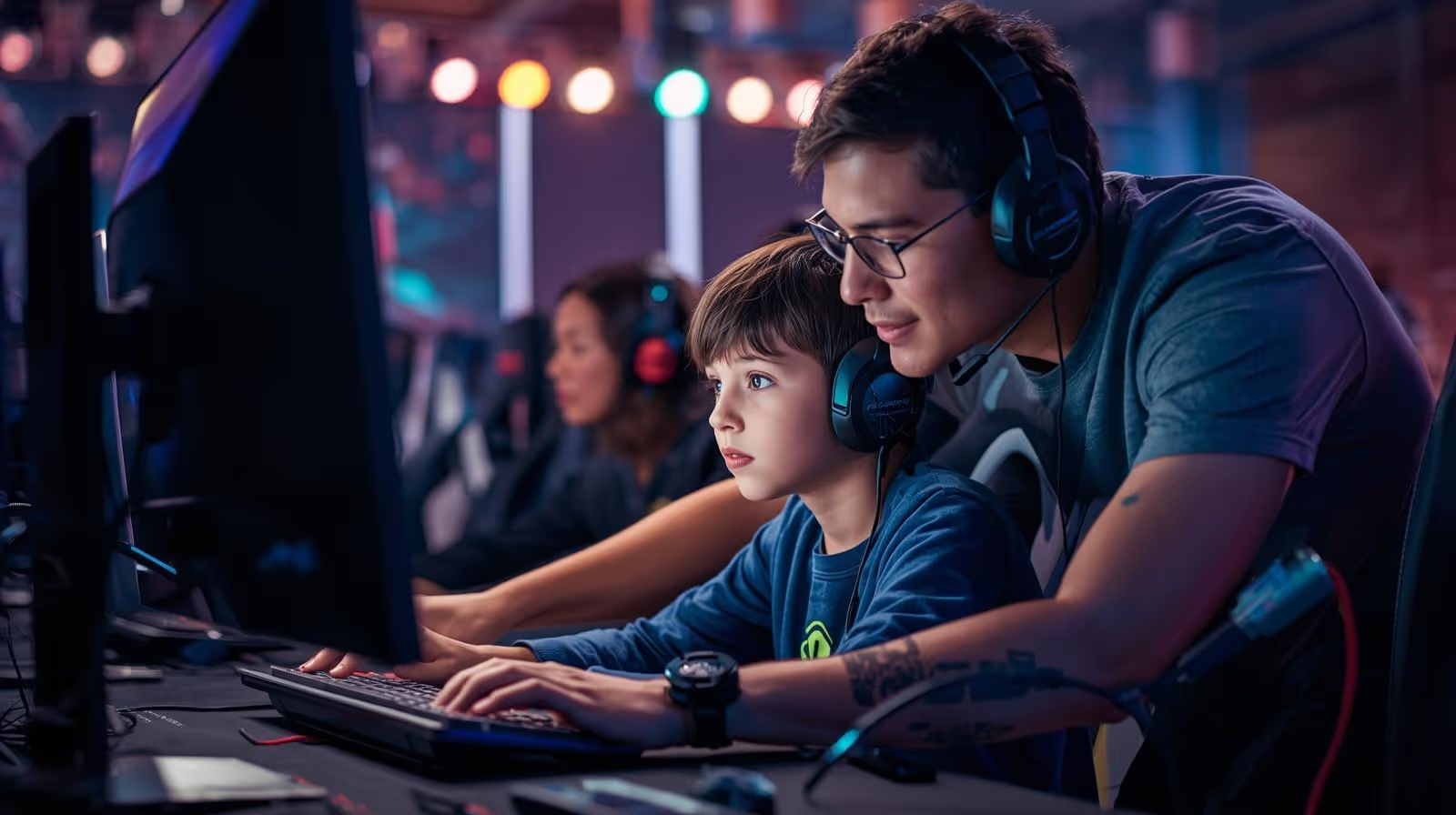

Screen time can feel like a black hole, hours go in and nothing useful comes out. If your kid loves esports, that worry gets louder, because the games look intense, the slang is strange, and it’s hard to tell what’s “practice” and what’s just scrolling for dopamine.
Here’s the good news: esports is organized competitive gaming, and at its best it can be structured a lot like a sport. There are roles, practice plans, coaches, reviews, and tournaments. This guide shows how to turn esports screen time into measurable progress you can actually see, better habits, stronger skills, and a clearer path that still protects grades, health, and character.
You don’t need to be a gamer to guide your child well. You just need a plan, a few house rules, and the confidence to ask better questions.
What Esports Really Is, and Why Kids Take It Seriously
Esports is not “just playing video games.” It’s competition with rules, rankings, and performance pressure. Kids take it seriously for the same reason they take soccer or band seriously, it gives them a place to improve, belong, and test themselves.
Most esports titles follow a familiar structure:
- Teams and roles: In games like League of Legends, Valorant, and Counter-Strike 2, players have jobs that fit their strengths (leader, support, entry player, strategist).
- Practice and coaching: Many teams run scheduled scrims (practice matches), set goals, and review mistakes.
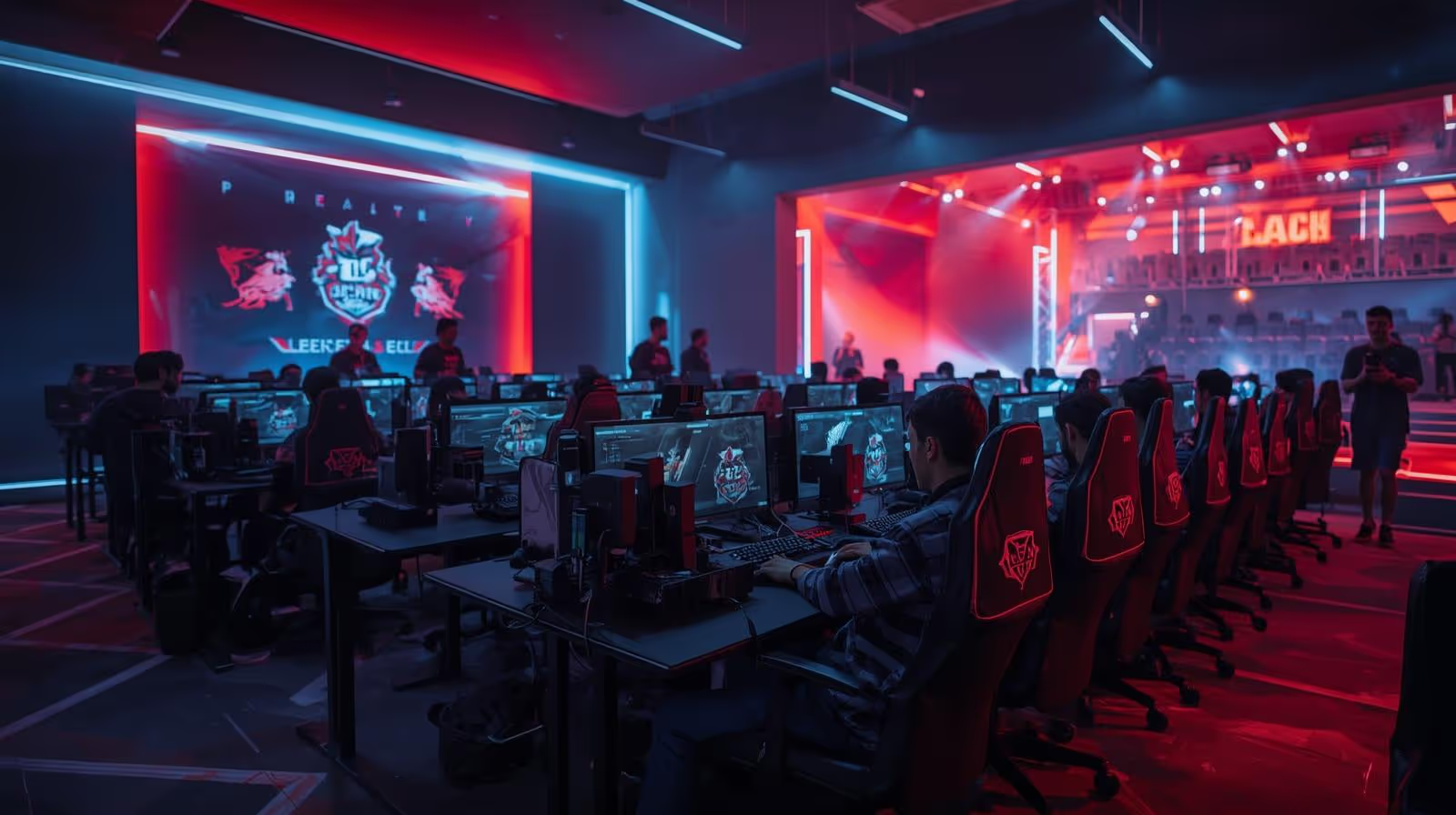
- Tournaments and leagues: Some are school-based, some are community leagues, and some are big professional events.
- Ranked ladders: Players climb or fall based on results, which is why improvement feels so personal.
Esports is also massive. Current estimates put the global esports audience at around 640 million viewers. That doesn’t mean your child is on a guaranteed path to fame, but it does explain why it feels real to them. The better expectation is simple: most kids won’t go pro, but many can gain practical skills and healthier habits if the home setup supports growth instead of endless grinding.
Popular titles parents often hear about include League of Legends, Valorant, Counter-Strike 2, Fortnite, and Mobile Legends. Each has its own culture, pace, and time demands. Your job isn’t to master the game, it’s to manage the environment around it.
Esports vs casual gaming, what counts as real practice
Casual gaming is like shooting hoops in the driveway. Esports practice is like running drills with a purpose.
You can spot structured practice by a few clear signs:
- Warm-ups: Aim trainers, movement drills, or quick skill routines before ranked matches.
- Drills with a focus: “I’m working on crosshair placement” or “I’m practicing callouts,” not “I’m just queueing.”
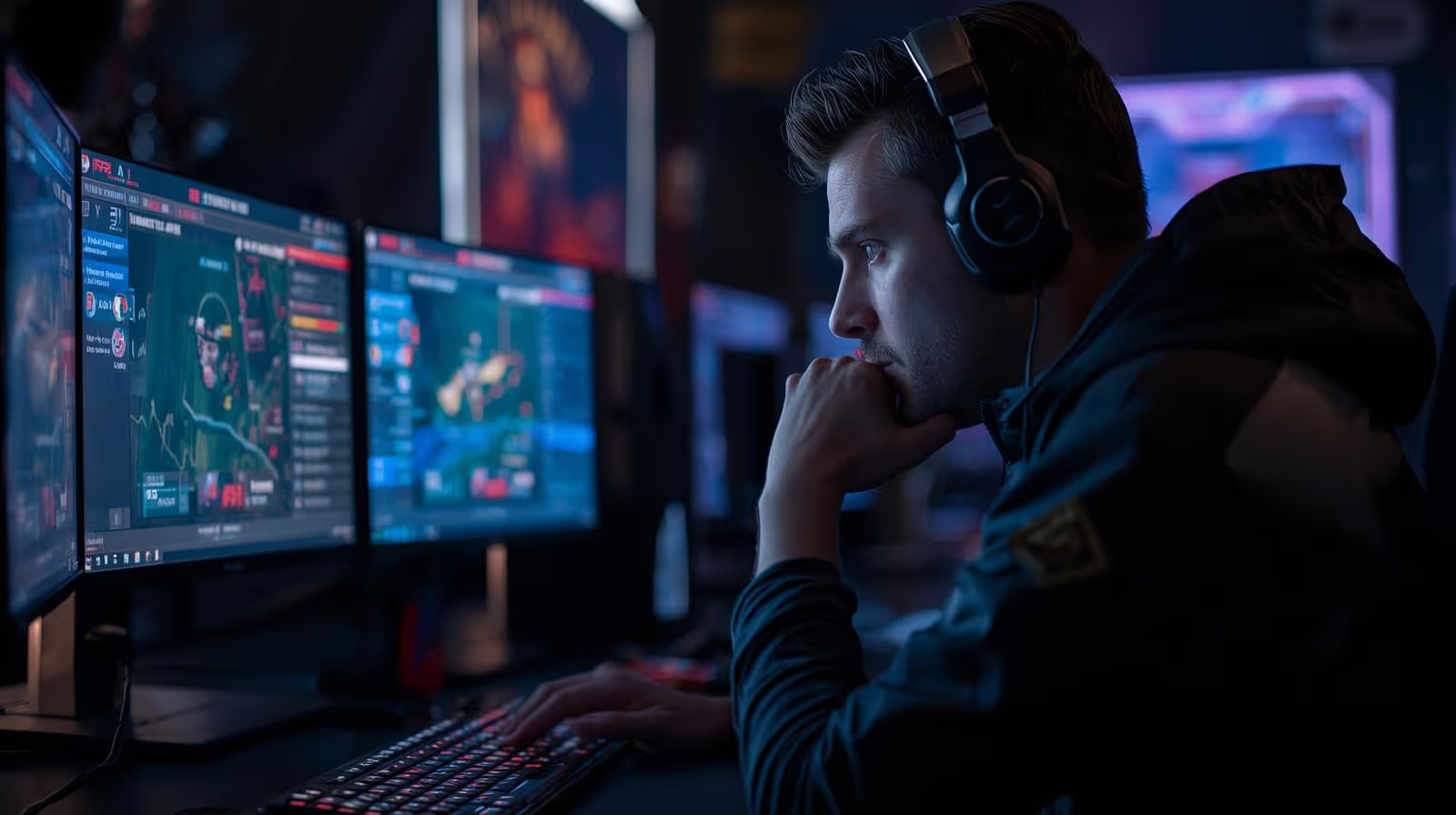
- Review: Watching a replay or clip to find one mistake to fix.
- Teamwork: Planned roles, basic strategies, and communication rules.
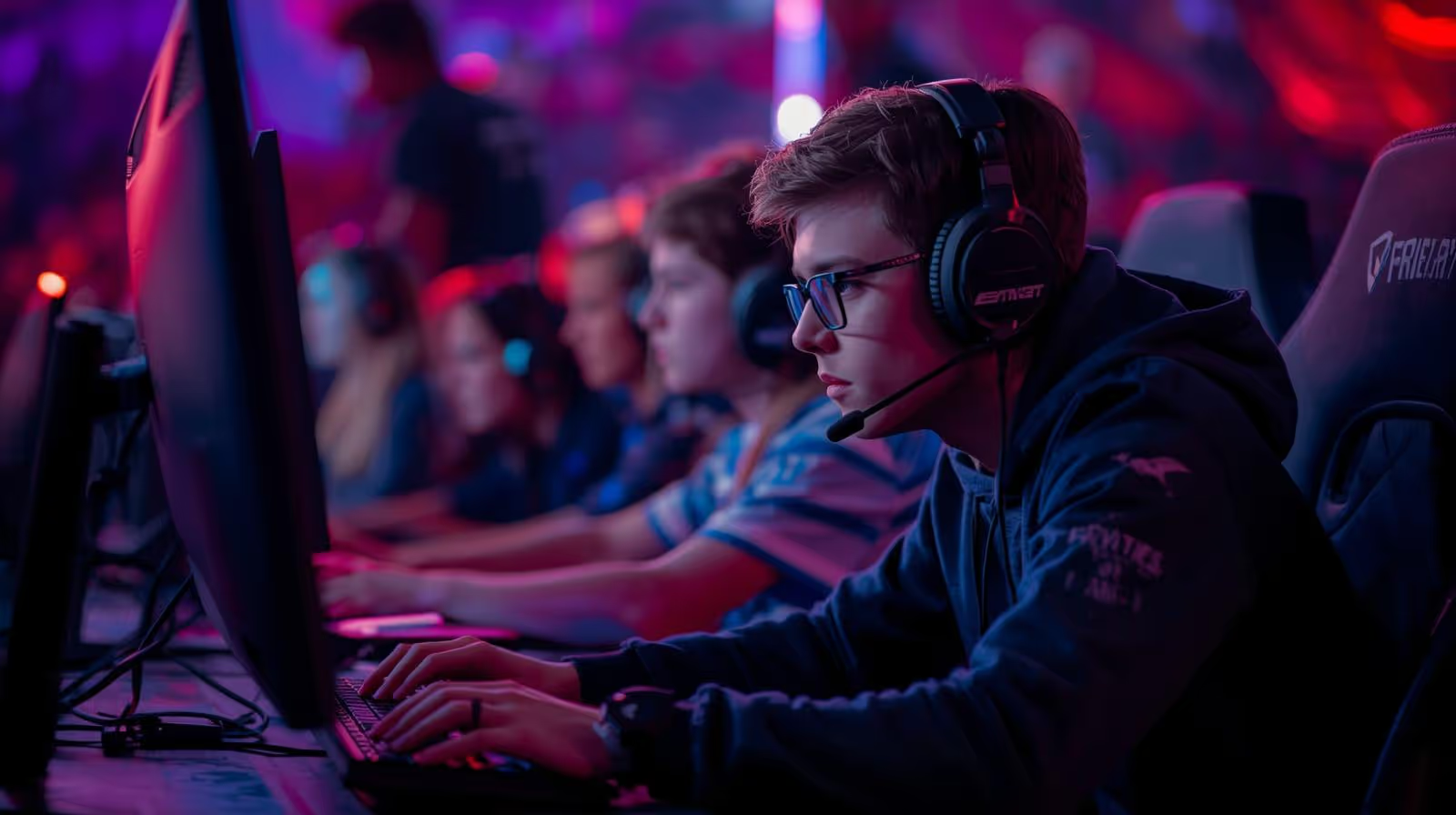
- Set matches: Scrims, tournament games, or ranked blocks with a start and stop time.
A small change in your parenting language helps a lot. Instead of “How many games did you play,” ask, “What are you working on today,” because that question nudges the brain toward progress, not just consumption.
The hidden skills kids build in esports (focus, teamwork, problem-solving)
When esports is balanced and guided, it can build skills that show up outside the game. The key is keeping it grounded, these benefits don’t come from unlimited hours, they come from intentional practice plus sleep, school, and movement.
Here are real skills esports can build, with real-life carryover:
- Communication: Calling out info fast and clearly can translate to speaking up in group projects.
- Focus under pressure: Staying locked in during a close match can help during tests or presentations.
- Problem-solving: Adapting to an opponent’s strategy mirrors adjusting to a tough class or a new coach’s system.
- Planning: Learning maps, timing, and resources is similar to planning a study schedule or training week.
- Emotional control: Handling a bad loss without melting down supports better conflict skills at home.
None of this is automatic. If a child is sleep-deprived, skipping homework, and raging in voice chat, esports isn’t building character, it’s revealing missing guardrails. That’s not a reason to ban it, it’s a reason to structure it.
Set Up a Healthy Esports Routine That Turns Screen Time Into Progress
A healthy esports routine is less about punishment and more about design. Think of it like building a practice field in your home: lines on the ground, clear start and stop times, and basic safety rules.
Start with one principle: quality practice beats long hours. Two focused hours with a plan can beat five messy hours of tilted ranked games.
A parent-friendly routine usually includes:
- School first, then play: Homework, chores, and family commitments come before queue time.
- Clear time blocks: A start time and an end time reduces arguing and “one more game” loops.
- Built-in breaks: Short resets protect mood, posture, and decision-making.
- Sleep as a non-negotiable: If sleep slips, everything else breaks, focus, grades, and patience.
- Movement every day: Even a walk helps, because sitting all day makes bodies and brains feel stuck.
If your child pushes back, it helps to frame it like sports. Nobody calls a coach “mean” for requiring rest and conditioning, so why should esports be different?
The Parent Player Plan: goals, schedule, and a simple progress tracker
If you want esports to become real progress, treat it like a season. One game, a few goals, a schedule you can see, and a quick review loop. Simple wins here beat complicated systems that nobody follows.
A basic plan most families can copy:
- Pick one main game for a season: This reduces chaos and makes improvement easier to measure.
- Set 1 to 3 skill goals: Examples include aim consistency, map knowledge, smarter rotations, or clearer comms.
- Schedule practice blocks: Short blocks work well on school nights, longer blocks on weekends.
- Review one match clip per week: Ask your child to show you one good moment and one mistake.
- Reset goals monthly: Keep what’s working, drop what isn’t.
For tracking, use a notes app. Keep it light, not obsessive. A good weekly tracker can be as short as:
- Sleep (hours and quality)
- Mood (calm, stressed, angry)
- Practice focus (what they trained)
- One win (a small success)
- One lesson (a mistake to fix)
If your child hates tracking, make it a two-minute habit right after play. You’re not building a spreadsheet, you’re building self-awareness.
Healthy gaming basics: breaks, posture, sleep, and stress control
Healthy esports habits look boring until they start paying off. Better sleep improves reaction time. Better posture reduces pain. Better breaks reduce tilt. These are performance tools, not “parent rules.”
Try these common-sense standards:
- Breaks: Take a 5-minute break every 45 to 60 minutes. Stand up, look far away, drink water.
- Posture: Feet on the floor, back supported, screen at a comfortable height. Wrists should feel neutral, not bent.
- Stretching: Quick wrist, shoulder, and neck stretches between blocks can prevent stiffness.
- Sleep buffer: Keep screens away from bedtime. A wind-down routine matters when matches get intense.
- Volume safety: Keep headphones at a safe level. If you have to shout over the game, it’s too loud.
- Food and hydration: Water nearby, real meals, and fewer energy drinks.
Also watch for stress signs. If your child is “tilting” (angry, blaming, spiraling), or shutting down, their brain isn’t learning anymore. A reset can be simple: a short walk, slower breathing, a snack, or stopping for the night. You can say, “I can see you’re stuck, take ten,” and mean it the same way you would after a bad inning.
Safety, Sportsmanship, and Smart Technology Rules for Esports at Home
Online play adds risks that don’t exist in most offline sports. Voice chat, strangers, scams, and toxic behavior can show up fast. The goal isn’t fear, it’s control. You can’t control the whole internet, but you can control your child’s settings, habits, and expectations.
Also take age ratings seriously. Ratings don’t tell you if a game is “good” or “bad,” they tell you what content and online features you’re agreeing to manage. If a game includes voice chat with strangers, that’s a parenting decision, not just a download.
House rules that help without turning your home into a courtroom:
- Voice chat only in certain situations (team play, known groups, or supervised hours).
- Friends lists require approval when kids are younger.
- Streaming needs extra boundaries (privacy and chat control).
- Purchases require permission, every time, even “small” ones.
A simple standard is powerful: skill can be celebrated, but sportsmanship is required. If your child can’t be respectful online, they don’t get to compete online.
Online safety checklist: chat, strangers, scams, and privacy settings
You can set most of this up in one sitting. Do it together, because kids follow rules more when they understand the reason.
A practical checklist:
- No personal info: No real name, school, team name tied to location, phone number, or where you hang out.
- Strong passwords and two-factor login: Use a password manager if your family already has one.
- Limit DMs: Reduce direct messages from strangers when the platform allows it.
- Approve friend requests: “Do you know this person in real life,” is a fair question to ask.
- Watch for “free skins” scams: Fake links, fake giveaways, and trade scams are common.
- Private accounts when possible: Keep profiles locked down, especially for younger players.
- Learn block and report tools: Do a quick practice run so your child knows how to use them fast.
If your child says, “Everybody talks like that,” you can answer calmly: “Not in this house.” Standards at home shape choices online.
Money and streaming boundaries: skins, subscriptions, and going live
Esports games often make money through cosmetics and passes. None of this is evil, but it can turn into impulse spending fast, especially with limited-time items and social pressure.
A simple family rule set works well:
- Parent approval for every purchase: No exceptions.
- Monthly cap: Pick a number you can afford and stick to it.
- No saved cards: Remove payment info from devices when possible.
- Receipts to a parent email: This adds transparency without constant arguing.
Streaming adds another layer. Going live can be fun and motivating, but it also creates privacy risks and a pressure loop, numbers become the scoreboard.
Streaming basics that protect kids:
- No face cam until ready: Some kids never want it, and that’s fine.
- Don’t share schedule or location: Not “what school,” not “what park,” not “I’m home alone.”
- Use chat moderation tools: Filters, blocked words, and a trusted moderator if available.
- Consider a stream delay: It reduces real-time sniping and attention from the wrong people.
If your child wants to stream, treat it like joining a public team. It’s not punishment to set rules, it’s supervision.
Pathways That Make Esports Count for School and the Future
Esports becomes meaningful when it connects to real life: school, community, leadership, and skills that matter in jobs. The goal isn’t to promise a pro contract. The goal is to help your child build a story of effort, teamwork, and growth.
Many schools now have esports clubs and teams, and many colleges offer esports programs and scholarships. Exact counts change often, but the direction is clear, organized esports is becoming more common in education, mostly because it helps schools reach students who may not join traditional sports.
Esports also has a wide range of roles beyond playing: coaching, analysis, video editing, broadcast, event operations, IT, marketing, and community work. If your child likes the space, there are many ways to belong.
School esports, clubs, and tournaments: how to find the right team fit
A good school esports program should look like a good sports program. It needs adults involved, clear expectations, and a culture that doesn’t reward toxic behavior.
When you’re checking out a team or club, look for:
- Adult supervision and a clear chain of responsibility
- Conduct rules that include chat behavior and respect
- Practice limits that protect sleep and homework
- Academic expectations, such as grade checks or study hall time
- Positive culture, where mistakes become learning, not humiliation
It’s fair to ask a coach questions like: “How do you handle conflict in voice chat,” and “What happens if grades drop.” Those answers tell you what the program really values.
If there’s no school team, your child still has options. Some families start a club, join a local rec league, or look for vetted community groups that run structured tournaments with clear rules.
Scholarships and careers beyond pro player (coach, analyst, creator, tech)
Scholarships vary by school, and requirements differ, but the pattern is consistent: rank helps, yet it’s rarely the only factor. Coaches also look for players who show up, communicate, and keep their grades steady.
To support this path, help your child collect proof of growth:
- Save highlights that show good decisions, not just flashy eliminations.
- Keep a simple record of tournament results or league standings.
- Note leadership moments, like mentoring a newer player or acting as a team captain.
- Track consistency, including practice habits and sportsmanship.
Careers around esports often match skills teens can start building now:
- Coach or analyst: Teaching, reviewing gameplay, planning strategy
- Shoutcaster or host: Speaking, writing, interviewing, storytelling
- Video editor: Editing clips, building reels, posting content responsibly
- Event staff: Scheduling, brackets, logistics, customer service
- Marketing and partnerships: Writing, design, social media, sales basics
- IT and tech support: Networking, PCs, audio, streaming setup
A portfolio matters, even for teens. A small set of edited match reviews, a team highlights reel, or a volunteer role at a local tournament can show real initiative.
Conclusion
Esports can feel like wasted time until it has the same things every sport needs: structure, limits, and support. Focus on three pillars, a healthy routine, clear online safety rules, and a path that connects gaming to school and future options. Pick one rule to set this week, and one progress goal to track with your child, then watch how quickly the conversation changes from “stop playing” to “show me what you improved today.”