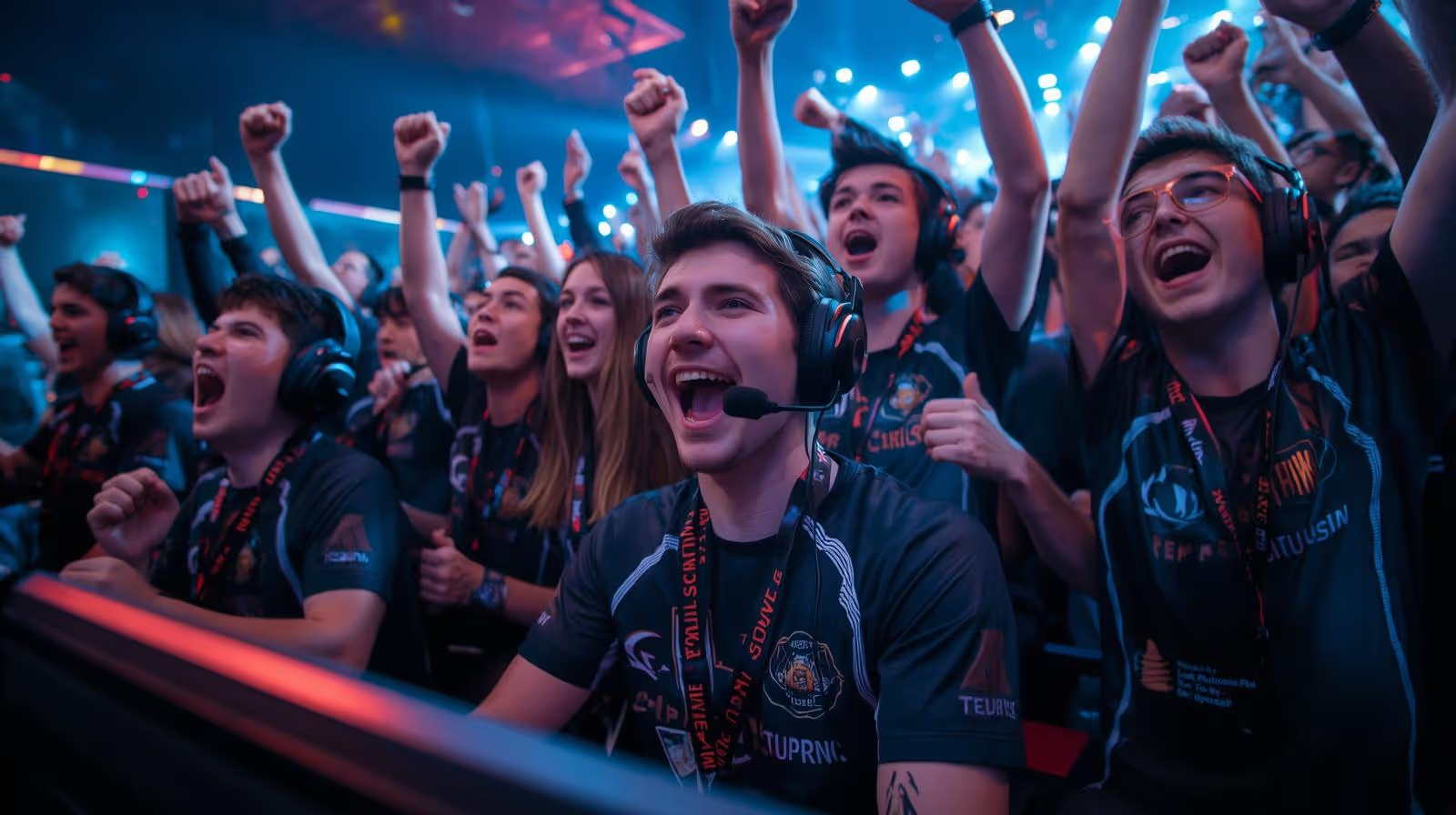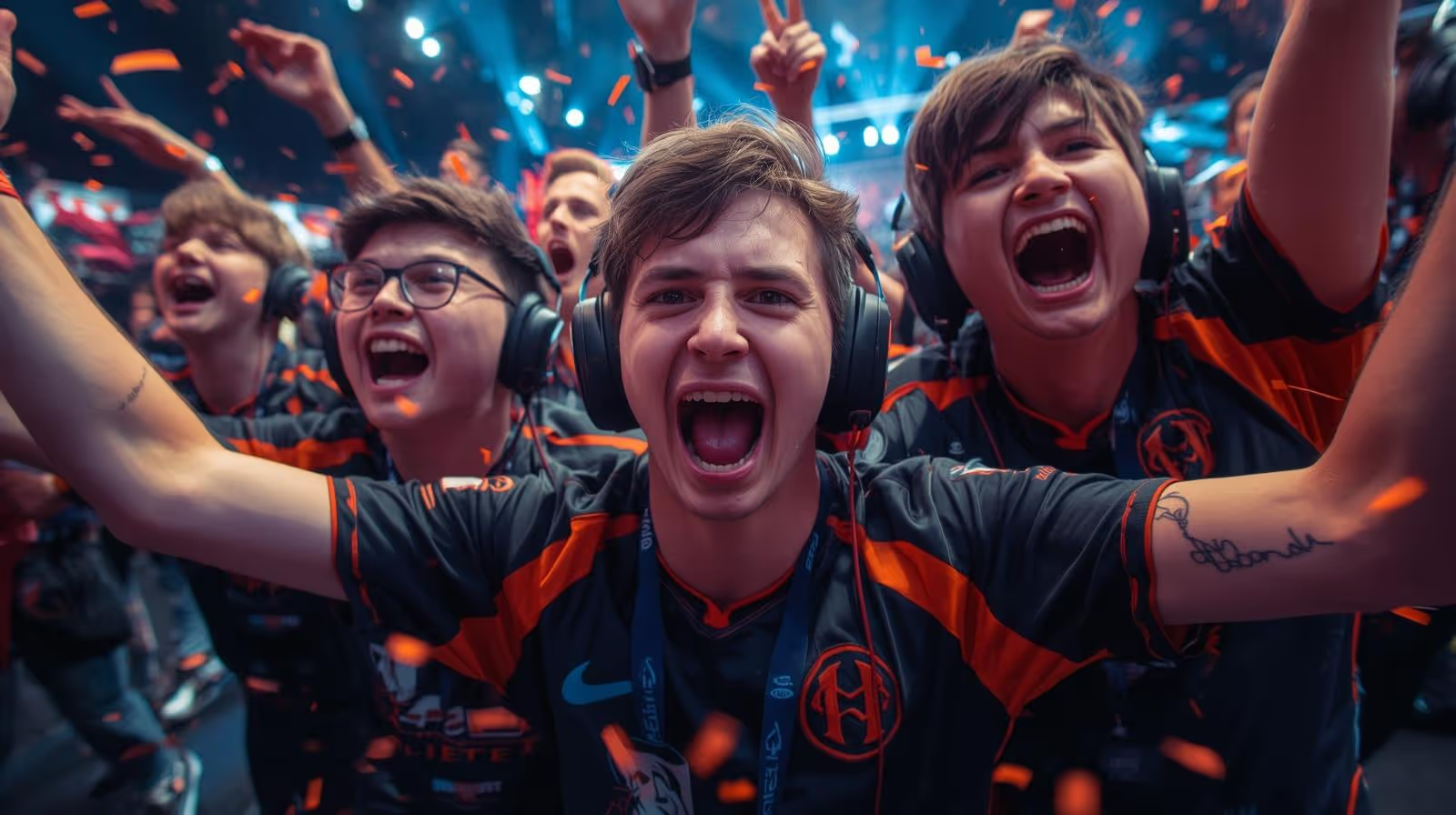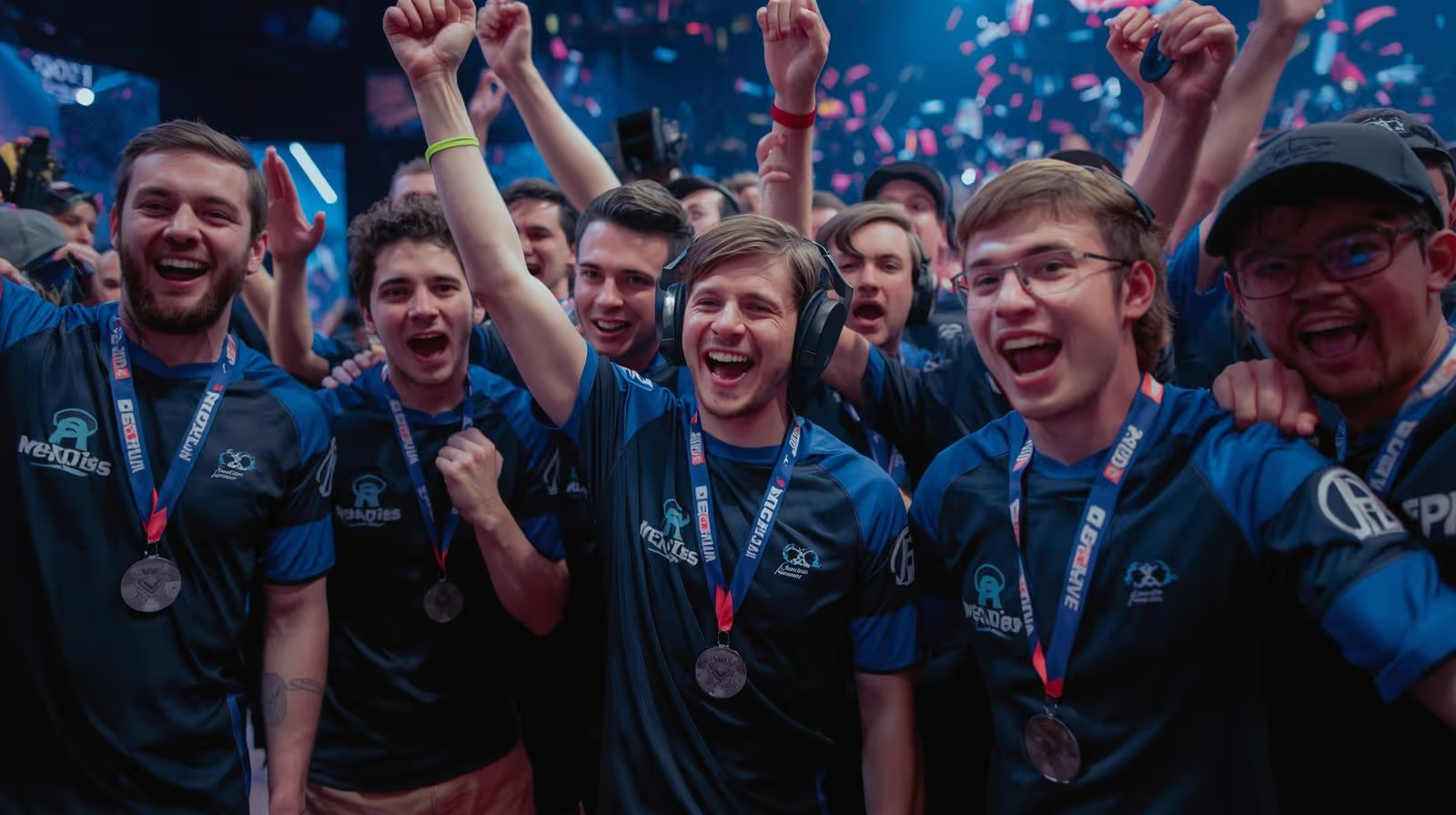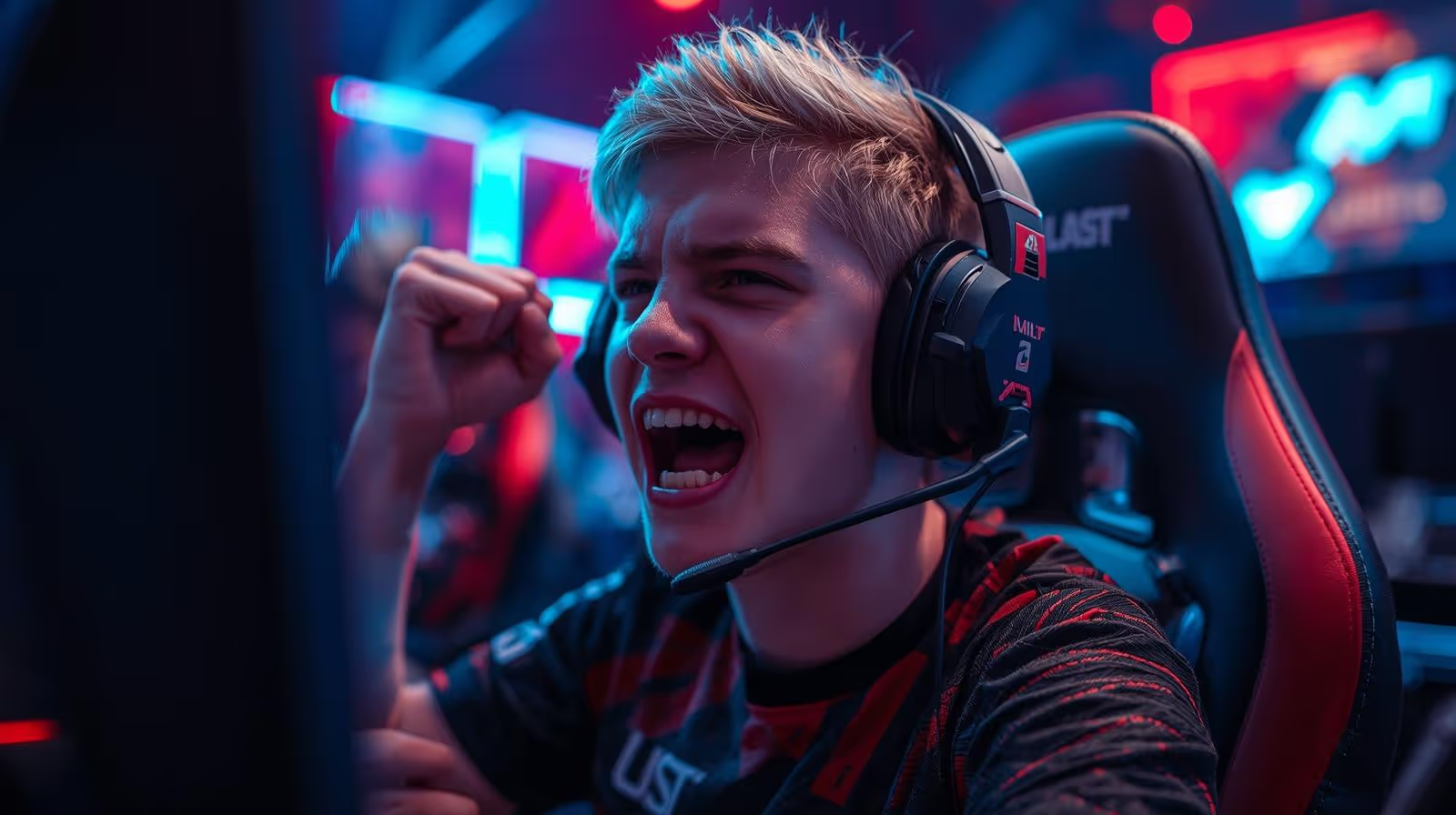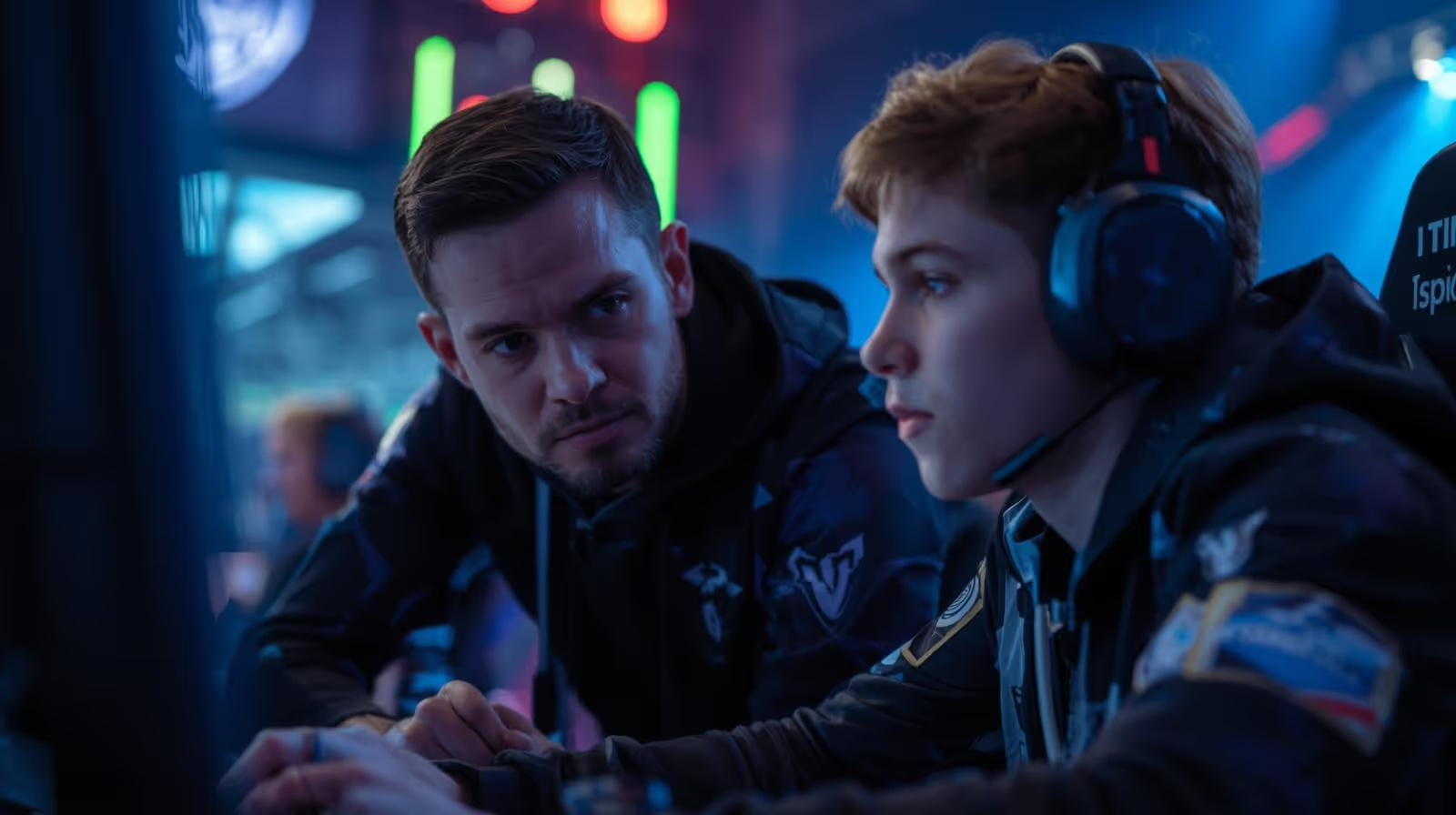

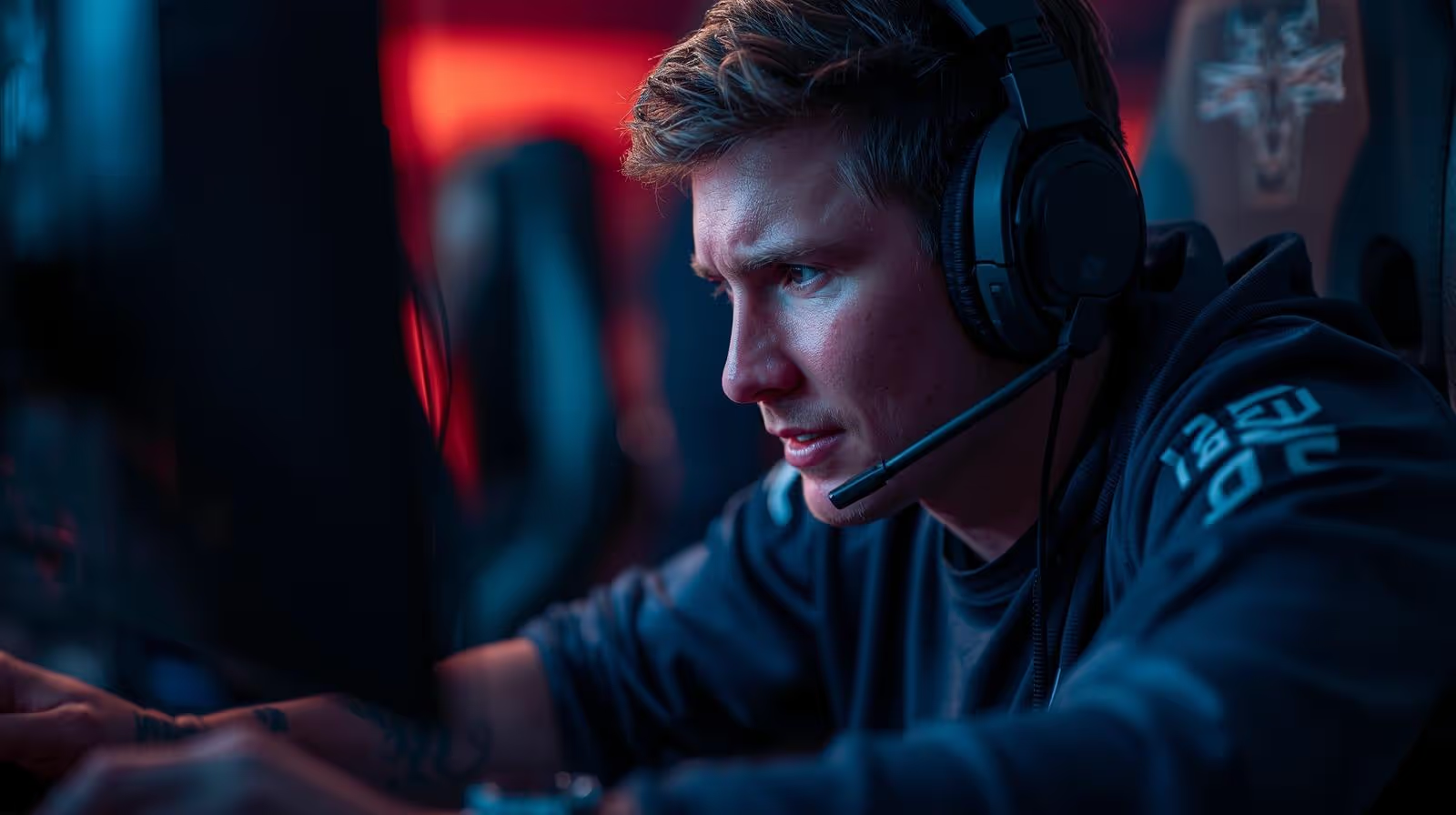

The arena lights feel too bright tonight. Cameras glide past the stage, the crowd roars, but one pro knows this might be the last time he walks to that desk, puts on that headset, and locks in a champion for the man who believed in him first.
This is not a story about prize pools or brand deals. It is about a player who chooses to make his last match a gift to his dying coach, not a step to his next contract.
Stories like this sit close to real events in modern esports. Fans saw tributes after the death of coaches like Kim "Crush" Jun-seo, and many heard players talk about the people who guided them off camera. This piece draws on that kind of truth, mixed with storytelling, to show why one final match can feel like a public goodbye letter.
Why does a last match for a dying coach hit so hard for players, fans, and staff? And what can everyone in esports learn from it about loyalty, gratitude, and how we treat the people behind the screen?
Let us walk into that arena together and find out.
Why A Last Match For A Dying Coach Hits So Hard In Esports
When a football or basketball coach retires, the moment is big, but familiar. There are speeches, flowers, and sometimes a farewell game. In esports, a last match for a dying coach feels different.
Most pros grow up online. They climb from solo queue to amateur teams, then academy, then the main stage. Through that whole climb, many have one constant presence, a coach who saw them first as a teenager grinding ranked until sunrise.
An esports coach is rarely just a whiteboard and draft notes. A good coach is:
- Part mentor who talks you through your worst loss
- Part analyst who stays awake to fix your mid-jungle pathing
- Part older sibling who reminds you to eat and sleep
So when that coach gets sick, the stage changes. The match is no longer just about standings or playoff seeding. It becomes a way to speak in the only language this player and coach really share: picks, bans, and plays.
A last match in esports is also incredibly public. The goodbye happens:
- On stream, in real time
- With chat, clips, and replays that live online forever
- With casters, content, and social media building the moment
That public nature turns the game into a shared letter. The player is not just saying, "Thank you, coach." He is showing millions of people, "This is who made me."
The Hidden Bond Between Esports Pros And Their Coaches
From the outside, a coach might look like the quiet person behind the players in the team photo. Inside the team, that person often holds everything together.
Daily life with a coach can look like this:
Morning scrims. The coach sets up best-of series, tracks drafts, calls timeouts, and keeps the room from tilting after a bad fight.
VOD reviews. After practice, everyone files into a dark room with a big screen. The coach pauses clips, asks, "What did you see here?" and waits in the silence until someone gives a real answer.
Solo queue checks. Late at night, the coach scrolls match history on a second monitor. He sees the top laner spamming a risky pick and messages, "Save that one for scrims first."
Then there are details that never show up on broadcast. A coach:
- Stays up an extra hour to rewatch a losing draft and find one positive play
- Calls a player after a bad series and just listens to the silence on the phone
- Brings coffee to a player who has not slept well in days
These small actions build trust. Over months and years, they turn into rituals. A certain fist bump before walking on stage. A simple “play our game” in the headset before champ select. A reminder to breathe and laugh before the cameras turn on.
That quiet bond is why a player can look at that coach and think, "If this is our last match together, I know what I need to do."
Pressure, Burnout, And Why One Person In Your Corner Matters
Most fans see only the stage, the bright lights, and the perfect plays on highlight reels. They do not see the fear of being replaced after one bad split.
Pros deal with:
- Scrim blocks that run long into the night
- Public hate every time the team loses
- Constant talk about contracts, benching, and trades
Sleep breaks. Hands ache. Players question if they still love the game. Burnout in top leagues is not a buzzword; it looks like a young player staring at his screen, feeling nothing after a win.
In that space, one stable voice can change everything. A strong coach reminds a player:
"You are more than your KDA.""One bad series does not erase a season.""You are still the kid who loved this game before contracts."
So when that coach becomes the one who is sick, the roles feel reversed. The player wants to be the strong one now. He cannot fix the illness. He cannot extend time. But he can choose how he uses the games they have left.
Playing a last match for that coach becomes a way to say, "You stayed for me when things were hard. I will stay for you now."
Inside The Story: The Pro, His Coach, And The Last Match
To see all this in motion, picture one team, one coach, and one pro who knows this is his last series with the person who shaped his career.
No dates, no region tags, just a team house, a stage, and a voice in his headset.
From Rookie To Star: How Their Journey Together Started
The first time they met, the player was a nervous teenager at an academy tryout. His hands shook on the mouse. He knew people spammed his solo queue name, but this was different. If he failed here, clips would not save him.
The coach watched from behind. He did not stare at the scoreboard. He watched body language. Did the kid panic after a bad gank? Did he type blame in chat? Did he recover after a lost lane?
After the scrim, the coach pulled him aside.
"You are raw," he said. "But you see plays other people do not. If you are ready to learn how to be a teammate, not just a solo queue star, I will fight for you."
That promise turned into a contract. Then into nights at the team house, grinding scrims on old PCs. The coach walked him through his first stage match, his first good interview, his first clogged social feed after a huge upset win.
When fame grew, the coach kept him grounded.
"Do not read every comment.""Say thank you to staff who clean the room.""Remember the game is still 5v5, not you versus the world."
Over time, they built a shared history of goofy inside jokes, crushing game fives, and teams that rose and fell. The player turned from rookie to star, but to the coach, he was still the kid from that first tryout room.
The Diagnosis That Changed Everything For The Team
The news did not land with drama. It came in a short team meeting.
The coach stood in front of the whiteboard, marker in hand, as if it was just another VOD talk. His voice shook a little when he said he had to go to the hospital more often, that doctors had found something serious.
No one knew what to say. Chairs creaked. Someone stared hard at the floor. Another player twisted a bottle cap until it cracked.
The coach tried to keep it normal.
"We will keep practicing," he said. "I will be remote some days. Staff will help. Focus on the next match."
But practice did not feel the same. Every late-night talk, every joke about bad drafts, now carried a quiet question in the background. How many more of these will we get?
Scrims stretched on, yet players glanced toward the empty chair when the coach missed a block. When he came in tired, they pretended not to notice. The team room felt heavier, even on good days.
The pro, now a star, started to realize that time was not an endless queue. This season might be their last real run together.
Choosing To Play One Last Match For Him
On top of all this, the pro was already close to the edge. Years of high-pressure seasons, wrist pain, and constant criticism had taken their toll. There were whispers about his retirement, or a move to co-streaming, or a break from competition.
The org gave him a choice. He could sit out for health, rest his hands, and plan his future. No one would blame him.
The coach, even while sick, told him, "Think about your life first. There is more than just this split."
That made the decision harder, not easier. It is easy to play for results. It is harder to choose to play for a person.
Alone in his room, the pro asked himself quiet questions.
If I walk away now, will I regret not playing one last series with him?If this is our last stage together, what kind of player do I want him to see?
By the end of that night, he knew. Contract talks could wait. Hands could rest later. This series would be for the coach.
Not for the org. Not for the fans. For the man who had first said, "I will fight for you."
On Stage: How A Regular Best-of-Series Became A Goodbye
From the outside, the match looked like any other best-of. The crowd roared. Casters hyped storylines. Social media spammed predictions.
For the pro, every tiny detail felt loaded. His wristband, with the coach's initials drawn inside. The warmup song they always used during their first split together. The short walk past the empty chair behind the stage where the coach once stood.
Champ select began. The team argued over draft. The pro took a deep breath and locked in his comfort pick, the champion the coach had taught him back in academy days.
"You still trust that one?" the assistant coach asked.
"Yeah," the pro said. "He taught me this. I am playing it."
In game, one play stood out. A risky dive they had drilled countless times in scrims. In voice comms, the pro called it like he had in those early days.
"Trust me, go now."
They went. The kill came through by a pixel. The crowd exploded. The camera cut to the coach backstage, watching from a screen, eyes shining with a mix of pride and pain.
At one point a pause stopped the game. Production showed the player at his desk, fingers on the keys, lips moving around words the mic did not catch. He was whispering, "This one is for you."
Whether they won or lost that day mattered less than the way he played. Every roam, every skillshot, every last-hit turned into a sentence in that goodbye letter.
After The Final GG: What He Said And What He Regrets
When the final Nexus fell, the sound hit like a wave. Some fans cheered. Some were silent. The pro took off his headset and looked for the coach out of habit, then remembered the coach was backstage on a couch.
Interviews came fast. Reporters wanted to talk about draft, matchups, and meta. The player brushed past most of it.
"I want to talk about our coach," he said into the mic. "He gave me a chance when I was just a solo queue kid. Everything I did on stage started with what he taught me."
Online, clips spread. People shared translations. Former teammates posted stories about late-night talks with the same coach.
But regret also sat in the player's chest. In quiet moments he thought:
I should have listened more when he tried to help my mindset.I should have visited the hospital sooner, not waited for a free day.I should have told him earlier how much his words kept me going.
After media, he slipped backstage. On the chair where the coach used to sit on stage, he left a folded note.
"Thank you for fighting for me," it said. "Tonight I tried to play like the player you saw in me. I hope it was enough."
Then he walked out of the arena knowing that part of his story had reached its last page.
What This Story Teaches Esports Players, Fans, And Coaches
Stories like this are not just sad highlights. They are a mirror for everyone who grinds this scene every day.
Short careers, public pressure, and fast roster changes make it easy to forget the human side. Too many people think only about rank, salary, and brand.
This kind of last match reminds us to look at something else: how we treat the people who guide us while we still have time.
Why Gratitude Matters More Than Your KDA Or Rank
Stats fade. Record books change. Patches shift the meta until old numbers barely matter.
What sticks in your head years later is who sat with you after a loss, who believed in you when your numbers looked bad, and who told you that your value was not tied to a scoreboard.
Gratitude does not need a big stage. Simple things count:
- Send a short message to your coach after practice and say, "Thanks for today."
- Back your coach on social media when chat flames draft decisions.
- Give credit to staff in interviews or tweets, not just to your own grind.
You do not lose anything by saying thank you. You gain a history you can be proud of when your own last match comes.
How Teams Can Support Sick Or Struggling Staff With Respect
Serious illness and mental strain hit staff as much as players. Coaches are not robots with spreadsheets. They are people with families, health issues, and fears.
Teams can show respect in small but real ways:
- Offer flexible schedules so a coach can rest or go to the hospital
- Use remote VOD sessions when travel is too hard
- Be clear about plans if someone needs to step away, so they do not feel guilty
Most of all, keep private things private unless the person wants to share. A coach should not have to trade their own comfort to keep fans in the loop.
When staff feel safe, players feel safer too. The whole structure becomes a little more human.
Turning Pain Into Purpose In Your Own Esports Journey
Not every story gets a perfect goodbye match. Some coaches leave without notice. Some players get cut mid-season without a final series. That hurts.
You cannot fix the past, but you can decide what you carry forward.
You can:
- Keep one habit your mentor drilled into you, like careful review or clear comms
- Treat your next rookie the way someone once treated you
- Use your pain as fuel to be kinder in scrims, less toxic in ranked, and more patient in team talks
When you do that, you are still playing for them, even if they are not on the headset anymore.
Keeping The Story Alive: Honoring Coaches In Esports Today
If esports wants to grow in a healthy way, it has to remember the people who build players, not just the players who win trophies.
Coaches rarely trend. Their faces are not on most thumbnails. Yet almost every star can point to a mentor who shaped their path.
Keeping stories like this alive helps fans see that the scene is more than shiny stages and spicy drafts. It is a chain of people who passed knowledge and care forward.
From Clip Highlights To Human Stories Behind The Screen
Fans love highlight clips. Perfect mechanics, outplays, and pentakills farm views. That is fine, but behind every clip there is a teacher.
Content creators, teams, and casters can bring that side forward by:
- Doing short segments before matches about a key coach or analyst
- Asking players on stream, "Who taught you that macro idea or that lane trick?"
- Sharing one short story about staff when breaking down big plays
If you are a fan, you can do this too. Look up your favorite team's staff list. Learn one thing about the head coach or analyst. When you watch a game, ask yourself, "Who helped build this style?"
It changes how you see every fight.
Simple Ways To Say "Thank You" To The People Who Guide You
Many young players feel shy about showing respect. They think it will sound cringe or forced. It does not have to.
You can:
- Send a private message to a coach or older teammate who taught you something important
- Mention your coach when you tweet about hitting a new rank
- Stand up for staff when others blame them for every loss
If you run a small stack or amateur team, you can copy good habits from pros. Do a short end-of-split call where everyone thanks at least one person. It feels small but sticks in your memory.
Gratitude does not make you soft. It makes you someone people want to fight beside when the match really matters.
Conclusion
Picture that player one last time, walking off stage after his final match, knowing he played for his dying coach, not for the standings.
Behind every pro you cheer for, there is someone who watched their early replays, calmed them after brutal losses, and said, "You can do this," when no one else believed. That quiet presence shapes careers more than any single patch or meta shift.
Trophies fade. Contracts end. The thing that lasts is how you treated the people who guided you and who you chose to play for when it really counted.
So ask yourself today, long before your own last match ever comes: who would you play your final game for, and what can you do for that person, that coach, that friend, right now?