
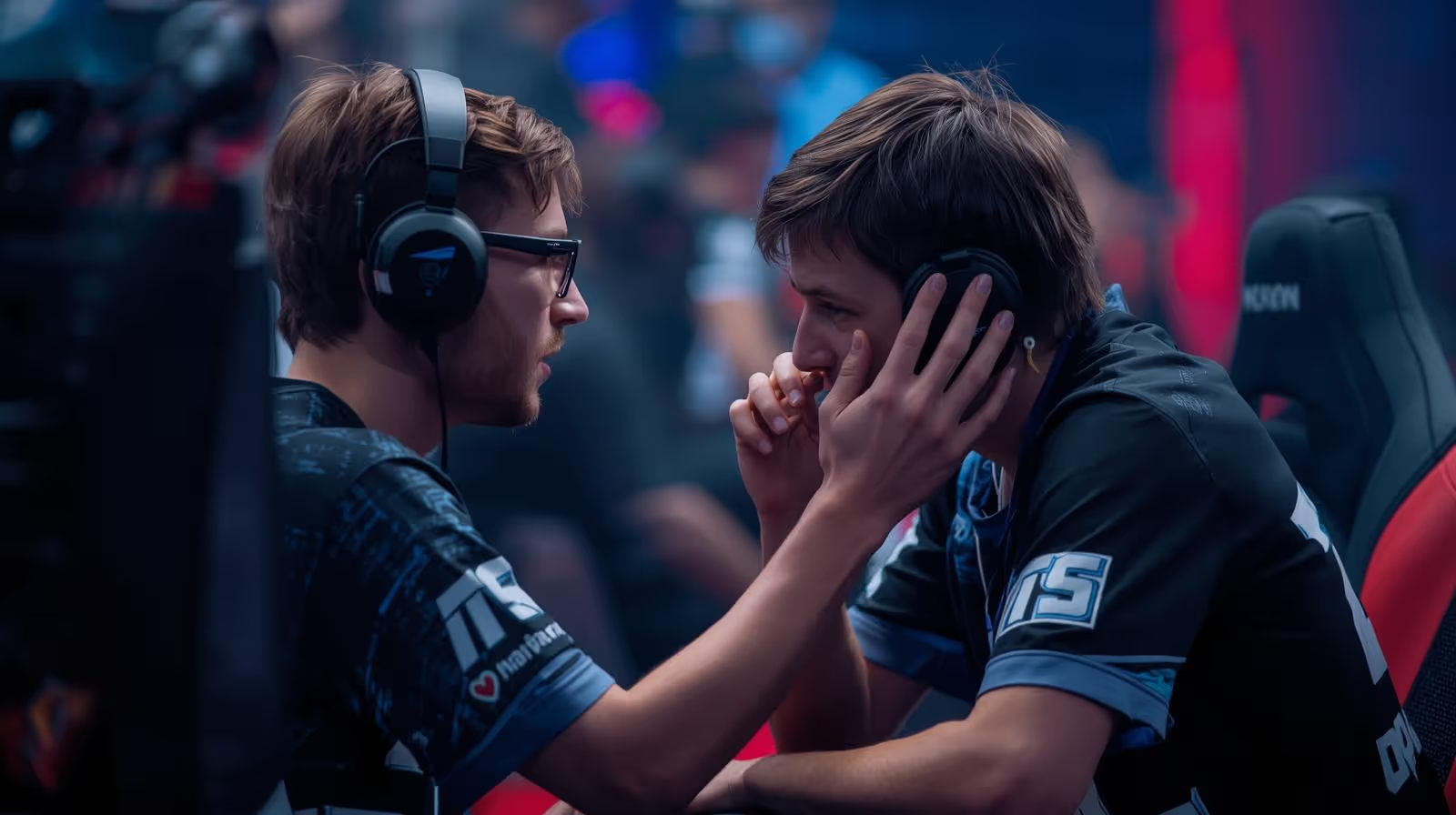

The arena was loud, the HUD was a blur, and the round timer felt like it was sprinting. On the player cam, you could see it in his eyes: one bad moment and he might be out of the scene for good.
Then it happened, a sudden stop, the kind that makes a crowd groan and a chat explode. A pause.
In esports, a fair-play pause is a ref-approved stop (or a mutually agreed stop in smaller events) used to fix a real problem so the match stays fair. It’s not a breather to calm nerves, and it’s not a sneaky timeout. It’s a line in the sand that says, “We win or lose the right way.”
And sometimes, that choice changes everything, a reputation, a roster spot, and a career that was one round away from fading out.
The Split-Second Pause That Changed Everything
It was either an online qualifier with everything on the line or a LAN group stage where one loss could mean an early flight home. The details don’t matter as much as the pressure did.
The player at the center of it all was on a thin rope. He had been benched before. He’d bounced through short trials. A few people in the scene whispered that he was “hard to work with,” the kind of label that sticks even when it’s not fully true. Now he had one more chance, a stand-in spot, a trial week, a “let’s see how you fit.”
The match itself was tight, a chess game played at sprint speed. Both teams traded rounds. Utility was perfect. Mid-round calls were sharp. Then, in the middle of a crucial fight, something went wrong that had nothing to do with aim.
A sound cue cut out. A mouse stutter hit at the worst time. A key press didn’t register. Maybe it was packet loss that turned a clean peek into a teleport. It was the kind of tech problem that looks like a mistake on the scoreboard, but feels like your hands got swapped with someone else’s.
Here’s the part that matters: the issue didn’t just hurt him. It twisted the whole round into something neither team signed up for.
What went wrong mid-fight, and why a pause was the only fair call
Picture a late-round retake. The player swings off a teammate’s flash, but his audio drops for half a second. He doesn’t hear the step that would’ve warned him. He turns the wrong way, gets deleted, and the round collapses.
Or picture a duel where his crosshair is perfect, but his input hiccups. The shot comes out late. In a pro lobby, late is the same as never.
If you were about to lose your spot, would you still call for a ref check, even knowing people might accuse you of making excuses.
Playing on would punish the wrong people. His team would eat a round they didn’t truly lose. The other team would get a win that might get protested later, turning a great map into paperwork and arguing. Worst of all, the match would feel dirty, and everyone in the server would remember it.
So the pause wasn’t about comfort. It was about reality. The game state had stopped being reliable, and competitive esports can’t run on vibes.
The choice that mattered, speaking up instead of staying silent
A lot of players freeze in that moment. Some “tough it out” and hope the issue goes away. Some stay quiet and bring it up only after they lose, which sounds like salt even when it’s true. Others do the thing everyone hates: rage pausing at a convenient time, or claiming a tech issue right before a big push.
This player did the simplest, hardest thing. He spoke up immediately, clearly, and calmly.
He flagged it to the official, described the problem in plain terms, and asked for a check. He didn’t blame the opponent. He didn’t blame the server as a cover for nerves. He didn’t try to squeeze extra seconds to talk strats.
He treated the pause like a safety brake, not a weapon.
That’s what made the room shift. Not because the pause was dramatic, but because it was clean. In esports, integrity under stress shows faster than any highlight clip.
How Fair-Play Pauses Work in Esports (and Why They Exist)
Most top esports have a version of the same idea: if something outside the players’ control breaks, the match can be paused to protect competitive integrity. It’s common in FPS titles, and it shows up in slightly different forms across leagues.
The key point is simple: an authorized pause is controlled by refs or admins. Unauthorized pauses are risky, and sometimes punishable, because they can be abused.
In major circuits, technical pauses are usually tied to hardware or software issues, crashes, disconnects, audio failures, or other verified problems. Refs decide what counts, how long the pause lasts, and what happens next. In many events, teams are expected to report issues right away, not two rounds later when momentum flips.
Fair play is the reason these rules exist. Without them, teams would win rounds because someone’s headset died, or lose because a PC froze mid-spray. Fans want competition, not malfunctions.
Authorized pause vs. abuse, what admins watch for
In plain language, an authorized pause is one that the admin approves (or initiates) after a real issue is reported promptly, with a clear reason that can be checked.
What makes a pause look suspicious is usually timing and pattern.
A few red flags admins tend to notice:
- The pause hits right before a big execute or right after an opponent wins a key round.
- The same player “has issues” again and again, especially in clutch moments.
- The team uses the downtime like a free coaching session when rules forbid it.
- The explanation keeps changing, or nobody can show any sign the issue exists.
Leagues handle penalties differently, but the range is familiar across esports: warnings, loss of pause privileges, round or map penalties, and in extreme cases, match forfeits or disqualification. The harsher the abuse looks, the faster refs act, because delay tactics can ruin an entire broadcast.
What happens during the pause, checks, comms rules, and the restart
A well-run pause is boring on purpose. It should feel like a pit stop, not a stage show.
Most pause flows look like this:
1) The issue gets stated fast. The player calls it out and the admin acknowledges it.
2) The admin checks basics. Is it a disconnect, a peripheral issue, an audio bug, a crash, packet loss, or something else.
3) Simple fixes happen first. Replug the device, restart the client, rejoin the server, confirm settings, and verify the player is stable.
4) Comms and behavior are controlled. Some events allow team voice to stay on, others limit it, and many have strict rules around coaching or strategy talk during technical pauses. Even when it’s allowed, shouting and blame never helps, and refs remember who stays professional.
5) The match resumes or gets adjusted. Usually play continues from the current state. In rare cases, admins may roll back a round or restart a round if a confirmed bug clearly changed the outcome. Full map restarts are uncommon and typically reserved for serious fairness problems.
For newer fans, it helps to think of a fair-play pause like stopping a boxing match to fix a glove strap. It’s not soft. It’s how you prevent a fake win.
Why That One Pause “Saved” the Career, Trust, Reputation, and Opportunity
The pause didn’t save the player because it erased a mistake. It saved him because it showed who he was when nobody would’ve blamed him for taking the selfish route.
Esports careers are fragile. Contracts can be short. Roles shift overnight. A single tryout block can decide whether you’re in scrims next month or back in ranked grinding in silence.
Teams don’t just sign skill. They sign reliability.
Calling a fair-play pause the right way does three things at once:
- It protects the match from protests and drama.
- It shows respect to opponents, which spreads fast in tight scenes.
- It tells staff you won’t panic when pressure spikes.
Reputation is currency, why integrity gets you tryouts and second chances
In esports, reputation moves like a currency. One coach tells another coach, and suddenly you’re “good in comms” or “a headache,” even if the sample size is tiny.
That’s why this moment mattered. The player didn’t just ask for help. He proved he could be trusted with the brand and the room.
What “good” looks like is not complicated:
- Honest reporting the second something breaks.
- Owning mistakes without mixing them with excuses.
- Calm comms that keep teammates steady.
- Respect for opponents, even when a round slips away.
When an org is choosing between two aim gods, who do they trust in chaos, the one who stays clean under pressure usually wins the argument.
And coaches notice something else during pauses: whether a player tries to sneak strategy talk if the rules say no. That’s the kind of small choice that tells a big story.
The ripple effect, better team culture, fewer disputes, stronger mental game
One fair decision can change the temperature of a whole match. Instead of both teams spiraling into accusations, the server settles. Instead of a post-game protest, the result stands. Instead of teammates tilting at bad luck, they reset and play.
That calm has a mental payoff. A clean conscience is lighter to carry than a shady win or a bitter loss. Players who handle pauses well often tilt less, because they feel in control of what they can control: communication and behavior.
It also shapes team culture. If a leader models fairness, younger players follow it. If a veteran shows respect in conflict, scrims get smoother. Over time, fewer fights means more focus, and more focus means better results.
The best part is that these habits aren’t locked behind pro status. Any team can copy them, even in small tournaments or ranked leagues.
Steal This Playbook, How Players and Teams Should Handle a Fair-Play Pause
This isn’t about being “nice.” It’s about protecting your time, your name, and your shot at the next opportunity. If you want a career in esports, treat pauses like part of the job.
Before the match, set rules, test gear, and agree on pause etiquette
A fair-play pause starts before the first pistol round.
Do the boring checks that prevent panic later. Test audio, mic levels, and push-to-talk. Confirm refresh rate and monitor settings. Make sure your mouse cable and USB port aren’t loose. If you’re on an online server, stabilize your network as much as you can, and close anything that spikes bandwidth.
Also, agree on etiquette as a team. Pick one calm spokesperson who talks to admins. Decide what you’ll say if something breaks. Know the tournament’s pause process so you don’t waste time figuring it out while the clock is ticking.
Preparation also protects you socially. When you look organized, other teams are less likely to assume you’re stalling.
During the pause, communicate clearly, document quickly, and stay respectful
When the issue hits, speed and clarity matter.
A simple script helps, even if you adjust it to your game:
State the problem: “Audio cut out mid-round, I lost critical cues.”
Request the proper help: “Requesting an admin check and tech pause.”
Confirm status: “I’m ready to resume when you approve.”
If the event allows it, gather quick proof. A screenshot of an error, a short clip, a network graph, or a log can save time and arguments. Don’t turn it into a courtroom, just collect enough to support what you’re saying.
Keep comms clean. No sarcasm, no blame, no baiting the other team. Respectful behavior during disputes is often remembered longer than the win, and it’s remembered by exactly the people who decide tryouts.
After the pause, reset fast. Summarize the next play in one sentence, then focus on the round. Don’t let the interruption become a story you keep retelling mid-map.
Conclusion
That fair-play pause mattered because it was honest, immediate, and respectful, not because it was convenient. In esports, fair play isn’t soft, it’s smart career protection, because it keeps matches clean and it keeps your name clean.
The next time something breaks mid-map, you’ll feel that same pull to stay quiet and hope nobody notices. Choose the pause, choose the ref, choose the straight story, and you might find that the moment you thought would ruin you becomes the one that keeps you in the scene.