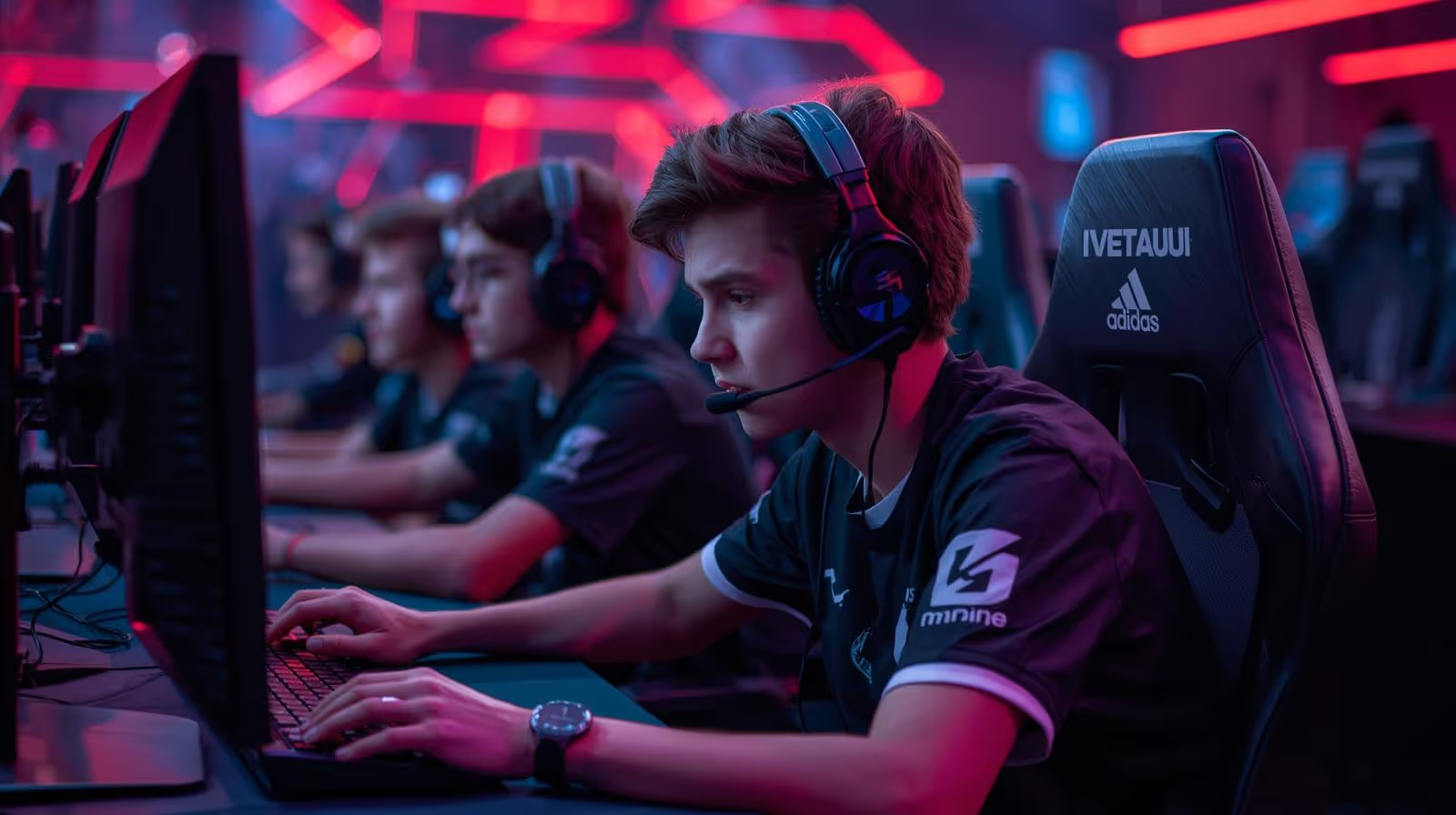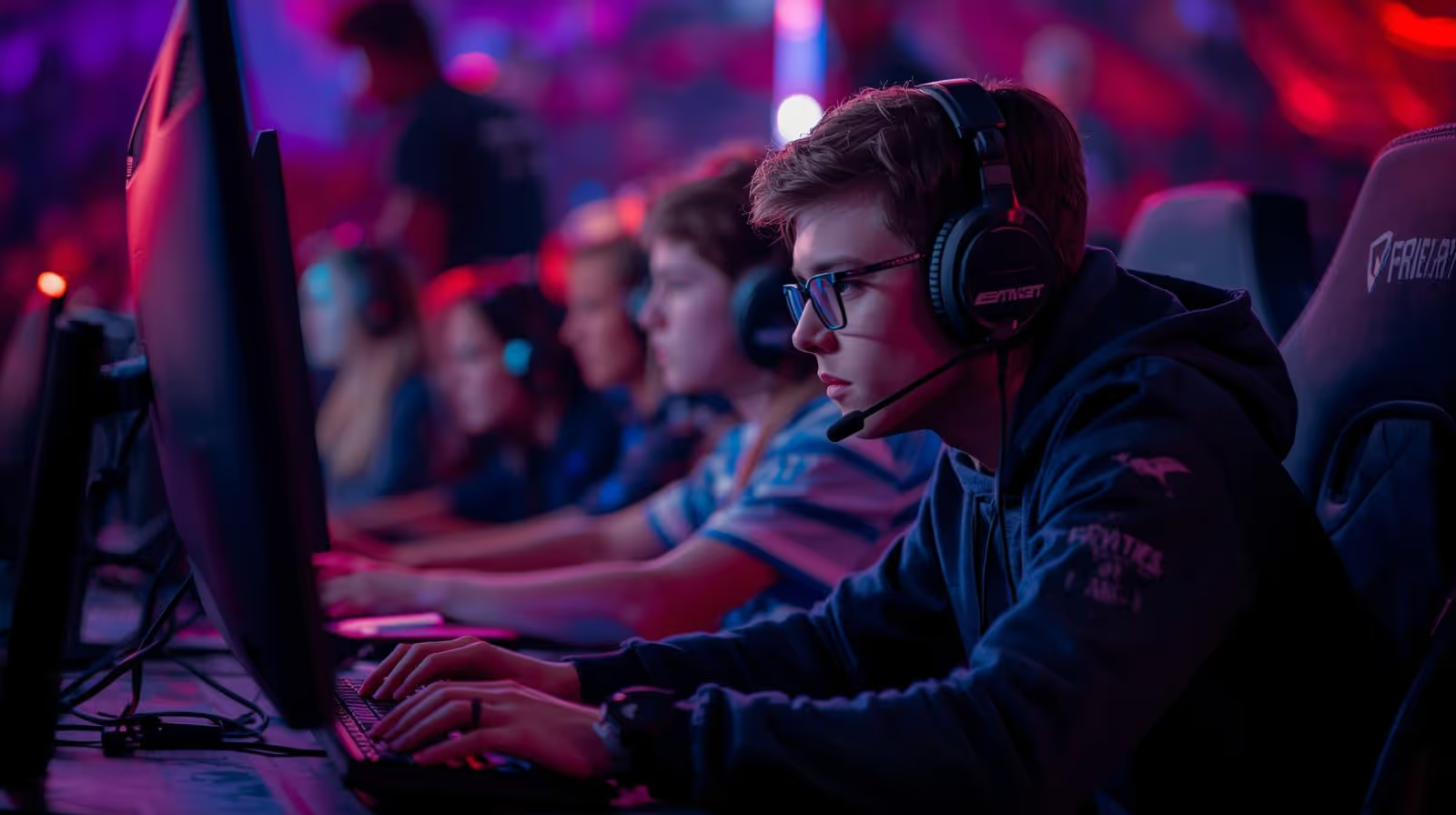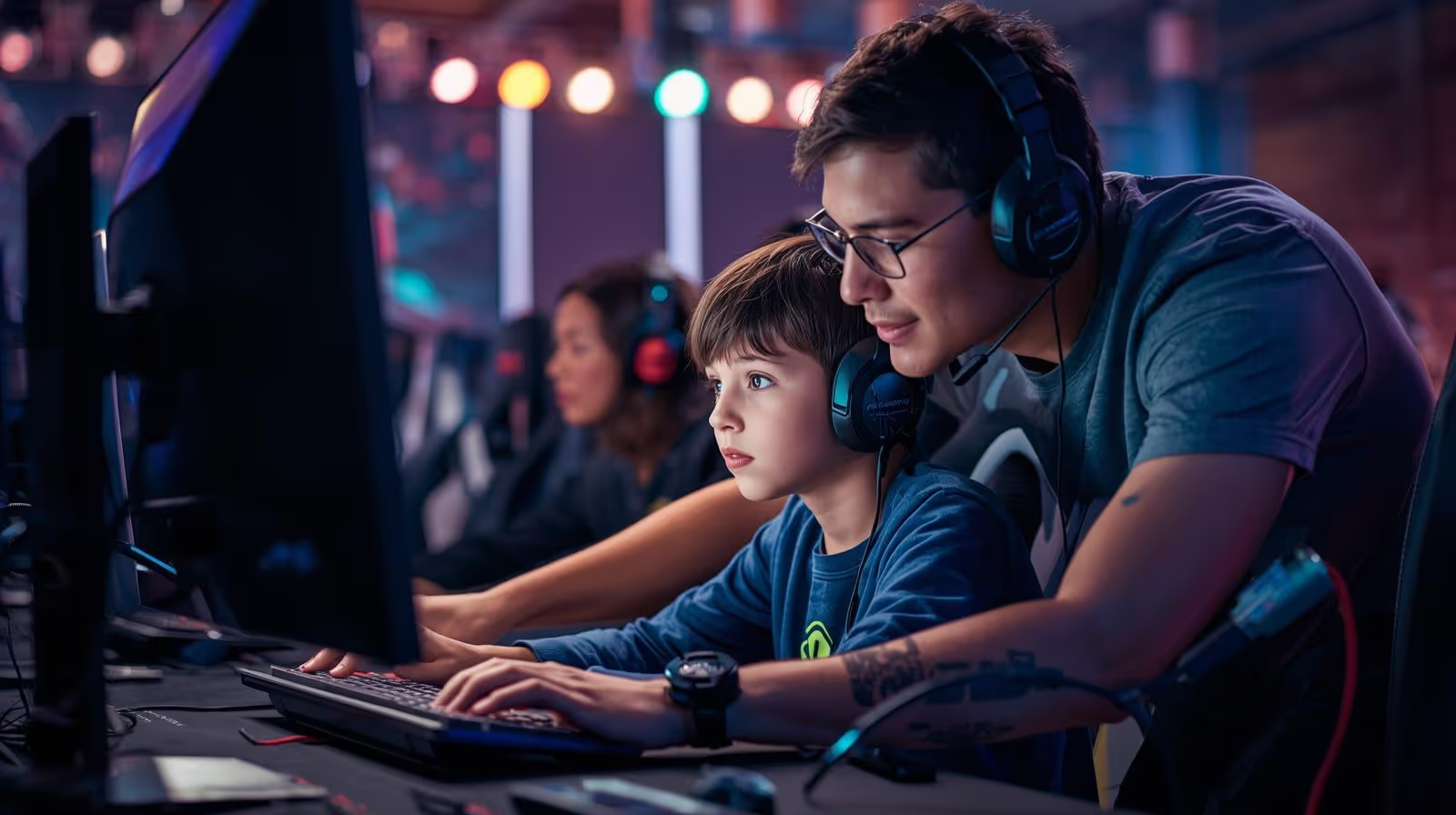

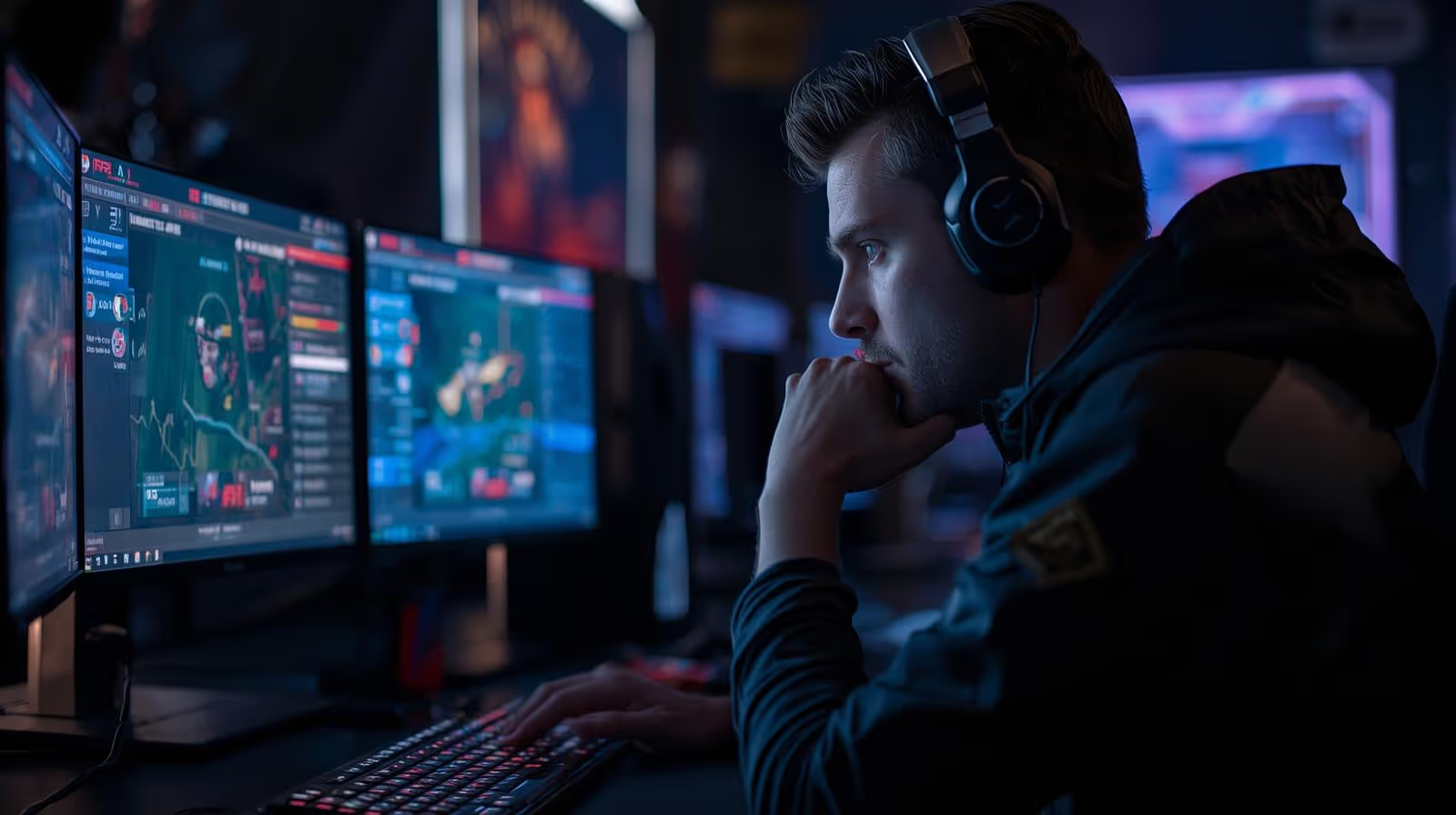

Scrims end, headsets come off, and the Discord call goes quiet. Players crash because tomorrow starts early, and the grind doesn’t pause just because the room got dark. That’s the part fans see. The part they don’t see is the coach, still at the desk, still working.
In esports, the best coaching is often invisible. It’s the VOD timestamps that make review painless, the scout notes that stop a “surprise” pick, and the practice plan that fixes one problem without frying the team’s brains. If the team is asleep, what is the coach even doing, and why does it change results so much.
This is what happens off-hours in games like Valorant, CS2, League of Legends, and Overwatch 2: review, scouting, planning, player support, and the admin work that keeps practice from turning into chaos.
After-hours VOD review: finding the tiny mistakes that decide maps
VOD review is watching match footage with intent. Not to relive highlights, but to turn messy rounds into clear lessons. Doing it after-hours matters because it’s quiet. No one is arguing mid-clip, no one is queueing ranked on a second monitor, and the coach can pause, rewind, and label moments without pressure.
A good esports coach isn’t watching for “who popped off.” They’re watching for why a round felt easy, or why it fell apart in five seconds. A Valorant post-plant where nobody is holding the swing, a CS2 mid-round where the second player doesn’t trade, a LoL reset that comes 20 seconds late, an Overwatch 2 fight where ults stack for no reason, these are small choices with big costs.
The goal is simple: wake the team up with a plan that feels fair and doable. Not an hour of scolding, not a ten-point rant. Just truth, organized.
What a coach is actually looking for in VODs (patterns, not just highlights)
Good coaches sort chaos into themes. One weird misplay can be a fluke, but the third time it happens, it’s training.
Common buckets most esports coaches track look like this:
- Positioning and spacing: Are players close enough to trade, but not stacked for free multi-kills. In CS2 that can mean distance on a split take, in Overwatch 2 it can mean supports playing one corner too far back.
- Timing: Does the hit come when the lurk is ready, or does the team “go” just because someone got bored. In Valorant, a two-second gap between flash and swing can decide everything.
- Utility usage: Smokes that fade before the exec, mollys that miss common spots, stuns that land after the target already moved. Coaches look for utility that creates space, not utility that looks busy.
- Comms gaps: Not volume, clarity. Who called the plan, who confirmed it, who stayed silent when the round needed one sentence.
- Economy and resource decisions: In CS2, buying when you should save, in Valorant, forcing with bad ult economy, in LoL, trading plates for a dragon setup that was never realistic.
- Objective setups: How early the team moves, who sets vision, who anchors, who zones. Most “bad fights” start as “late setups.”
- Repeat mistakes under stress: The same bad peek when tilted, the same rushed engage when down a map, the same tunnel vision when ahead.
Coaches usually tag moments with short labels, then group them into a few themes for the next day. That’s how feedback stays focused. Players don’t feel singled out for every mistake, because the coach can show it’s a team pattern, not a personal attack.
How good coaches turn film into simple action items players will follow
Players don’t need more info, they need the right next step. A strong coach turns a full VOD into a handful of clips and one clear job for each player.
That often looks like:
- Short clips with timestamps, not full maps. A 40-second clip that shows the exact timing error teaches faster than a 30-minute rewatch.
- One focus per player, tied to their role. Your initiator hears about info timing and follow-up, your IGL hears about mid-round options, your entry hears about spacing and trade paths.
- Team-wide notes, kept small. Three team fixes beats twelve “nice to knows.”
- “Next rep” fixes, meaning what changes in the very next scrim. Not “be smarter,” but “if we lose A main control, we don’t re-peek, we regroup for a 20-second contact into late exec.”
Coaches also make it easy to comply. Shared folders, labeled clips, a short written summary, and a quick agenda for tomorrow’s review. When players wake up, the work is waiting, and it doesn’t feel like homework that will take all day.
Opponent scouting while the team sleeps: building a plan that feels like a cheat code
Scouting isn’t spying. It’s respect. It says, “This team is good, so we’re not walking in blind.”
While players sleep, coaches and analysts study habits, because habits decide matches. Teams repeat the same defaults, the same mid-round routes, the same comfort picks. Even creative squads have patterns, and a good esports coach is hunting for what shows up when pressure hits.
Scouting also protects confidence. When a team loses to a weird setup, it feels like magic. When a team is ready for it, it feels like the opponent is predictable.
Scouting checklist: map tendencies, drafts, pace, and repeat setups
A strong scouting pass is organized by questions the team will actually use. It’s less “everything they do” and more “what we must be ready for.”
Here’s what coaches commonly track, by game:
Valorant
- Defaults: where they take early space, and what utility they spend to do it.
- Retakes: do they re-hit fast, or do they save and play exits.
- Agent choices: what they pick on each map, and what they avoid.
- Set plays: the same stun timing, the same smoke one-way, the same late lurk.
CS2
- Utility patterns: where the first smoke lands, how many flashes they burn to take mid.
- Mid-round calls: do they regroup into a late hit, or do they split and trade space.
- Pistol habits: favorite stacks, common aggression, and who anchors alone.
- Trade discipline: do they follow spacing rules, or do they give isolated duels.
League of Legends
- Early pathing: where the jungler starts, and how often they cover lanes on first reset.
- Objective setup: timing for dragon and herald, and how they place vision.
- Draft priorities: comfort champs, flex picks, and which bans they respect.
- Side lane habits: who catches waves, who overextends, and when they swap lanes.
Overwatch 2
- Comp swaps: what they do when their first look fails.
- Ult cycles: how they stack ults, and whether they waste them in lost fights.
- Target focus: who they dive first, and what triggers their engage.
- Map-specific routes: common rotations and spawn fight habits.
The coach then turns all of that into a few lines the team can remember. Players can’t carry a ten-page report into a match, and they shouldn’t have to.
Turning scouting into a match-ready playbook (without overloading players)
A good playbook is light enough to use under stress. The coach picks the top tendencies that will decide the series, then builds counters that fit the team’s style.
That process often includes:
- Veto and map ideas: not just “ban their best map,” but “pick into what we’ve prepped,” with a clear reason.
- Draft or agent plan: what you want, what you’ll trade, and what you won’t allow.
- Pistol and early-round plans: simple, repeatable openings that settle nerves.
- Anti-strats: one or two targeted counters, like punishing a common lurk timing or holding a predictable retake route.
- Backup plans: what the team does when the first look fails, so panic doesn’t call the shots.
The best part is how it feels to players. They load into server and things look familiar. The opponent does the thing, and the team is already in position. That’s the “cheat code” feeling, and it comes from late-night homework done right.
Planning the next day: practice design, recovery, and keeping burnout away
Tactics matter, but energy is the fuel. A coach who plans well makes improvement feel lighter, even when the schedule is heavy.
After-hours planning usually means building the next day around learning speed. Too much scrimming with no focus becomes noise. Too much review becomes theory with no reps. The job is to balance both, while protecting recovery.
Sleep is part of training. When coaches treat it like optional, teams pay for it in slow comms, weak focus, and short tempers. When coaches protect it, players show up sharp, and the practice actually sticks.
Designing scrims that fix one problem at a time (instead of endless games)
A good scrim block has a purpose that fits in one sentence. If the goal can’t be said fast, it usually can’t be coached well.
Examples of clean scrim goals:
- “Cleaner mid-round calls when the first plan fails.”
- “Better objective setups, we arrive earlier and hold space.”
- “Trade tighter on entries, no solo peeks.”
Coaches often add simple rules for the block. Not to be strict, but to force the habit.
In Valorant or CS2, that might mean, “No hero re-peeks after first contact,” or “We only exec when both lurk and main are ready.” In LoL, it could be, “No coin-flip fights before dragon, we set vision first.” In Overwatch 2, it might be, “We track two ults minimum before hard engaging.”
Progress gets measured with plain metrics. Not fancy dashboards in the team meeting, just numbers that answer, “Did we improve today?”
- How many rounds had a clean trade attempt.
- How often the team hit the site with full utility.
- How many objective fights started with proper setup.
- How many fights were lost with multiple ults wasted.
When players can feel the point of practice, they stop drifting. They play with intent, and that’s when skill compounds.
Quiet culture work: trust, tilt control, and mental resilience between matches
The loud part of coaching is the timeout. The quiet part is what happens after a rough map, when everyone’s ego is tender and the group chat could go sideways.
Behind the scenes, good coaches:
- Write feedback in a calm tone, even when the day was ugly.
- Plan hard talks, so they don’t happen in the heat of tilt.
- Watch for stress signs, like sleep slips, short replies, and blame language.
- Set standards the team can repeat, like how to call mistakes without roasting someone.
Modern esports coaching is getting more data-aware and more mental skills focused, but the best version still sounds simple. It’s things like, “Own your death fast, then call the next plan,” or “We don’t argue about a lost round, we prep the next one.”
This work matters because teams don’t usually lose from lack of aim. They lose when trust breaks, and decision-making gets emotional.
The unglamorous work nobody sees: schedules, tools, and problem-solving at midnight
If players are the engine, operations are the oil. A good esports coach handles a lot of unsexy tasks so the team can show up and play.
It’s calendar work, message threads, server details, scrim confirmations, and fixing small issues before they become big distractions. When this work is done well, nobody notices. When it’s done poorly, everything feels harder than it should.
Admin and logistics that keep practice smooth (scrims, calendars, rules, notes)
A coach’s after-hours checklist often includes:
- Booking scrims and confirming start times, maps, and rules.
- Updating the team calendar with review blocks, individual chats, and rest windows.
- Organizing VOD links and notes, so nobody is hunting for “that one round.”
- Preparing tomorrow’s agenda, so meetings don’t drift.
- Coordinating with managers and support staff, so travel, media, and obligations don’t hijack practice.
This is also where coaches protect player focus. They push meetings away from peak practice hours. They batch non-game tasks. They stop last-minute surprises when possible.
When a team says, “Practice felt smooth today,” that’s often admin work paying off.
Data tracking and player development plans that compound over time
Great coaches don’t just fix today’s mistakes. They build player growth that stacks week after week.
Even without naming specific tools, coaches commonly track trends like:
- Entry success and whether entries get traded.
- Deaths with no trade attempt.
- Objective control, like first contact around sites, dragons, or key map zones.
- Utility or cooldown value, meaning did it create space, force movement, or win time.
- Ult value in Overwatch 2, including fights won per ult spend.
- Draft outcomes, like which comps win on which maps, and why.
Those trends turn into development plans. Not vague goals like “be more consistent,” but a weekly focus like “don’t take isolated fights when we’re up numbers,” or “improve retake spacing.”
This is where late-night work becomes long-term advantage. When players get the same clear feedback loop, they improve faster, and the team stops repeating the same losses in new outfits.
Conclusion
A good esports coach works when players sleep so the next session feels clearer, calmer, and more focused. That hidden work usually falls into four pillars: VOD review that produces teachable clips, opponent scouting that prevents surprises, planning that targets one problem at a time while protecting recovery, and operations that remove chaos from the day.
Players need rest to perform, and coaches need quiet hours to prepare. What would your team look like if your next scrim had a real plan behind it, and everyone logged in knowing exactly what to fix.