


If you hang out in Twitch chats, esports subreddits, or football Twitter, you already know this argument. Some say esports is the new giant. Others swear nothing will ever touch football.
Both sides have a point. Football fills gigantic stadiums and national TV. Esports owns Twitch, YouTube, and Discord servers. Both have global fanbases, heavy emotions, and real money attached.
So which one is actually bigger today? Not just in hype, but in real numbers, cash, and attention from young fans?
This guide breaks it down in a simple, side‑by‑side way. You will see how big each scene is, how people watch, where the money comes from, and which one grows faster with the next generation. Numbers are tricky to compare because esports lives mostly online and football still lives mostly on TV, so the focus here is on clear, fair comparisons instead of wild marketing claims.
Let’s start by asking what “bigger” even means.
What Does “Bigger” Even Mean for Esports vs Football?
When people say, “Football is bigger,” or “Esports is the future,” they often talk about different things.
For this topic, “bigger” can mean:
- How many people watch at all
- How big peak events are
- How much money the industry brings in
- How strong the culture is with young fans
To keep it clear, this breakdown sticks to four angles:
- Total audience size: How many people watch each one in a year.
- How they watch: Livestreams and hours watched for esports, TV plus apps for football.
- Money and revenue: How much cash both scenes pull in, and from where.
- Future growth with young fans: Who is winning the under‑25 crowd.
Before jumping into the head‑to‑head, a few basics help make sense of the stats.
How We Compare Esports and Football Fairly
Esports and football do not use the same scoreboard.
Esports talks about concurrent viewers, which means how many people are watching a stream at the same time. It also tracks hours watched, which adds up every minute viewers spend on Twitch, YouTube, and other platforms.
Football reports TV ratings and total viewers. Those combine classic TV, paid sports channels, and more streaming apps every year. A single big match can be on dozens of platforms at once.
There is another catch. Esports is not one game. It is a bundle of titles: League of Legends, Counter‑Strike 2, Valorant, Dota 2, and many more. Football is one sport with many leagues and tournaments, all built around the same basic game.
To keep this fair:
- Numbers use trusted industry estimates, not hype graphics from random Twitter accounts.
- Stats are rounded so readers do not get lost in decimals.
- Esports numbers mostly cover the major titles and big events, not every small local cup.
With that in mind, a few anchor stats set the stage.
Key Stats You Should Know Before You Pick a Side
Recent reports put the global esports audience at around 640 million people. About half of those are hardcore fans who watch often. The other half tune in once in a while.
Football sits on a different planet for raw reach. Across leagues, national teams, and huge tournaments, total football fans are counted in the billions, well above four billion people worldwide over a full cycle of events.
For peak moments:
- League of Legends Worlds has pushed close to 7 million peak concurrent viewers on official streams.
- Big CS2 Majors reach around 2 million peak viewers.
- Valorant Champions and Dota 2’s biggest events hit several million at their best.
Football’s biggest matches still dwarf that. World finals and huge continental games reach tens of millions to hundreds of millions of viewers across TV and streaming.
So, in total size and money, football still wins. Esports is catching up fast in online attention, especially with younger fans, and that is where the story gets more interesting.
Audience Showdown: Who Has More Fans Watching Right Now?
This is the part most fans care about: who actually gets more eyeballs.
Global Reach: Esports in the Hundreds of Millions, Football in the Billions
Esports has grown into a serious global force. Around 640 million people watch at least some esports during a year. Roughly 300 million of them are true enthusiasts who know the teams, follow leagues, and watch often.
This is huge, but football is still the default sport for a massive part of the planet. From Europe to Africa to Latin America and Asia, people grow up with football on free TV, radio, and now phones. Big studies put long‑term football fandom at over four billion people.
That does not mean four billion people watch every weekend. It means that over time, across qualifiers, cups, and league seasons, billions connect with football at some point. Many live in places where high‑speed internet is spotty, but a local bar or family TV still shows key matches.
Esports flips that picture. It is strongest where:
- Stable internet is common
- Gaming PCs, consoles, or decent phones are normal
- Young people spend more time online than on broadcast TV
So esports hits hard in parts of Asia, North America, and growing pockets in Latin America and the Middle East, with mobile helping expand into new regions.
Biggest Events: Worlds and Majors vs Global Football Finals
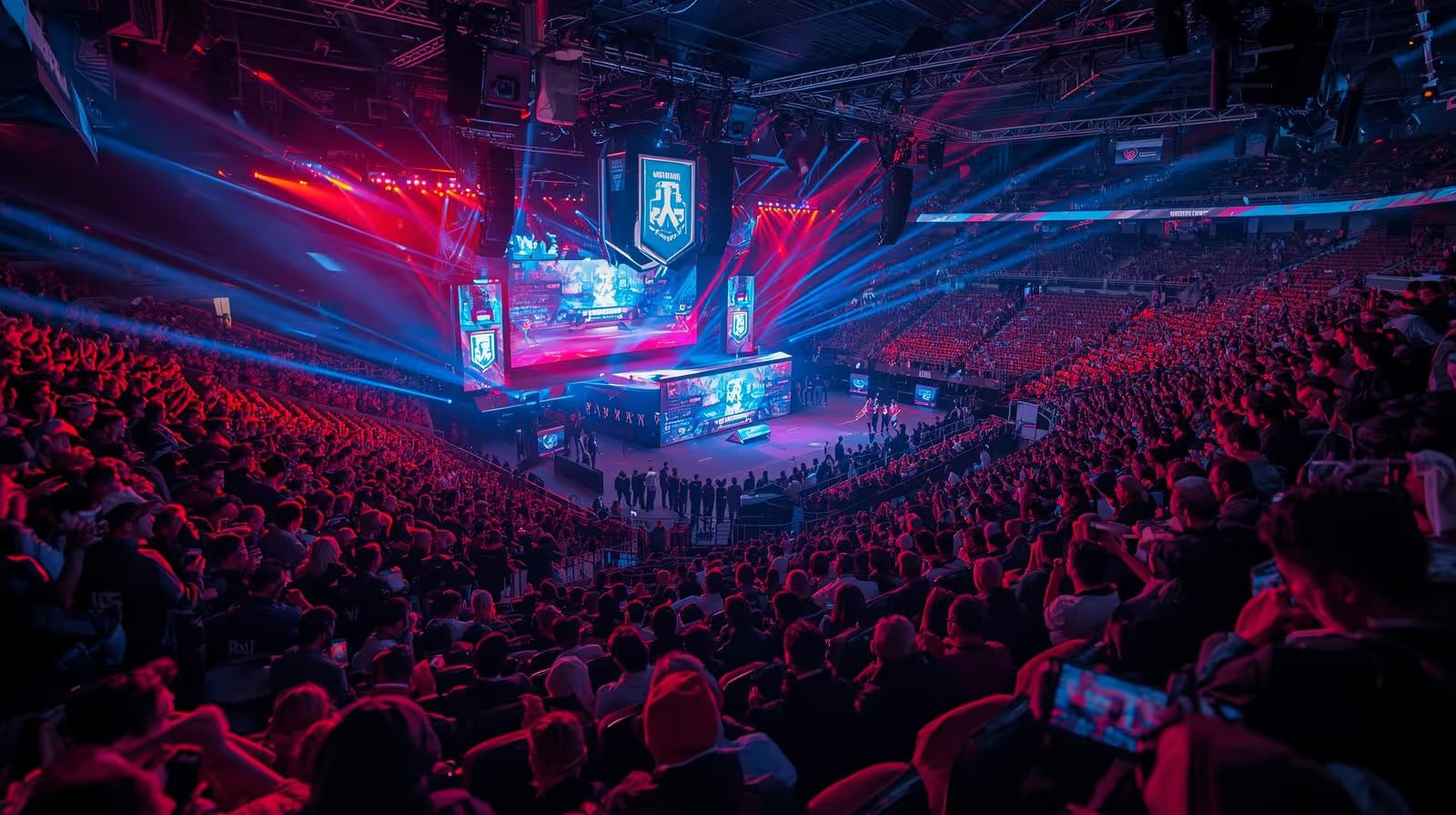
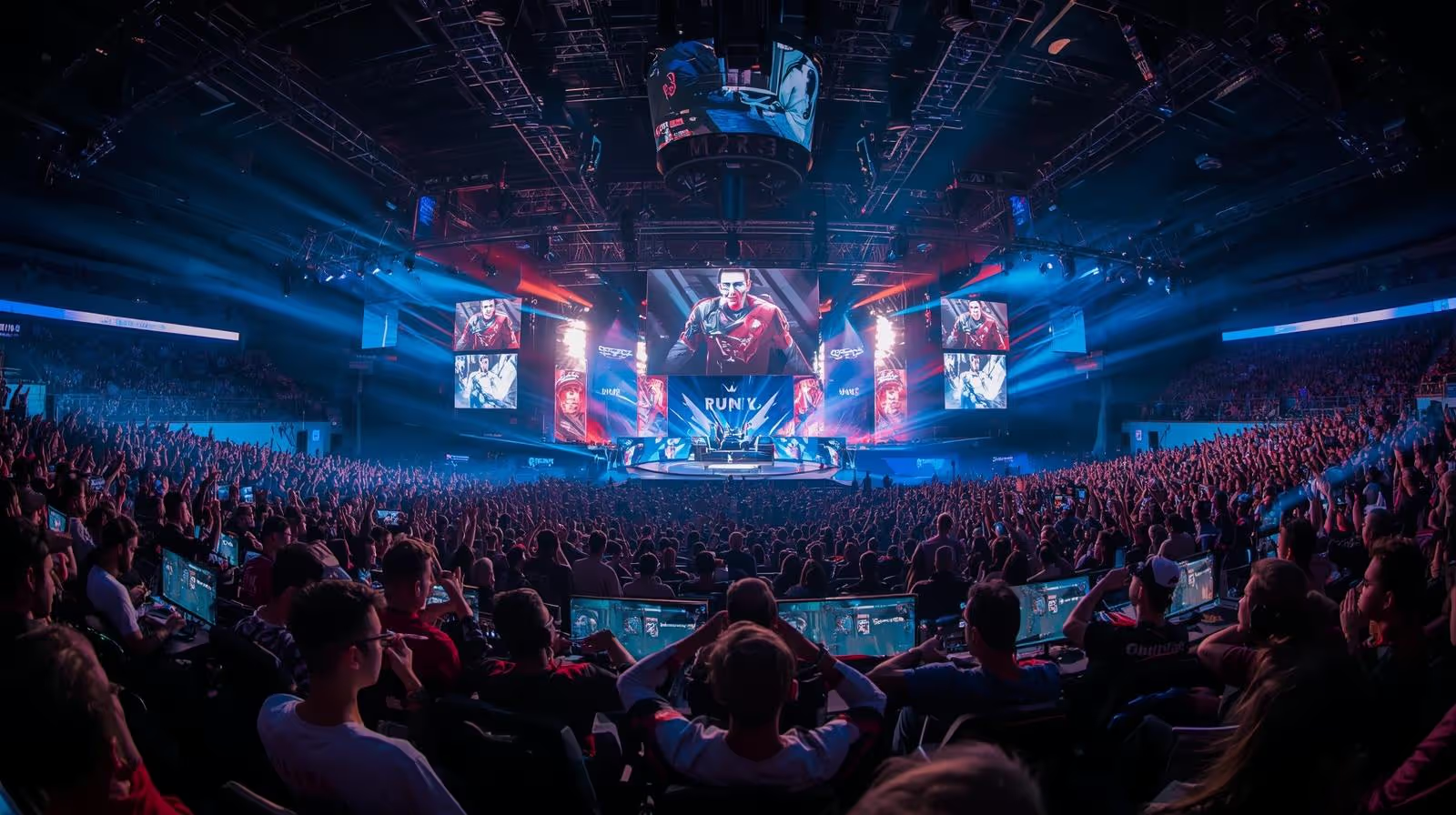
Think about peak moments. League of Legends Worlds raises trophy shots that feel like rock concerts. Worlds has hit around 6 to 7 million peak concurrent viewers across main official streams. CS2 and Valorant majors land from hundreds of thousands to a few million peak viewers.
For online streaming, those numbers are massive. They sit near the very top of Twitch and YouTube live charts.
Now look at football. Recent global finals and title games hit:
- Around 1.5 billion viewers for the biggest recent world final
- Around hundreds of millions watching Champions League finals over all platforms
Even regular high‑stakes knockout matches pull tens of millions of viewers.
So single football matches are still larger by a wide margin. Esports wins inside the pure streaming category, but football dominates once you add traditional TV.
Weekly Viewing Habits: Premier League vs Everyday Esports Streams
Peak events are not the full story. Weekly habits matter.
Top football leagues like the Premier League, La Liga, and others pull millions of viewers per match across regions. Fans plan their weekend around kick‑off times. It feels like appointment TV, even when many people now watch through streaming apps.
Esports works more like always‑on live content. Instead of one match per week, fans might:
- Watch pro league matches several times a week
- Tune into big tournaments when they pop up
- Hang in personal streams hosted by pros and creators every day
Viewed this way, Twitch and YouTube can feel “full of esports” all the time, even if the total number of unique human beings who watch football in a season is higher.
If your daily routine is Discord, Twitch, ranked games, and highlight clips, esports can already feel bigger in your life than any traditional sport.
Money Matchup: Who Makes More and Who Gets Paid?
Audience is one part. Money is another. Here, the gap is even wider.
Industry Revenue: Billion Dollar Esports vs Multi‑Billion Dollar Football
Estimates for total esports revenue cluster between about 1.8 and 4.8 billion dollars a year, depending on how you count betting and related gaming. Most of that comes from:
- Sponsorships
- Media rights
- Advertising
- In‑game items tied to events
- Tickets to live events
That is serious money, but football’s main leagues alone bring in many times more.
Across Europe, the top leagues together clear tens of billions of euros in a season. The Premier League by itself sits near the top with several billion in revenue, driven by giant TV deals, global sponsors, ticket sales, and merch.
Some single football clubs post yearly revenue around or above one billion euros on their own. That is close to the entire lower range of the global esports market.
So in raw cash, football is still a giant. Esports scores its wins in growth rate and online influence, not absolute size.
Prize Pools and Salaries: Tournaments vs Club Contracts
Money reaches players in very different ways.
In esports:
- Top titles offer prize pools in the millions of dollars for big events.
- Only a small slice of teams actually take home the big checks.
- Many pros rely on team salaries, brand deals, and streaming income to make a living.
Some stars put together big yearly earnings through a mix of salary, prize winnings, and creator work. But the long tail is tough. Plenty of strong pros earn modest pay, and contracts can be short.
In football:
- Top players sign multi‑year club contracts with guaranteed salaries.
- Even mid‑level pros in strong leagues can earn a solid full‑time income.
- Stars stack huge wages with sponsorships, bonuses, and image rights.
If you compare the average pro, football still offers more security and higher median pay. Esports can create a few very rich stars, while the middle tier often needs side income or very careful planning.
Earnings for Creators, Streamers, and Content Teams
Here is where esports changes the picture.
Esports sits inside a wider creator economy. Many people do not need to win events to earn money. They can:
- Stream ranked games
- Create highlight videos, guides, or analysis
- Coach players and teams
- Build personal brands on Twitch, YouTube, TikTok, and more
This opens doors for talented players and smart creators who might never lift a trophy on a big stage.
Football has creators too. There are YouTube channels, watch‑along streams, and freestyle content. But the barrier to entry is higher. You need fields, teammates, filming setups, travel, and sometimes club access.
For esports, you mostly need a PC or console, decent internet, and a lot of time. That lowers the entry cost and spreads money more widely across streamers, editors, and small teams, even if the total pie is smaller than football’s.
Future Growth: Is Esports on Track to Overtake Football?
Now for the big question people love to ask: Will esports ever really pass football in total fans?
In terms of total global audience and revenue, the answer is very likely no, at least not soon. Football’s lead is enormous and built across more than a century.
But if you look at growth with young, online fans, the story changes.
Young Fans and Online‑First Viewing Habits
Under‑25 fans spend more time on:
- Twitch
- YouTube
- TikTok
- Social feeds and clips
than on any cable channel.
Esports fits that world by default. Matches run on Twitch and YouTube. VODs, highlights, and memes flood social feeds within minutes.
Football has to adapt to that. Big clubs and leagues now push:
- Short highlight clips
- Watch‑along shows
- Behind‑the‑scenes content
- Collabs with popular streamers and gamers
Many kids first meet football through video games, like FIFA or eFootball, or through short clips on their phones. Esports is already native to that style of viewing, where chat spam and instant replays are part of the experience.
So with youth attention, esports sits in a very strong spot.
Regional Growth: Where Esports Is Catching Up Fast
Esports growth is especially strong in:
- Latin America
- Southeast Asia
- Parts of Africa
- The Middle East and North Africa
In many of these regions, mobile gaming is huge. You do not need a high‑end PC. A solid phone and a data plan can be enough to play and watch.
Digital events can reach anyone with a connection. That means organizers can scale tournaments without building massive stadium networks everywhere.
Football is still huge in these regions. Street games, local leagues, and national teams all carry deep culture. But as internet access improves, esports can jump forward very fast, because it travels over wires and airwaves instead of pitches and stadiums.
Barriers to Entry: What It Takes to Go Pro in Each Scene
Becoming a football pro usually means:
- Joining local clubs as a kid
- Years of training, gear, and travel
- Getting spotted by scouts
- Climbing through youth systems and lower leagues
The path is clear but very narrow at the top. Millions try, few make it.
In esports, the path looks different:
- Grind ranked ladders in a major title
- Play online tournaments and scrims
- Join amateur or academy teams
- Build a presence through streaming or social media
You still need good hardware, solid internet, and time to practice. Team support and good coaching matter more as you climb. The scene can feel more open, because anyone can queue from home, but it is also more crowded with hopefuls.
So football is more structured but less accessible at the top. Esports is more open at the start, but brutal at the elite level, where careers can be short and patches can rewrite the meta overnight.
So Which Is Bigger: Esports or Football?
Time to bring it all together.
The answer depends on what you care about most.
By Total Audience and Revenue, Football Still Wins Big
If you judge by:
- Total number of fans
- Total number of viewers across a year
- Total money in the system
football wins by a large margin.
Football connects with billions of people. Esports connects with hundreds of millions. Football generates tens of billions in yearly revenue. Esports operates in the low single‑digit billions at most, even with generous estimates.
That is not a loss for esports. It started much later and has grown incredibly fast. But in raw size, football is still king.
By Hype, Online Culture, and Youth Attention, Esports Leads
On Twitch and YouTube, gaming and esports content often dominates both live and VOD charts, especially with teens and young adults.
Major esports finals feel like global online festivals. Chat spam, watch parties, co‑streams, memes, translations, and replay uploads hit social feeds in real time. For many younger fans, these events feel bigger and more personal than a TV match their parents care about.
Football still creates huge online moments, of course. But if your daily media diet is mostly digital, esports may already feel like the center of your sports universe.
The Real Answer: Both Are Huge, and They Feed Each Other
The smarter question is not “Which one kills the other?” but how they connect.
You already see crossovers:
- Football clubs owning esports teams
- Pro footballers investing in gaming and streaming
- Streamers playing football charity matches
- Fans discovering football through the video game version of it, then drifting into esports for other titles
Many people do not pick a side at all. They watch football on the weekend, grind ranked during the week, and jump into Worlds or a big Major when it rolls around.
Esports and football can grow together and share fans instead of fighting for a single crown.
Conclusion
When you stack the numbers side by side, football is still the global giant in total fans, event size, and money. It reaches billions, moves massive TV deals, and fills stadiums across the planet.
Esports is the rising power inside online culture. It owns long hours on Twitch and YouTube, grabs younger viewers, and turns everyday gamers into fans, creators, and sometimes pros.
If you love esports, you do not need football to fail. You can be proud that a scene built from LAN parties and small online cups now commands hundreds of millions of fans and billion‑dollar revenue. If you love football, it makes sense to take esports seriously, because it is shaping how the next generation thinks about sports and competition.
The most likely future is not one winner and one loser, but more crossovers, more shared sponsors, and more fans who cheer for both a club and a favorite esports team on the same weekend.