

Your kid looks unstoppable in ranked. Friends say they should “go pro.” You see the passion, the talent, and maybe a bit of worry in the back of your mind.
Can your child actually make it?
Millions of kids play games like League of Legends, Valorant, CS2, and Fortnite. Only a tiny slice ever reach a real professional level. This guide is for parents who want clear answers, not hype or fear.
You’ll see what “going pro” actually means, how to spot real potential, what the pro path really looks like, the risks to watch, and how to support your child even if they never touch a main stage. The tone here is honest, not harsh, so you can be a strong partner in your child’s esports dream.
What “Going Pro” in Esports Really Means for Your Child
Most parents hear “pro gamer” and think, “My kid will get paid to play games all day.” That is not how it works.
A true professional esports player is usually:
- Signed to a team or organization under contract
- Playing in official leagues or major events
- Training with coaches and analysts
- Living under team schedules and expectations
This looks closer to a full-time athlete job than casual gaming.
A few key levels help make sense of where your child stands.
- Casual good player: Wins with friends, above average in public games.
- High ranked player: Reaches high ranks in the game’s ladder, maybe top 1 to 5 percent.
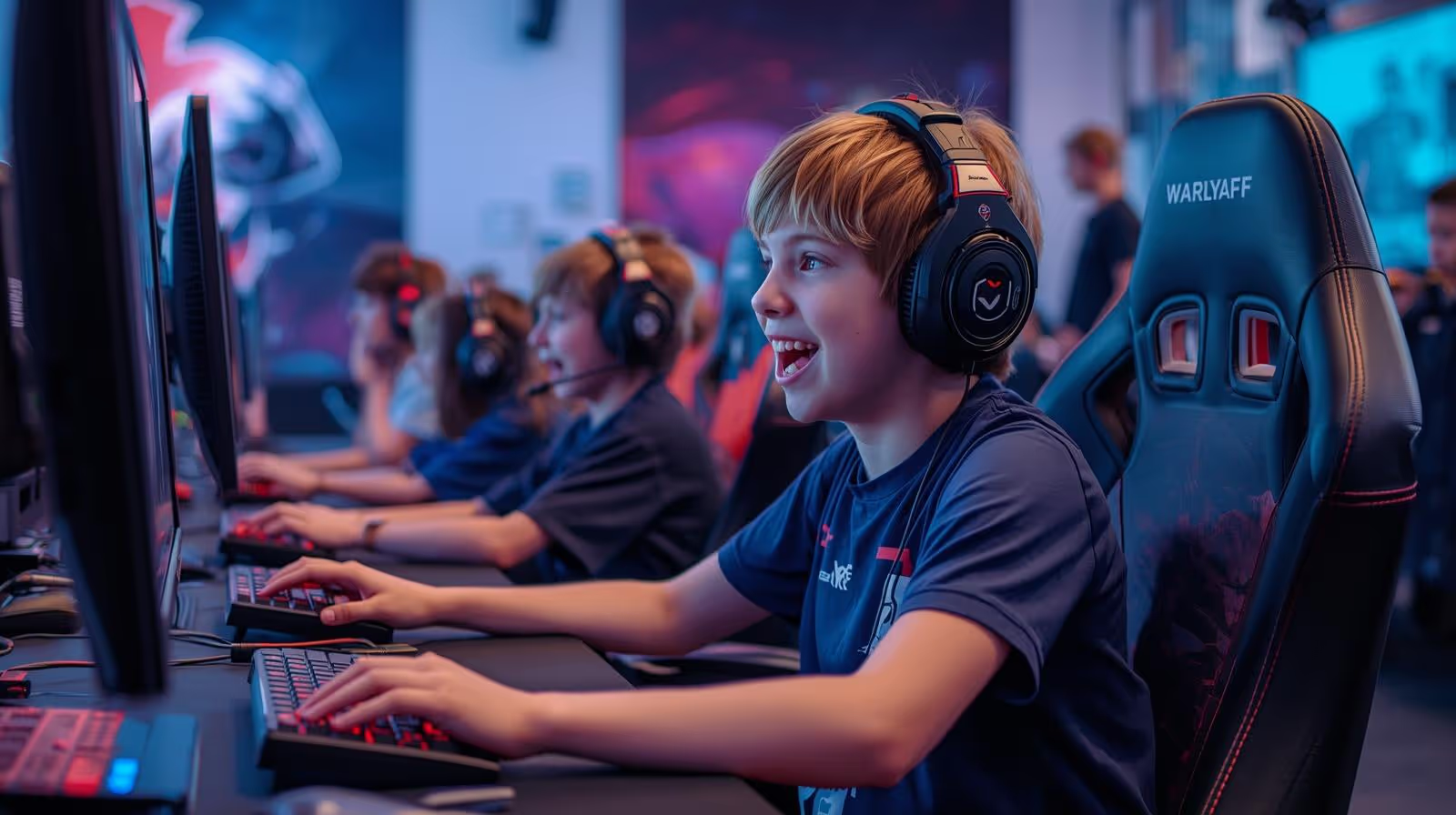
- Semi-pro / amateur competitive: Plays in online cups, school leagues, local events, sometimes for small prize money.
- Content creator: Streams, makes videos, builds a personal audience, may or may not compete.
- Signed pro: Has a contract, salary or stipend, and plays in serious leagues or circuits.
Some pros build a name and make decent money. Others bounce around teams, sit on benches, or leave the scene after a short time. Careers can be brief, unstable, and often depend on results, public image, and how long the game stays popular.
There is opportunity, but there are no guarantees of fame, long careers, or big payouts.
Esports roles: pro player, streamer, creator, and coach
“Going pro” might not mean only playing on stage.
Many young people find better fits in roles around competition:
- Pro player: Competes in leagues and tournaments as their main job.
- Streamer: Livestreams gameplay, talks with chat, builds a community.
- YouTuber / content creator: Makes guides, montages, breakdowns, or comedy content.
- Analyst: Studies stats and game film, supports coaches and teams.
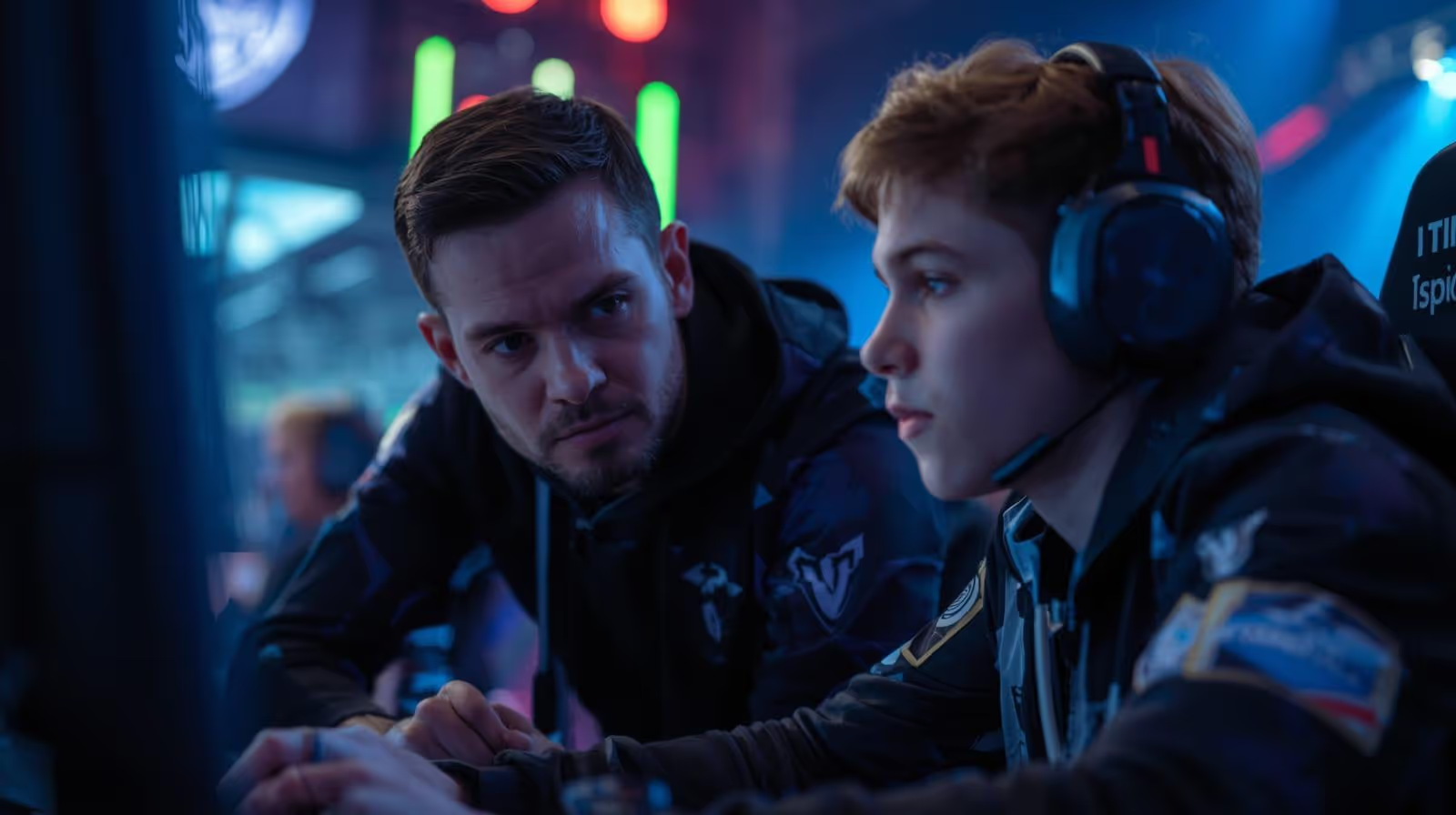
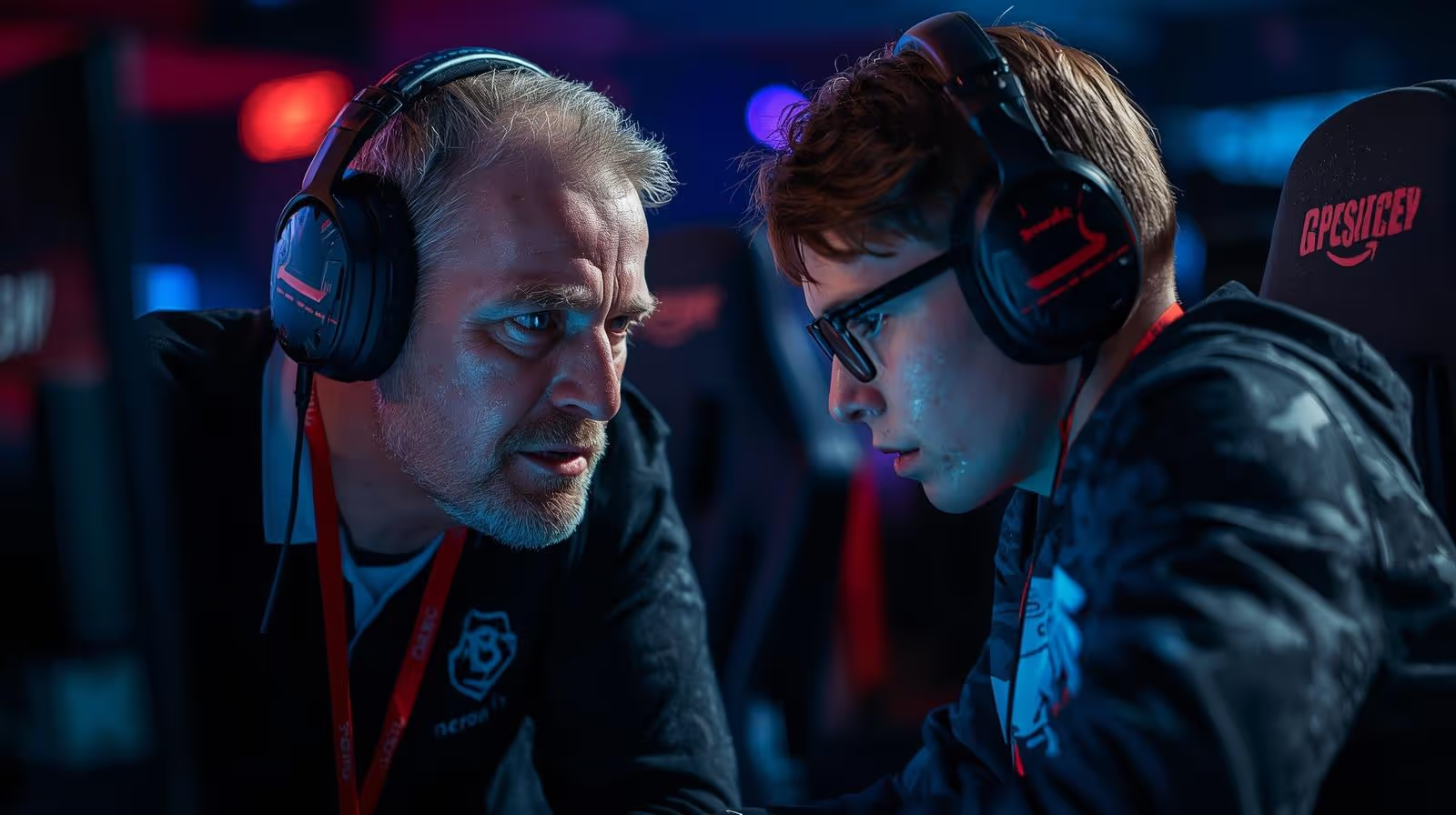
- Coach: Helps players improve, builds strategies, runs scrims.
- Social media creator: Clips content, runs team or player accounts, helps shape public image.
Some kids are amazing mechanics but hate being on camera. Others love teaching and explaining. Some have strong voices and charisma but not world-class aim.
Seeing these paths helps you support the passion without forcing a single “pro player or bust” path.
How rare is a true pro esports career?
Each of the big titles has huge player bases. League of Legends, Valorant, CS2, and Fortnite all pull in millions of players.
Only a tiny fraction ever sign real contracts or play at top events. The odds look a lot like trying to go pro in traditional sports. It is possible, and some do it, but most never reach that level.
For every star you see on stage, there are thousands of high-ranked players who grind hard and never get that shot. When you keep that in mind, it is easier to support the dream while also planning for school, work, and life outside the game.
What a pro esports life actually looks like day to day
If your child ends up on a serious team, their daily life changes fast.
A typical pro schedule can include:
- Long practice blocks with the team
- Scrims against other serious teams
- VOD review (re-watching games to study mistakes and patterns)
- Solo queue grinding to keep skills sharp
- Physical training in better orgs, like gym time or mobility work
- Travel for events and bootcamps
- Media days, sponsor content, and fan interactions
Games patch often, so the “meta” shifts. Players must keep learning and re-learning. Pressure never fully goes away. Fans react to every win and loss, and social media can turn toxic.
On the outside it might look like “playing games all day.” Inside, it is a structured, high-pressure job.
Key Signs Your Child Might Have Real Esports Pro Potential
Almost every ranked gamer has heard “you could go pro” at some point. Most of them will not.
What should parents actually watch for?
Look less at raw win streaks and more at patterns over time: how your child plays, thinks, and behaves. Real potential mixes skill with mindset and habits.
Skill and game sense: more than just being good at aim
Raw mechanics matter, especially in shooters. High-level players show:
- Fast but controlled aim and reflexes
- Smart positioning so they are hard to catch out
- Strong map awareness, knowing where threats and opportunities are
- Quick, confident decisions when the situation explodes
Beyond that, the best kids have strong game sense. They:
- Predict what the other team will do
- Rotate at smart times, not only when their friends move
- Understand win conditions, like “we win teamfights with our ult combo” or “we must avoid late game”
If you are not a gamer, how do you judge that? Ask:
- High-ranked friends or older players you trust
- School or community coaches
- Reputable online coaching platforms
Ask for honest feedback, not flattery. “Where would you place my kid among players you see?” is far more useful than “Are they good?”
Work ethic: does your child grind with purpose, not just play nonstop?
Many kids play a lot. Far fewer practice with a plan.
Serious, improving players tend to:
- Watch their own replays to spot mistakes
- Look up guides, pro VODs, or educational content
- Try coaching and apply what they hear
- Set clear goals, like “reach this rank by the end of the season”
- Keep going after a bad day instead of rage quitting for a week
A child who only queues game after game, never reflects, and ignores advice is not building toward pro-level play, no matter how many hours they invest.
Ask your child: “What are you working on getting better at this week?” If they can answer clearly, that is a good sign.
Mental toughness: how your child handles stress, tilt, and loss
Esports is full of stress. High-ranked queues and tournaments are not friendly places.
Red flags include:
- Screaming at teammates
- Slamming desks or breaking gear
- Quitting mid-game when things go wrong
- Blaming others every time
Positive signs look like:
- Staying calm after mistakes
- Saying “that one is on me” when they mess up
- Learning from bad games instead of denying them
- Resetting between matches rather than spiraling
Tilt happens to almost everyone; what matters is how fast they recover. If your child melts under minor pressure in online matches, big stages will be even harder.
Teamwork and communication in team-based esports
League of Legends, Valorant, and CS2 are team games at the highest levels. Pure aim is not enough.
Strong team players:
- Call out clear info: positions, cooldowns, plans
- Listen to others instead of talking over everyone
- Adjust to the team’s needs, not only their favorite role
- Play “weak side” or support when needed, not only star roles
Many talented kids dominate aim duels but refuse to cooperate. That might work in solo queue, but actual teams care about flexibility and communication.
You can listen for simple things when they play with friends: Do they lead calmly, share credit, and stay respectful, or do they flame and blame nonstop?
Coachability and ego: can your child take feedback and grow?
Coaches and teams love players who are coachable.
Coachability looks like:
- Hearing criticism without shutting down
- Asking questions to understand feedback
- Trying new ideas even if they feel odd at first
- Admitting when someone else has a better plan
A big, fragile ego kills opportunity. If your child refuses to listen, always blames teammates, or quits projects when someone pushes them, their path to high-level teams will be rough, even with great mechanics.
You can test this at home. Offer gentle feedback like, “I hear you got mad that game. What could you try next time?” Their reaction tells you a lot.
How to Test Your Child’s Esports Potential in a Healthy Way
You do not need to crush the dream or throw them into 10-hour grind days. There is a middle road.
You can test their potential while protecting health, school, and family life.
Start by understanding the game and competitive ladder
Each big title has a ranked ladder with clear bands, like Iron to Challenger in League of Legends or Bronze to Radiant in Valorant.
Ask your child to explain:
- What rank they are at now
- What rank counts as “top” in that game
- What their short-term and long-term rank goals are
This helps you tell “pretty good” from “exceptional.” A player near the very top of the ladder, even in one region, has a different profile than someone sitting in the middle but playing all day.
You do not need to know every detail. You just need enough to understand when progress stalls or climbs.
Track real progress: ranks, stats, and tournament results
Look at trends over months, not day-to-day swings.
Useful signs of progress:
- Rank climbs over seasons, even if it is slow
- Consistent strong stats, not just one great week
- Small tournament results, like school events or online cups
- Stable performance when playing with better teammates
Avoid making big decisions based on one lucky win, a viral clip, or a streak that may not stick. Ask your child to keep simple notes on goals and results so you can review them together every month or two.
Use teams, school programs, and camps to get honest feedback
Outside voices help a lot. Options include:
- School esports clubs or varsity teams
- Community leagues or local gaming centers
- Online amateur teams that scrim and enter cups
- Esports camps or private coaching
Coaches and older players can give a clearer picture than friends who just want to be nice.
Good questions to ask a coach:
- “If my child works hard, where do you see their level in a few years?”
- “Do they have any standout strengths or big gaps compared to others?”
- “Would you expect them to reach college level, high amateur, or just strong casual play?”
You are not asking for guarantees, only a rough map.
Set clear limits: health, sleep, and school come first
Pursuing esports should not wreck your child’s life.
Simple, fair rules can include:
- No all-night sessions before school days
- Clear bedtimes and minimum sleep hours
- Schoolwork and grades as a gate for ranked or scrims
- Set breaks for food, stretching, and short walks
Top organizations care more and more about long careers, not only short spikes. Healthy routines help performance. Frame limits as support, not punishment: “If you want to play at a high level, your body and mind need rest.”
Hard Truths: Risks, Burnout, and What Parents Should Watch For
There is real upside to taking esports seriously, but there are real risks as well.
You do not need to panic, yet you should keep your eyes open.
Burnout and pressure: when gaming stops being fun
Burnout in young players can look like:
- Your child feels tired before they even sit down to play
- Scrims feel like a chore, not a challenge
- Anger grows over small mistakes or losses
- They say they feel trapped by their own goals
Some young stars have walked away early because the pressure, public attention, or constant grind killed their joy. Ask your child often, “Do you still enjoy the process, not just the idea of winning?” That one question can open important talks.
Physical and mental health risks for young esports hopefuls
Long hours at a screen come with real health risks if unmanaged:
- Back and neck pain from bad posture
- Eye strain and headaches
- Wrist and hand issues, sometimes serious
- Stress, anxiety, and mood swings
You can lower these risks with simple habits:
- Short stretch and movement breaks every hour
- Basic exercise several times a week
- Blue-light filters or glasses if screens strain their eyes
- Honest talks about mood, stress, and sleep
If your child starts to complain about pain or looks worn out, that is not “part of the grind.” It is a sign the routine needs a change.
Red flags: when the pro esports dream is hurting your child
Some warning signs call for clear action:
- Grades dropping fast or missing school
- Lying about playtime or hiding devices
- Skipping meals or snacks to keep playing
- Staying up far past agreed bedtimes
- Cutting off offline friends and hobbies
- Spending too much on skins, bets, or in-game items
- Exploding with anger whenever you set a simple limit
Treat these as signals to step in, not reasons to shame your child. Firm but calm boundaries plus open talks work better than yelling or banning everything overnight.
Supporting Your Child’s Esports Dream Without Losing Perspective
You can take your child’s dream seriously without believing they are “the next superstar.”
Think of yourself as a guide, not a critic or a manager.
Talk openly about odds, backup plans, and long-term goals
Honest talks matter.
You might say something like: “I know going pro is your dream. The odds are low, but I’m willing to support you if we also plan for school and other options.”
Pair the dream with clear steps:
- Staying on track for graduation
- Aiming first for high-level amateur or college esports
- Learning side skills like video editing, streaming, or coaching
These paths keep doors open even if your child never lands a major team contract.
Use esports to build real-life skills your child can keep
Serious gaming can grow long-term skills:
- Problem-solving under pressure
- Communication and leadership in teams
- Time management when schedules get busy
- Handling wins and losses with some maturity
You can help connect those skills to real life. For example:
- Ask your child to lead a school project the way they shot-call in games.
- Encourage them to apply their VOD review habits to studying and test prep.
- Suggest they use streaming or content projects to practice planning and deadlines.
Even if they never go pro, those skills stay with them.
When to lean in harder, and when to gently pull back
Parents often ask, “How hard should we push?”
Simple guidelines can help:
- Lean in when your child shows steady progress, stable mood, solid grades, and stays social. Support tournaments, better equipment when affordable, and maybe some coaching.
- Pull back when health drops, school falls apart, or they seem miserable. Reduce hours, reset goals, and talk about why the dream is hurting instead of helping.
Review things together every few months. Ask, “Is our current setup helping you grow as a player and as a person?” Adjust as needed rather than locking in one forever plan.
Conclusion
Very few kids will reach full pro player status in esports, but many can grow through serious play. Real potential shows up in skill, game sense, work ethic, mental strength, teamwork, and coachability, not just high hours and occasional pop-off games.
Your job is not to predict the future. Your job is to keep health, school, and character in view while your child chases something they care about. With clear limits, honest feedback from coaches, and regular talks about goals and odds, you can support the dream in a smart way.
If the road leads to a big stage one day, great. If it leads to a strong, happy adult who still loves games and carries real skills into other careers, that is a win too.