

Do you ever hear game names shouted from your kid's room and have no idea what they are talking about? Maybe you just know they play “some online game” with friends, the volume is high, and time seems to disappear.
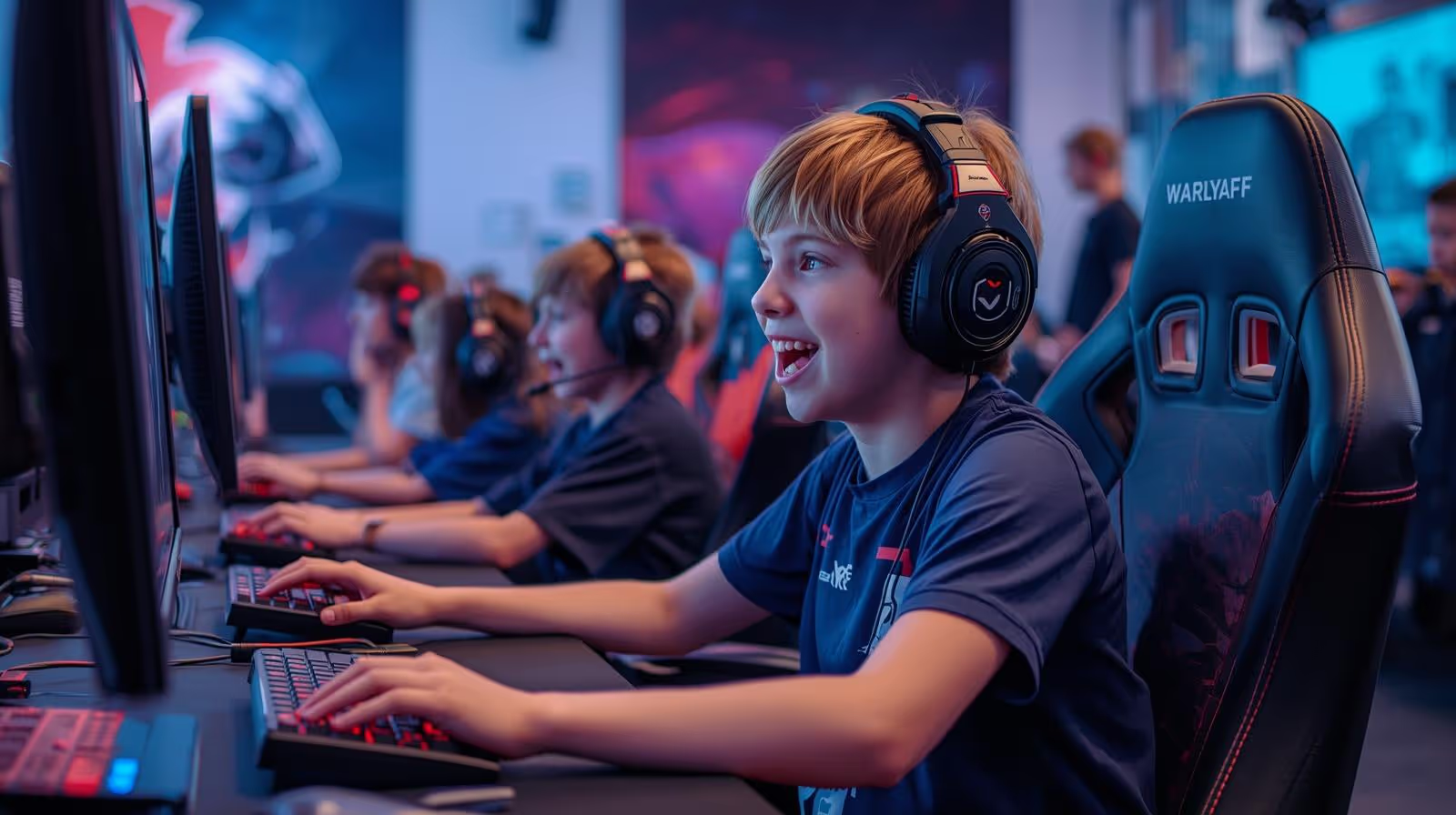
You are not alone. For many families, esports has become the new after-school activity. Esports simply means organized competitive video gaming. Kids join teams, play in ranked modes, watch tournaments, and talk about players like they are pro athletes.
In this guide, you will get a clear, parent-friendly look at the five esports games kids are most likely playing right now: Fortnite, Valorant, League of Legends, Mobile Legends: Bang Bang, and Counter-Strike 2. You will see what each game actually is, what the basic goal looks like, what to watch for with content and time limits, and how to turn gaming into something healthier instead of a daily argument.
A Quick Parent-Friendly Guide To Esports And Online Gaming
Before jumping into each game, it helps to understand what makes esports different from kids just “playing a game for a bit.”
What Is Esports And How Is It Different From Casual Gaming?
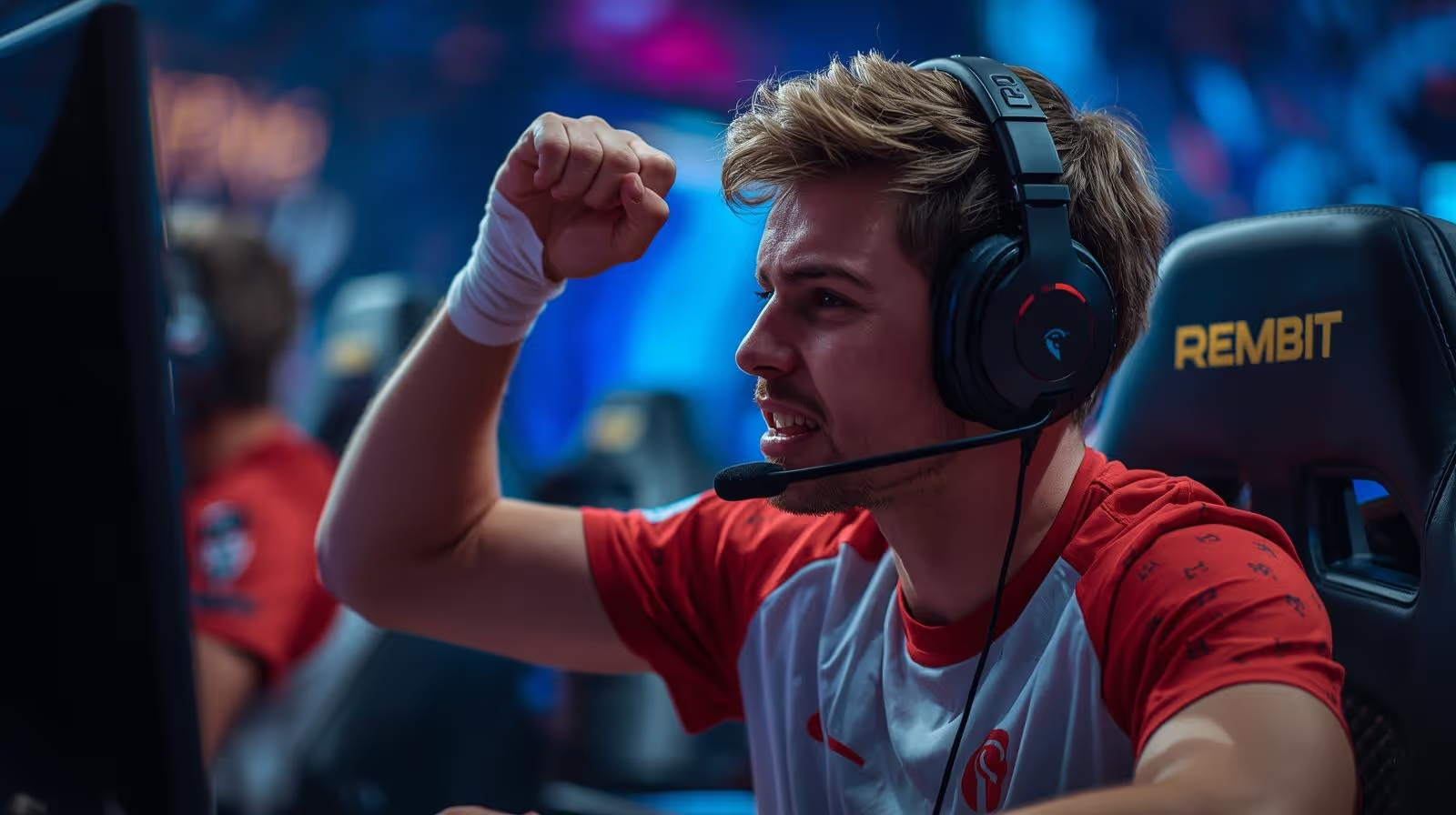
Esports is competitive gaming that looks a lot like organized sports. There are teams, leagues, tournaments, schedules, and prize pools. Kids may follow pro players, cheer for favorite teams, and talk about matches the same way others talk about soccer or basketball.
Casual gaming is more like shooting hoops in the driveway. A child logs in, plays for fun, leaves whenever they want, and the result does not matter much. Many games include both styles. Your child might relax in a casual mode after school, then later play ranked matches that feel like a real season game where every win or loss counts.
Why Kids And Teens Are Drawn To Esports Games
For kids and teens, esports games tick several boxes at once.
They are social. Friends meet online, talk on voice chat, and play together most days. If your kid could hang out with friends, compete, and relax without leaving their chair, would that sound appealing to them?
They are competitive. Ranks, levels, and stats give a strong sense of progress. Kids can see they are getting better, especially when they climb a rank or unlock a new skill.
They are entertaining. Bright graphics, big plays, and funny moments make these games fun to watch as well as play. Many kids watch streamers and pro matches almost like a TV show.
They give a sense of belonging. When your kid talks about a favorite game, pro team, or streamer, they feel part of something bigger than their own room.
Basic Terms Parents Will Hear Around Esports
A few common words come up in almost every esports game:
Ranked: A competitive mode that matches players of similar skill, with clear ranks to climb.
Casual: Lower-pressure modes where wins and losses do not affect rank.
Meta: The most popular and effective strategies, weapons, or characters at a given time.
FPS (first-person shooter): A game where you see through the eyes of the character and use guns or other weapons.
MOBA (multiplayer online battle arena): A top-down team game where players control a single hero and fight to destroy the enemy base.
Battle royale: A mode where many players drop into one map and fight until only one player or team remains.
With that foundation, it is time to look at the five games your kid is most likely talking about.
Fortnite: The Colorful Battle Royale Your Kid Probably Knows By Heart
Fortnite is often the first esports-style game kids try, and for many families it is the most familiar name.
What Fortnite Is And How A Typical Match Works
Fortnite is an online game where up to 100 players drop from a flying bus onto a large island. They land, search for weapons and items, and try to survive as long as they can. The core mode is a battle royale, so the goal is simple: be the last player or team standing.
To keep matches moving, a storm closes in over time, shrinking the safe area on the map. Kids learn to balance fighting, hiding, and moving with the storm. There are several modes, including solo, duos, and squads, plus creative maps made by players that can feel more like playgrounds or mini-games than serious matches.
Why Kids Love Fortnite: Skins, Dances, And Playing With Friends
Fortnite has a cartoon look, wild colors, and lots of humor. Kids can do dances, known as emotes, in the middle of a match. They can wear “skins,” which are outfits based on original designs, superheroes, or characters from popular shows.
Have you noticed your kid talk more about a cool outfit, a dance, or a special event than about winning every single game? That is common. Fortnite is free to play, so kids can join without paying, then choose to spend money on cosmetic items that do not change the core gameplay but help them feel unique.
A big part of the draw is social. Kids log in to talk, laugh, and share experiences. For many, Fortnite is the digital version of hanging out at the park.
What Parents Should Know About Safety, Content, And Spending In Fortnite
Fortnite has gunfights, but the violence is light and cartoon-style, with no realistic blood. Even so, some parents prefer to wait until kids are a bit older before they play.
Voice chat and text chat can be used with friends or open lobbies. Kids can also add people to a friends list. In the settings, you can turn off voice chat or limit it to friends only, mute other players, and hide names from strangers.
Spending is another key area. The game sells a virtual currency that kids use to buy skins and emotes. Simple rules help a lot, such as:
- No spending without asking.
- Set a monthly budget if you allow purchases.
- Talk with your child about wants versus needs.
Time limits also matter. Because matches last a set amount of time, many families use a rule like “one or two matches, then a break” instead of a vague “play for a bit.”
Valorant: The Tactical Shooter For Competitive Teens
Valorant is a team-based first-person shooter that feels more serious and focused than Fortnite and tends to attract older kids and teens who enjoy tight teamwork.
What Valorant Is And How Teams Compete
In Valorant, two teams of five players face off on a map. One side attacks and tries to plant a device called the Spike at certain sites. The other side defends and tries to stop that from happening or defuse the Spike if it is planted.
Players pick characters called agents, each with special abilities, such as walls, smokes, or vision tools. These powers support gunfights and add strategy, but the core of the game is still precise shooting, careful movement, and good communication with teammates.
Why Teens Are Drawn To Valorant Ranked Play
Valorant has a strong ranked mode that gives clear feedback on progress. Teens climb through ranks, feel proud when they move up, and may feel upset if they drop down. Does your teen talk about ranks, wins, and losses as if they are on a sports team? That mindset is common in this game.
Voice chat is built in, so teams coordinate tactics during every round. Many teens also watch pro tournaments, follow favorite players, and try to copy tactics in their own matches.
Parent Watchpoints: Voice Chat, Team Pressure, And Age Fit
Valorant has more realistic gunplay than Fortnite, though the visuals are still stylized. Voice chat with strangers often includes strong language or trash talk. Some kids handle that fine, others find it stressful.
Practical steps for parents include:
- Suggest using voice chat only with friends when possible.
- Talk about how to deal with rude players, such as muting or blocking them.
- Agree on a stop time before ranked matches begin, so one “last game” does not stretch late into the night.
Because of the intensity and online interactions, this game tends to fit older kids and teens better than younger children.
League of Legends And Mobile Legends: What Parents Should Know About MOBA Games
League of Legends and Mobile Legends: Bang Bang are both MOBA games. They share the same basic idea but run on different devices.
What A MOBA Game Is In Simple Terms
A MOBA is a top-down team strategy game. Two teams start on opposite sides of a map, each with a home base. Three main paths, called lanes, connect the bases and are guarded by defensive towers.
Each player controls a single champion or hero with unique skills. During a match, players defeat small enemy units, gain gold and experience, buy items, and grow stronger. The goal is to push down lanes, destroy towers, and finally break the enemy base.
Matches have a clear start and end, and quitting early hurts the team, which is why kids often say they “cannot leave mid-game.”
League of Legends: Deep Strategy On PC
League of Legends is one of the most watched esports titles. Kids and teens see big arenas, loud crowds, and pro players treated like stars.
In normal and ranked modes, five-player teams play with defined roles, such as top lane, mid lane, jungle, and support. Older kids may spend hours learning champions, items, and strategies. Many also watch streams and tournaments to pick up ideas.
For parents, the main impact is time and emotion. Matches can run long, and losing a hard game can leave a child upset. Talking about healthy competition and how to handle wins and losses helps a lot.
Mobile Legends: Bang Bang: Esports In Your Kid’s Pocket
Mobile Legends brings the same style of game to phones and tablets. Matches are often shorter, and the controls are touch-based instead of keyboard and mouse.
Because it runs on phones, kids can play almost anywhere: on the couch, in the car, or at a friend’s house. Friends can form teams quickly and hop into a game in a few taps. Mobile Legends also has large esports events, so kids may follow teams and players through social media or video platforms.
Key Parent Tips For MOBA Games: Time, Tilt, And Team Drama
MOBA games bring a few common challenges:
- Time blocks: Matches take a fixed chunk of time, so quitting early is seen as letting the team down. Setting gaming windows, like “no new matches 30 minutes before bed,” helps avoid conflict.
- Tilt: Tilt is the word players use when someone gets frustrated after mistakes or losses and starts playing worse. Kids on tilt may want to “fix” a bad game with another one, which can turn into a long session.
- Team drama: Because teamwork matters, kids sometimes argue with teammates or blame others.
You can support your child by talking about good sports behavior, encouraging short breaks between games, and reminding them that it is okay to stop for the day after a rough match.
Counter-Strike 2: Classic Competitive Shooting For Serious Players
Counter-Strike 2 is a long-running, team-based shooter that many serious competitive players choose as their main game.
How Counter-Strike 2 Works And Why It Feels So Intense
In Counter-Strike 2, two teams face off as attackers and defenders. Attackers try to plant a bomb at one of several sites. Defenders try to stop them or defuse the bomb.
Rounds are quick. When a player is eliminated, they do not respawn until the next round, so every mistake feels important. The game has a realistic look and focuses on aim, movement, and quick decisions rather than flashy abilities.
Because each round is short and matches use many rounds, the pace feels tense and exciting for players and viewers.
Why Teens Choose Counter-Strike 2 For High Level Competition
Many competitive teens pick this game because it has a long esports history and rewards pure skill. They can see clear improvements as their aim, timing, and map knowledge improve.
They may watch pro tournaments, learn set plays and grenade spots, and practice repeatedly in ranked modes. Does your teen talk about perfect aim or famous pro teams from big tournaments? That is a sign they feel part of a wider esports scene, not just one game.
What Parents Should Balance: Violence, Communication, And Playtime
Counter-Strike 2 uses realistic weapons and settings. While there is no focus on gore, some parents feel more cautious about younger kids playing it.
Voice chat can be intense and sometimes harsh, especially in ranked modes. Matches can stack up, so “just one more” can turn into several.
Helpful steps include:
- Setting age-based rules about when your child can try this game.
- Encouraging use of the mute function when other players are rude or distracting.
- Agreeing on clear start and stop times during the week, with other activities mixed in.
Making Esports Healthy: Boundaries, Communication, And Positive Play
Across all these games, the goal is not to ban everything. The goal is to turn esports into a healthy hobby that fits into family life.
How To Talk With Your Kid About The Games They Love
A simple conversation can change the tone around gaming. Instead of starting with “You play too much,” try open questions such as:
- “What do you like most about this game?”
- “Who do you usually play with?”
- “What role or character do you play?”
Ask if they will show you a match and explain what is happening on screen. Many kids love acting as the “coach” and teaching a parent. Listening without jumping in with judgment builds trust, which makes later talks about limits much easier.
Setting Clear, Fair Rules Around Time And Money
Every family needs its own set of rules. A few ideas that work across most homes:
- Set daily or weekly gaming windows, such as “after homework, before dinner” or “extra time on weekends.”
- Avoid late-night ranked matches on school nights, since those are harder to stop.
- Decide on clear rules for spending, such as allowing cosmetic purchases only on special occasions or with a set allowance.
Most consoles, phones, and PCs include parental controls. You do not need to know every technical detail to use them. Start small, and adjust as you learn what fits your child.
Turning Esports Into A Positive Hobby, Not Just Screen Time
When guided well, esports can support teamwork, problem-solving, and social skills. Some schools run esports clubs, and some local communities host casual events or small tournaments. Joining these can turn gaming into a shared, structured activity instead of something that happens alone behind a closed door.
Balance still matters. Encourage regular breaks, physical movement, and good sleep. If your child dreams about an esports career, ask questions and explore related paths such as learning to code, working with graphics, or creating content, rather than only grinding ranks without a plan.
Conclusion
Fortnite, Valorant, League of Legends, Mobile Legends: Bang Bang, and Counter-Strike 2 are part of daily life for many kids who love competitive games. You do not have to be a gamer to set smart rules, ask good questions, and support healthy play.
Pick one of these games, ask your child to explain it, and sit with them for a match or a stream. You might not care who wins, but you will see what your kid cares about and why.
Understanding comes before control. When you stay curious, you and your child can treat esports as something you handle together, not a battle you fight on opposite sides.