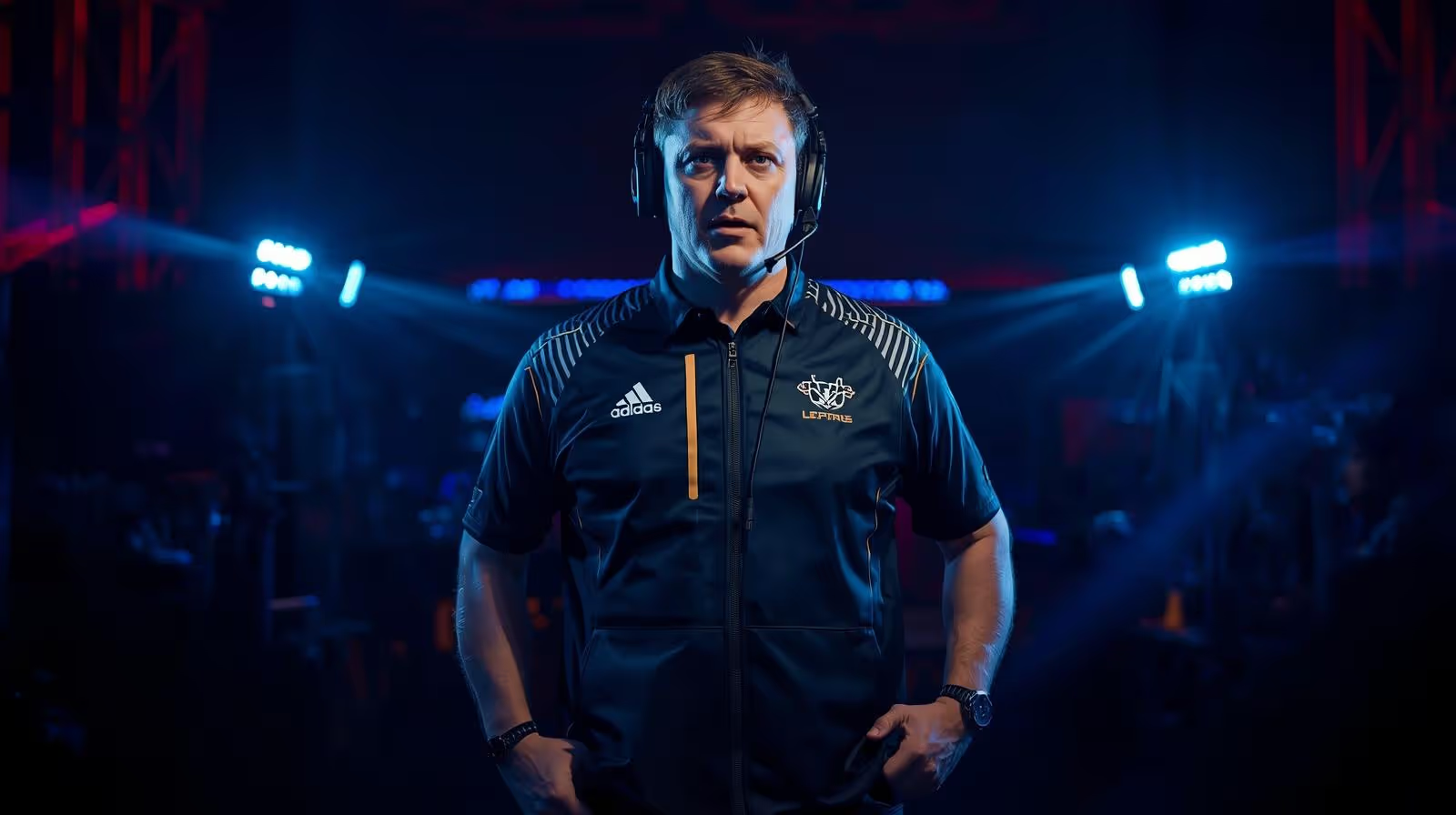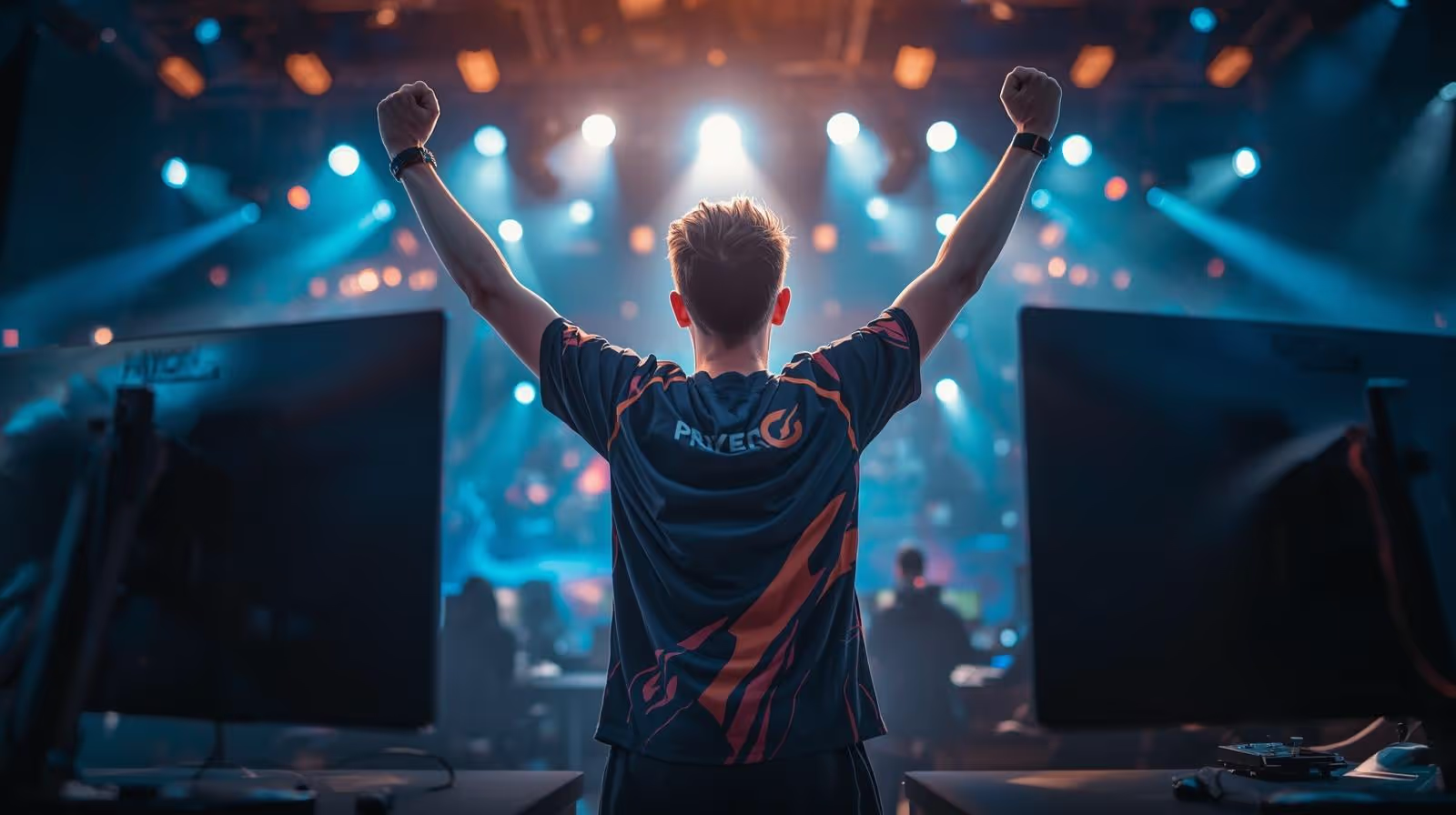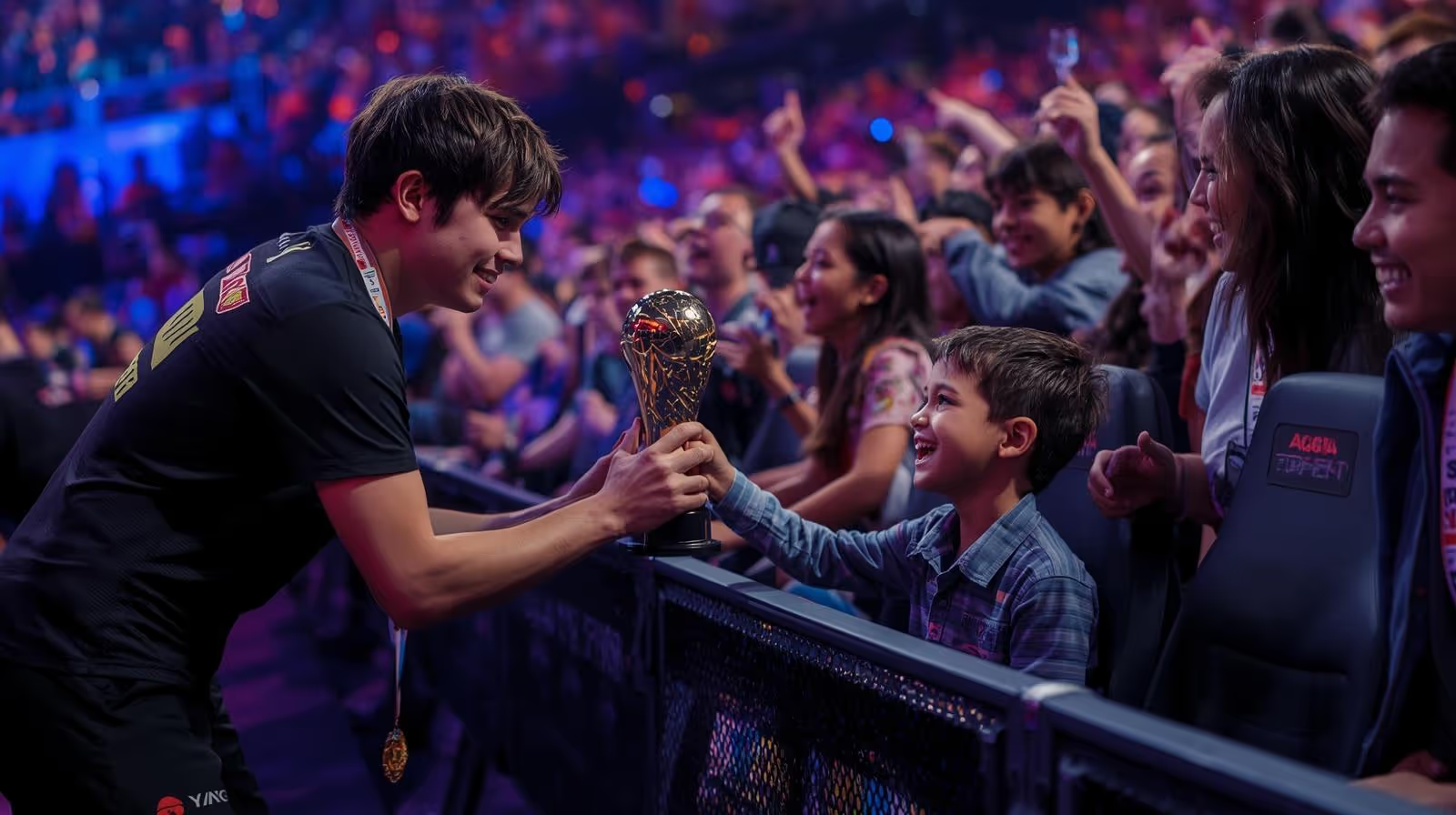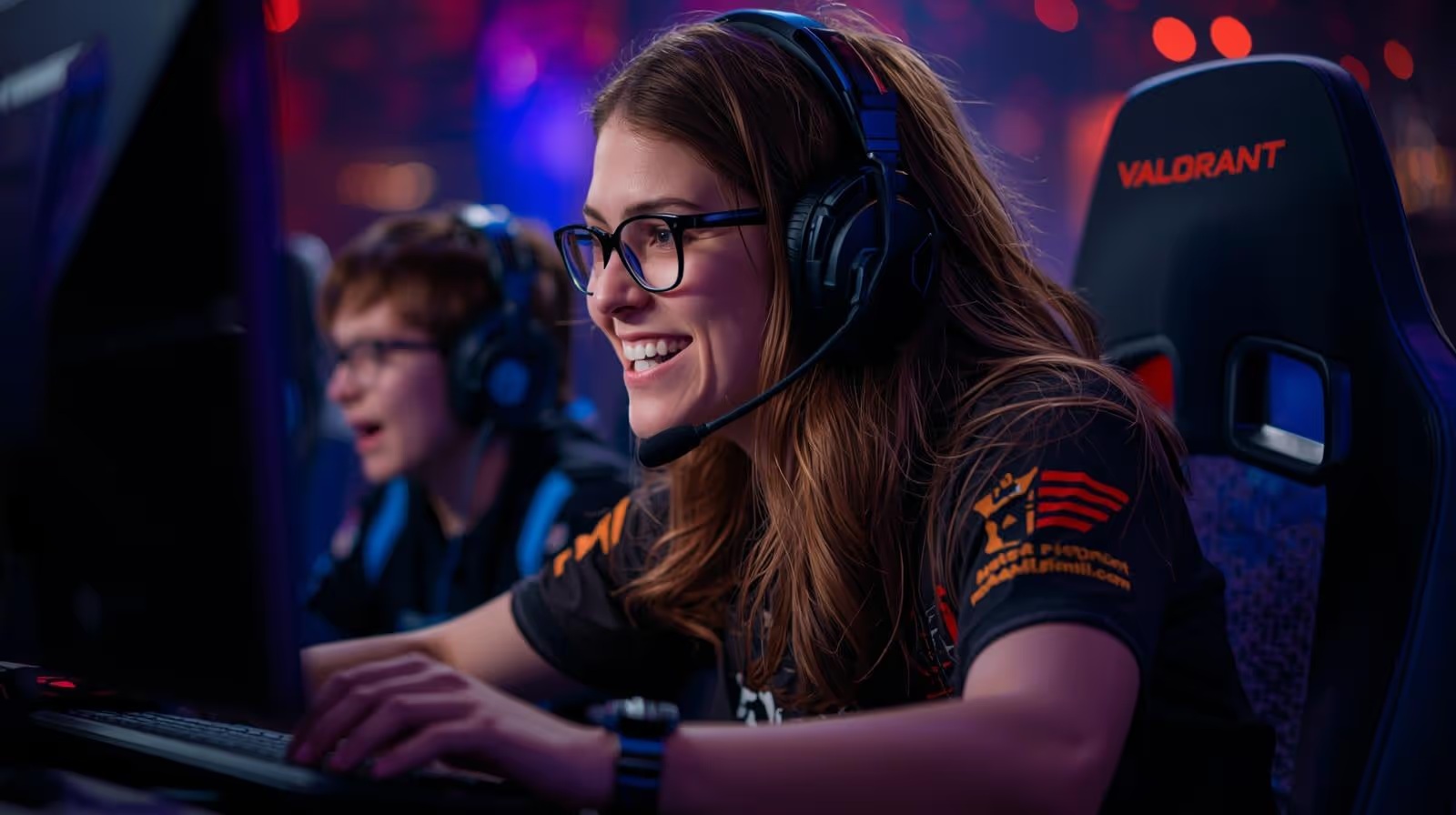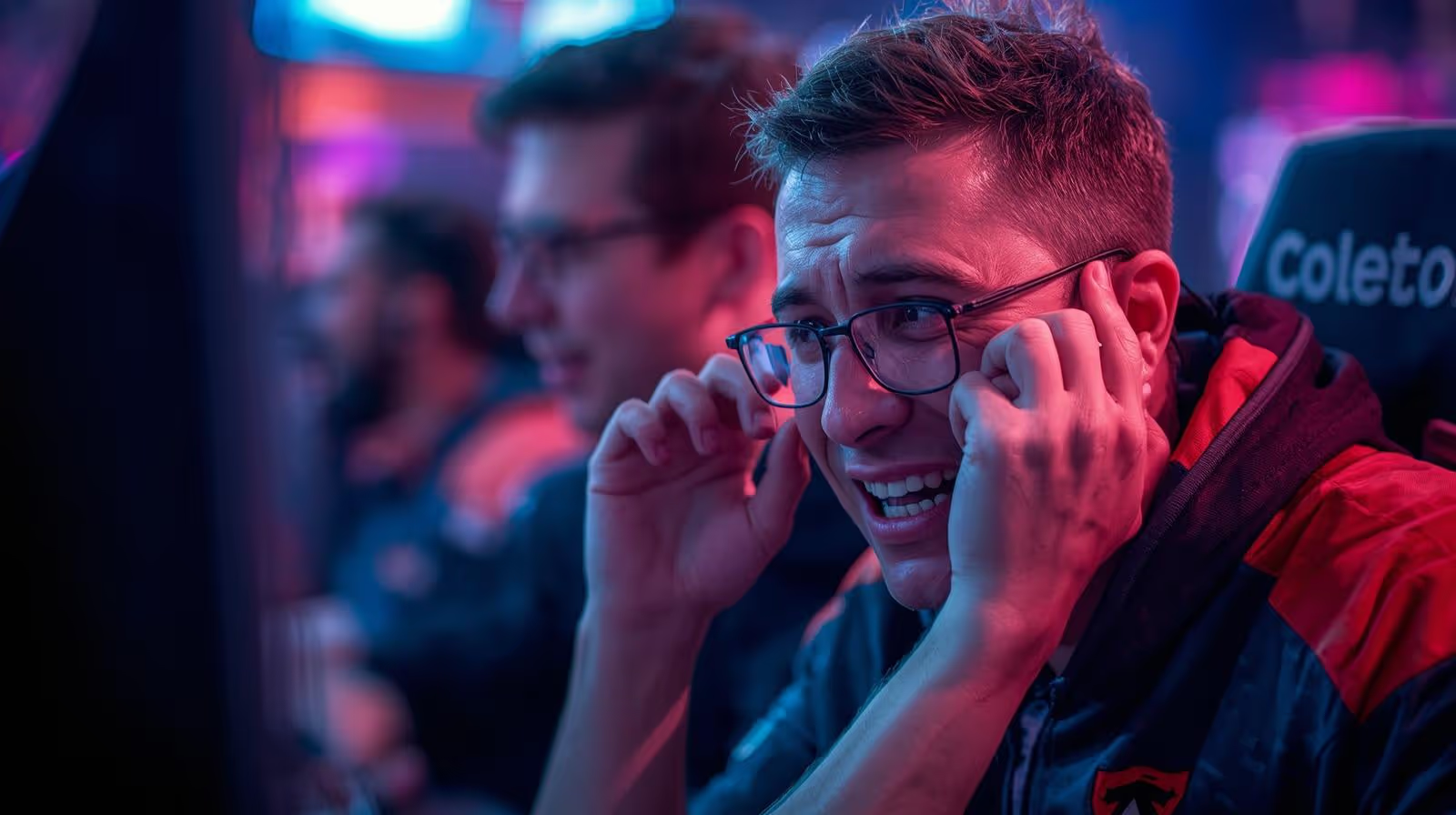


The message popped up in his inbox while he was watching another late night scrim stream.
“Have you seen this kid?”
A link, a timestamp, a simple note.
He almost ignored it. He had seen a hundred “next big thing” clips. But when he clicked, when he watched that single outplay unfold on his second monitor, something in his chest twisted.
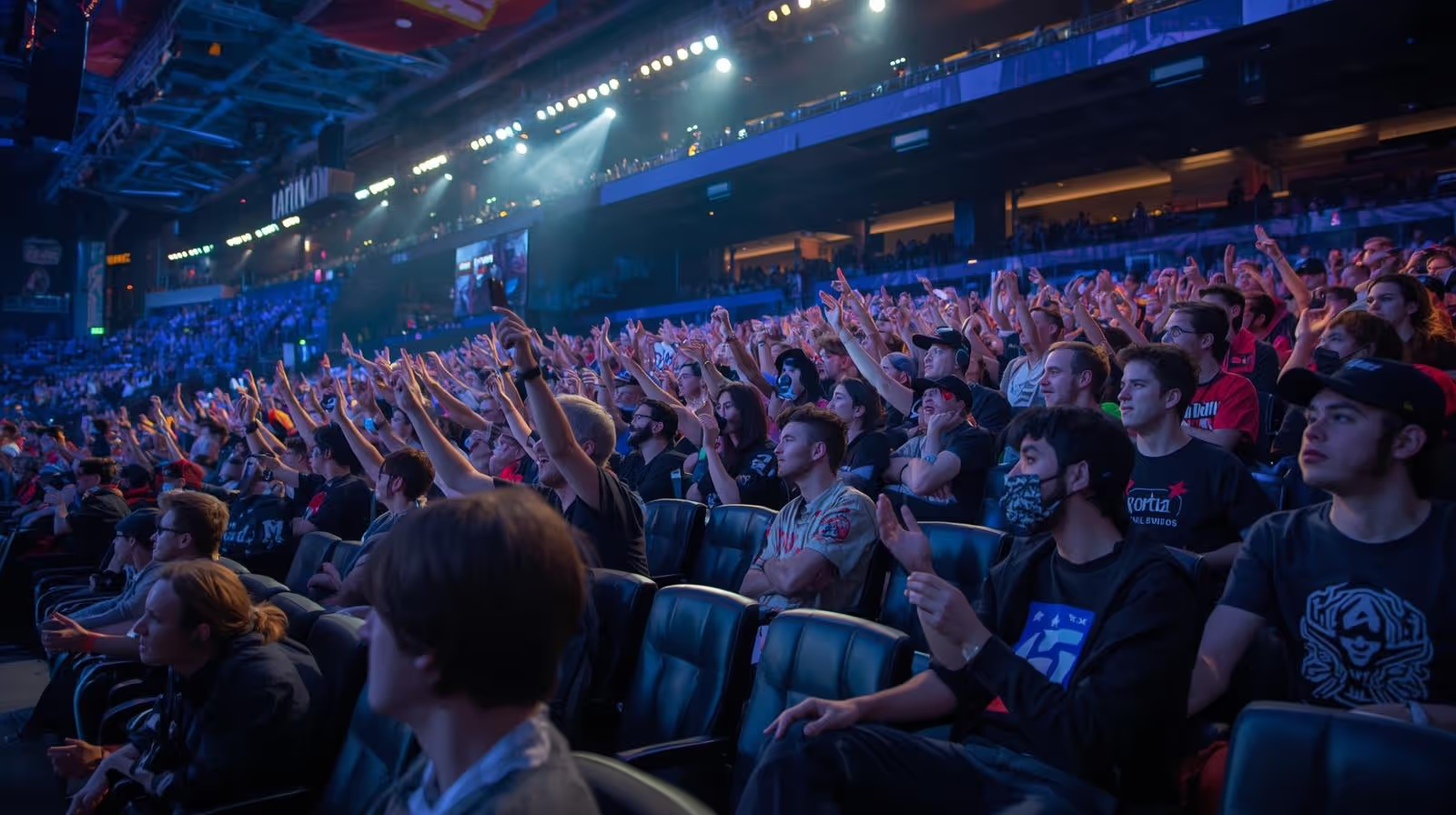
The rookie’s camera flashed forward, dodged a key skillshot by a pixel, then turned a lost fight into a clean ace. The crowd in the arena went wild. The casters screamed. Chat spammed emotes and copy-pastes.
He stared at the nameplate.
Same role. Same lane. Same style.
Same last name as the man who had ended his career.
In that moment, the retired star who once ruled a League of Legends style MOBA scene knew his quiet life was over. The modern franchised leagues, academy systems, and polished Worlds stages had moved on without him. But now the past and the future had collided in one player.
The son of his old rival.
He was about to step back into a scene that had passed him by, not to play, but to coach the one person who carried both his biggest regret and his best chance at a second life in esports.
This is a story about ego, mentorship, and what happens when an old rivalry crashes into a new generation.
The Rivalry That Shaped a Generation of Esports Fans
Back then, before slick studio sets and global watch parties were normal, their rivalry was the heartbeat of the league.
He was the fearless mid lane captain.
Shotcaller. Lane bully. The kind of player who would pick aggressive champions blind, walk up in lane, and dare you to punish him. His teams played around his roams and his calls. He took every fight like it was the last one he would ever get.
His rival played the same role, on a different top team. Cold eyes, calm face, almost no expression on stage. If the legend was fire, his rival was ice. He waited for mistakes, then punished everything. Smart lane control, clean wave management, late game teamfights that looked solved before they even began.
Every split, their teams met in finals.
Every final, the stories grew.
Fans argued for hours online. Who was better in lane? Who had the higher ceiling? Was raw aggression or patient control the “real” way to play mid? Memes flew around every time one of them died on stream. People made highlight videos that cut between their plays like a rap battle.
The league loved it.
Viewership records broke again and again.
Casters framed every meeting as a legacy match.
For years, if you watched this MOBA at the highest level, you had to pick a side. Fire or ice. Legend or rival. There was no middle ground.
How Two Star Players Went From Solo Queue Trash Talk to Sold-Out Finals
It did not start on stage. It started in solo queue.
Back when both were just names on a ranked ladder, they met in mid. He played his comfort assassin. The other locked in a control mage. The game turned into a duel in the center of the map.
All-chat was open.
“Nice gank diff.”
“Outplayed btw.”
Trash talk like that, harmless at first, began to follow them.
They fought in late night ranked sessions, traded wins, flamed each other in post-game lobbies, and picked into each other on purpose. Friends clipped their kills and posted them on forums. Soon, people queued up just to see if they would meet again.
Then came scrim drama.
Stories leaked about one team “running it down” in practice, about the rival refusing to remake after a pause, about a cheap level-two cheese gank that tilted everyone.
By the time they both hit pro play, the stage felt small for how big their egos had grown.
Early tournaments only poured fuel on the fire. One regional event had them meet in a semifinal, where the legend’s team pulled off a bold level-one invade. He roamed out of lane on a risky path, stole a jungle buff, and snowballed the entire game. In the post-game interview, he smirked into the camera and said, “He is free gold if you know how to punish him.”
The rival responded in the next match with a perfect teleport flank that wiped out the legend’s team at Baron. He stared at the camera, said nothing, then left the stage.
Fans took sides.
Streams spammed their names.
Every ranked game they played turned into content.
Trash talk had become a full-blown storyline. By the time they were headlining sold-out finals, everyone knew this was the matchup to watch.
The Night Everything Broke: The Final Series That Ended a Career
The series that changed everything looked like another classic.
Best of five. Packed arena. Worlds-style playoff.
Both teams built around their star mids, just like always.
The first two games were a blur of solo kills and roams. One game each. Chat exploded. Social media trended with their names. Analysts drew arrows all over the map in telestrator segments, breaking down their lane moves.
Game three went to the legend. He called for a gutsy dive under tier two mid, tanked turret shots, and still walked out with a double kill. The crowd chanted his name. Fans said the rivalry was finally swinging his way.
Then came game four, where the rival played his slow style. Late scaling, narrow early laning, perfect teamfight setups. The legend tried to force fights, missed a key engage, and watched the game slip away.
Game five became the one he could never forget.
Late game, tied gold, Baron on the map, both bases on a knife’s edge. He had control of mid wave, vision in river, and his team was calling to reset. Instead, he saw a low-health target near raptors and smelled a hero play.
He called for the collapse.
He flashed forward, whiffed his combo by inches, and got chain-cc’d.
Ace.
Baron.
Nexus.
His rival did not even celebrate that hard. He just hugged his teammates, shook hands, then lifted the trophy. Cameras caught the legend staring at the ground as the confetti fell.
The desk blamed him.
Social media turned on him.
Clips of the failed engage looped for weeks.
He felt burned out, empty, and alone. That one call became the symbol of his decline. Every time he queued up, someone typed, “Nice game five.” He tried to laugh it off, but deep down, something cracked.
That series became the shadow that followed him into retirement. It was also the match he later pulled up on screen for his rival’s son.
From Superstar to Retired Mentor: Why the Legend Walked Away From Pro Play
After that loss, he stayed in the league for a while, but something had changed.
The meta shifted again. New champions hit the live servers. Younger mids with faster hands and crazy champion pools flooded into the scene. The game he had mastered felt new and strange every other week.
Scrim days started to drag.
Travel felt heavier.
Every patch note read like a reminder that he was getting older in a young person’s sport.
He could have stuck around and coasted on his name. Some players did that. Instead, he chose to step away.
He made an official retirement post, thanked his team, cried a little on stream, and closed the chapter as a pro player.
He did not stop watching, though. He watched every split from the sidelines. He saw his rival keep playing for a while, then move into a staff role. He watched rookies he had never heard of become stars overnight. He saw franchised spots sell for big money, academy teams appear, and Worlds stages turn into massive events.
Esports was growing up without him, and he was not sure how to fit into it.
Burnout, Patch Fatigue, and the Cost of Staying on Top in Esports
People outside esports often ask, “Why retire so young?”
They do not see the daily grind.
Ten-hour scrim blocks.
Review sessions that stretch into the night.
Three hours of sleep before another flight.
Every patch, some champion he relied on got nerfed. Every season, new items rewired the meta. He had to relearn matchups, reset muscle memory, and rethink every decision.
At first, that pressure made him sharp. Later in his career, it just wore him down.
He started missing skillshots he never missed before. Younger mids punished his small errors. A rookie once solo killed him twice in ten minutes, then bowed in the all-chat with a simple “gg mid.”
The fear of “falling off” hit hard. He did not want to stay long enough for people to call him washed. So he walked away on his own terms, before a team benched him.
Many pros reach that same point. Your hands slow, the patch notes feel like homework, and the joy of playing fades behind stress and fear.
Life After the Stage: Streaming, Casting, and an Empty Feeling
Retirement did not mean disappearing.
He streamed ranked games and co-streamed big matches. His chat filled with old fans and new viewers who only knew him from highlight reels. He joked, told scrim stories, and did live analysis of drafts.
Sometimes, broadcast talent invited him to the analyst desk. He put on a blazer, smiled for the camera, and broke down mid lane matchups. Viewers spammed, “Coach when?”
On screen, he looked happy.
Inside, something felt off.
He felt like a guest in a house he had helped build. The league he once shaped with his rivalry now moved just fine without him. Younger pros took his records, teams changed brands, and new storylines replaced his.
At night, when the stream was off, he sometimes pulled up the VOD of that final series. Game five. The failed engage. The look on his rival’s face as the trophy rose.
“Is this what people remember most?” he wondered.
He wanted a way to rewrite that ending, but he did not know how. Coaching tempted him, yet he held back. Being a good player did not always mean being a good coach.
He did not want to fail twice.
A New Prodigy Appears: Meeting His Old Rival’s Son
The kid broke into an academy league first.
Whispers started in scrim circles.
“Have you seen that new mid on the academy squad?”
“He plays like a mix of both of them.”
The legend ignored the talk until that clip hit his inbox.
The highlight came from an academy playoff match. The rookie was behind, tower down, lane lost. The enemy jungler dove him under turret with a support. Instead of burning flash to run, the kid danced between their skillshots, juked into the fog, then turned with perfect timing for a double kill.
The camera zoomed on his face. Young, calm, focused. The nameplate showed a family name that hit like a punch.
His rival’s son.
At first he thought it was a joke. Then he checked the player profile. Same hometown. Same last name. Same role.
The past had sent him an invite.
The Clip That Changed Everything: Watching the Kid’s First Big Outplay
He watched the full VOD.
The rookie roamed with confidence, set up vision before every move, and played with sharp, fearless mechanics. It reminded him of his own early days. There was the same hunger in his trading, the same “fight me” body language on the map.
But there was something of the father too.
In mid game, when the team had a small lead, the kid did not overforce dives. He held waves, farmed carefully, and called for slow setups around objectives. His pings were clean. He shifted from raw aggression into control at the right times.
It felt like someone had spliced two playstyles into one body.
He sat back in his chair and realized he was smiling.
Pride, for a scene that now raised players this complete even at academy level.
Fear, because the name on screen carried so much history.
A strange sense of fate, because of all the rookies in all the roles, it had to be this one catching his eye.
Somewhere between minute twenty and thirty of that game, he knew watching would not be enough.
Old Emotions, New Generation: What the Rival’s Son Represents
To him, the kid was not just another rookie.
He was the echo of a finals stage, the living reminder of a handshake line that felt like a funeral. The boy carried the blood of the man who had lifted the trophy over him.
At the same time, the son had nothing to do with that old pain. He was young, hungry, and free of all the drama. He did not choose his last name. He had just chosen mid lane.
In esports, careers are short. A few splits at the top, maybe a couple of deep Worlds runs, then the next wave comes through. Fans move on fast. Legends fade into highlight channels.
Helping this kid become great could mean something different.
It could be a way to pass on all the lessons bought with that painful game five. It could be a way to protect someone with his rival’s face from burning out like he did. It could be his way of proving that his mind for the game still had value.
He asked himself a hard question:
“If I help this kid reach the top, do I finally beat my own past?”
He did not know the answer, but for the first time in years, he felt pulled toward the stage again.
Why a Retired Legend Came Back Just to Coach His Old Rival’s Son
The academy team wanted a stronger coaching staff for the next split. The org reached out to former pros. His name circled in talks, as it always did.
This time, he did not let the message sit.
He replied, asking a simple question:
“Is your mid staying next split?”
When they confirmed, negotiations moved fast. The org liked the story. Viewers would love the angle. The son of an old champion, coached by his father’s legendary rival, in a modern franchised system that craved storylines.
His reasons were not simple hype, though.
He wanted closure on his own legacy.
He respected his rival enough to care about the kid’s future.
He wanted to protect this young player from making the same greedy calls that had ruined his last series.
Most of all, he wanted to prove to himself that he was more than one failed engage. Coaching meant showing that his game sense still mattered, even if his fingers were slower.
When he signed the contract, his hand shook a little.
He was back, not as a star, but as a mentor to the son of the man who had beaten him at his peak.
From Enemies to Respect: The Quiet Deal With His Former Rival
Before the news went public, he made one more move.
He messaged his old rival.
They met in a quiet cafe near the arena, far from cameras. No jerseys, no lights, just two retired mids and a lot of old weight between them.
The first minutes were awkward. They joked about solo queue griefers. They complained about new items. Slowly, tension faded.
Then they talked about the kid.
The father asked blunt questions.
“Why do you want to coach him?”
“Can you handle fans dragging up our history?”
He answered honestly. He spoke about the clip, about feeling lost in retirement, about wanting to pass on more than just VODs.
The rival surprised him.
“He respects you,” the father said. “He grew up watching our finals. He watched that game five more than you think.”
They went over the son’s habits. Too eager to fight level three. Sometimes tunnel-vision around side lane kills. Strong voice in mid game, but still shy in review meetings.
By the end of the talk, they shared something they did not have in their prime: respect. They both cared more about the future of the scene, and about this kid, than about old beef.
They shook hands, this time with no cameras.
Coaching the Son of the Man Who Beat You: Rules, Limits, and Hard Truths
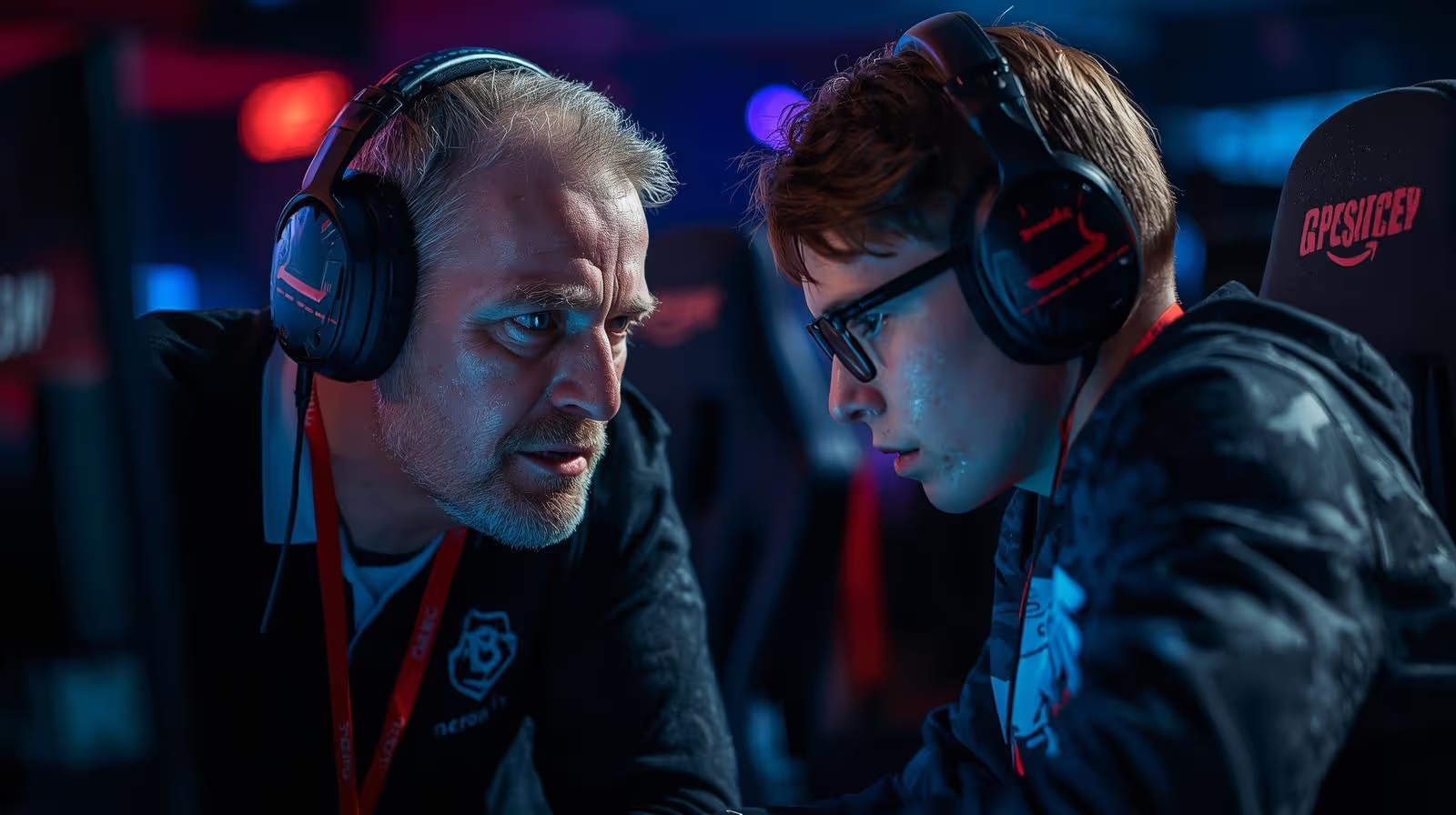
On day one of practice, he set clear rules with the rookie.
“No drama farming. We do not chase clout off my past or your dad’s name.”
“No special treatment because of who you are.”
“Full honesty in reviews. If you mess up, I say it. If I mess up, I say it too.”
They watched VODs together. Not just the son’s games, but that old finals series as well.
The kid saw game three and laughed at the wild dive.
He saw game four and asked about macro decisions.
When they reached game five, the room went quiet.
The coach did not skip the mistake. He paused on the frame where he flashed in.
“This,” he said, “is what happens when ego calls the play. I saw a kill and forgot the game state. We had mid wave, vision, and reset timers. I threw away a title because I wanted to be the hero.”
The rookie listened, eyes locked on the screen.
“Then we won’t make that call,” he said.
They worked on basics first: wave control, trade windows, tracking jungle starts. Then they built up to bigger things: calling lane state to teammates, staying calm after a bad death, giving better interviews.
He did not try to turn the kid into a copy of himself or a copy of his father. He used his own failures as building blocks instead of secrets.
Building a New Identity: Helping the Kid Escape His Father’s Shadow
The hardest part was not mechanics. It was identity.
Every time the rookie queued up, someone typed, “Mini-dad.” Casters compared his laning to his father’s. Fans asked if he would replay the old rivalry.
The coach made it clear.
“You are not your dad’s rerun. You are not my rematch. You are you.”
They experimented with picks that fit the son’s own style. Flexible champions that could roam or scale. Drafts that trusted his calls around objectives. Some games he shot-called side lane plays. Other games he anchored mid and let junglers shine.
When interviews pointed at the family name, the coach stepped in.
“He is his own player,” he told broadcast. “If you watch his VODs, you see a style that is different from mine and his dad’s.”
Inside the team house, he pushed the kid to own his voice. Speak up in reviews. Call out even the coach if something felt wrong. Take pride in his decisions, not just his name.
Slowly, the rookie’s tag started to feel less like “someone’s son” and more like a name fans respected on its own.
The Comeback Stage: When Coach, Rookie, and Rival Meet Under the Arena Lights
Inevitably, the bracket did its thing.
The academy squad, guided by the retired legend, made a deep playoff run. On the other side, the main roster tied to the father’s legacy dropped into a lower bracket series.
Bracket magic happened.
They met on stage.
The storylines wrote themselves.
The son, mid for the academy upstarts.
The coach, former superstar on the sideline.
The rival, now a staff figure behind the opposing team.
Crowd signs called back to old finals and new blood. Casters set the scene, talking about how this esport had grown from solo queue trash talk to multi-layered family legacies inside franchised systems.
For the coach, walking into the arena felt like walking into a time loop. Same tension, same crowd energy, but a different role and a different purpose.
Draft Room Tension and the Game Plan That Tests Everything
In the draft room, he made a bold choice.
He put his mid on a champion that needed leadership, not just hands. A pick that had to call rotations and set up fights, not just execute combos.
The game plan targeted his old rival’s style, built from years of memory. He knew how that staff liked to play early jungle. He knew they leaned on safe lanes into mid, then shifted pressure top.
Prep points were simple and clear.
“Track early jungle pathing through vision, not guesses.”
“Do not flip early skirmishes without lane priority.”
“Late game, you make the first call around major objectives, not me.”
He wanted the kid to be more than a passenger. This was the test he had been building toward since the first clip.
Could the son stand on stage, face a team shaped by his father, follow a plan made by his father’s old rival, then still find his own line when things broke?
The Moment of Truth: Misplays, Adaptation, and a New Legacy
The series did not go clean.
In game one, the rookie tried to force a signature outplay, flashed in for a solo kill, and died to a last tick of damage. The enemy mid snowballed. They lost.
Old fears poked at the coach. Was this his game five curse repeating?
In review between games, he did not rage.
“What did you see?” he asked.
“I thought I had lethal,” the kid said. “I ignored jungle timer.”
“Then fix that, and play the next game,” the coach replied.
Game two, the son played calmer. He tracked vision, called missing timers, and passed on risky engages. They won off a clean mid game objective setup that looked like something out of his father’s old VODs.
Game three became the real turning point.
Late game, even gold, both teams around Baron. The coach suggested one plan through comms. The son saw something else.
“I can push mid and threaten end if they start Nash,” the kid said. “Trust me.”
There was a pause. The coach thought of that long-ago flash toward raptors, of how his own ego had chased a hero moment. This felt different. The kid had set up waves, checked vision, and counted enemy flashes.
“Alright,” the coach said. “Call it and we follow.”
The enemy started Baron. The son shoved mid, slipped into the jungle, and forced a split decision. When the other team split to answer, he called for a turn, not to end, but to isolate the enemy jungler. They collapsed, killed him, then took Baron themselves.
It was not his father’s patient style.
It was not his coach’s reckless one.
It was something new, smart, and his own.
They did not need a miracle fight after that. They closed out the game with steady, clean play.
Whether they won the full series or lost in five mattered less than what everyone in that arena saw.
A rookie who could fail, adapt, and lead.
A retired legend who had learned to let go of his ego and trust the next generation.
A father watching his son step out of his shadow, guided by the man he once beat.
Conclusion
In a scene built on patches, scrims, and short careers, the best stories come from rivalries that refuse to die.
This one just happened to turn into a partnership.
A retired mid lane star who could not forget a single failed play found a second career by coaching the son of his old rival. Along the way, he learned that legacies are not frozen in VODs. They live in ideas passed down, mistakes shared openly, and young players who grow beyond their labels.
For fans, it was a reminder that retired pros still have huge value as coaches and mentors. For players, it showed that one bad series does not define a life. You can come back, in a different role, and write a new chapter.
If you were in his spot, would you go back to coach your old rival’s kid, or keep your distance from the past? Whatever your answer, the story points to a hopeful future.
Esports is starting to feel like a long-term sport, with generations learning from each other, not just chasing short bursts of fame. And in that future, every rivalry has the chance to turn into something bigger than a single match.