

If you open a random simracing Discord voice channel today, you might hear a name that sounds strange at first: KymiRing, near Iitti and Kausala in Finland. For decades this area was just forest, farms, and a highway exit a long drive from the capital. Now it pops up in esports chats, highlight reels, and racing forums all over the world.
How did a quiet rural town, not a big city full of neon and arenas, end up on the simracing map?
The answer sits at the meeting point of real racing and virtual racing. It is a story about a modern race track in the middle of the woods, a passionate Finnish simracing community, youth talent with bedroom rigs, and esports events that treat virtual racing as real competition.
Hidden inside that story is a simple lesson. Any small town that picks one strong focus, supports its community, and connects real life with esports can build a niche that people far away will care about.
Let’s unpack how it happened.
Where Is This Finnish Simracing Capital and Why Should Esports Fans Care?
Iitti and Kausala sit in southeastern Finland, not far from the town of Kouvola. Picture long stretches of pine forest, lakes, and fields, then a modern race circuit rising out of the trees. That circuit is KymiRing, and it turned a quiet area into a name sim fans actually recognize.
On a map, the place looks like the opposite of a classic esports hub. There is no huge downtown skyline, no multi-purpose arena packed every weekend, no cluster of giant team offices. Most people outside Finland had never heard the names Iitti or Kausala at all.
So why should esports fans care?
Because this small area shows something important: you do not need a giant city to build a respected competitive scene. What you need is a clear identity. For Iitti and Kausala, that identity is racing, both real and virtual.
From Unknown Village to Name Everyone Says in Simracing Lobbies
For a long time, the village was just another dot on the Finnish road network. Locals knew it for farming, a few services, and the natural scenery. International fans barely spotted it on rally maps.
That changed when KymiRing was built nearby. Motorsports media started talking about a serious new circuit hidden in the forest. Test days, national races, and international plans drew drivers, engineers, and camera crews.
Simracers watched.
Clips from onboards and drone shots made their way into Discord servers. People compared corners to famous turns at other circuits. Streamers and league admins began dropping the name in chats when they talked about “that big new track in Finland.”
The recipe was simple but powerful: a real circuit with character, good video footage, and a country that already loves motorsport. Word of mouth did the rest.
What Makes Simracing Different From Other Esports?
To understand why this matters, it helps to be clear about what simracing is.
Simracing is competitive racing with software that tries to model real cars and tracks as closely as possible. It is not just about pressing gas and brake buttons; you feel the car through a wheel and pedals, sometimes on a heavy metal rig with a racing seat.
Good sims model:
- Tire grip and wear
- Suspension movement
- Aero balance and slipstream
- Weather and track temperature
On top of that, most popular sims use laser-scanned or carefully measured circuits. Drivers learn real braking points, curbs, and racing lines. Many real-world pros use sims for training.
So simracing sits in a special spot between traditional esports and real motorsport. The skills transfer both ways. That is why having a real track like KymiRing close by is such a key advantage. It gives data, stories, and a physical “home base” that pure online games cannot copy.
How KymiRing Turned a Small Finnish Town Into a Real and Virtual Racing Hub
KymiRing is the main anchor that pulled Iitti and Kausala into the global motorsport conversation. It is a long, flowing road course with over twenty turns, clear elevation changes, and one of the longest straights in Europe. The design targets top-level bike and car racing, plus rallycross on a linked layout.
Imagine seeing that kind of track in the middle of deep forest. It looks almost surreal, like someone dropped a world-class circuit into a postcard.
The track had a rough early period with money issues and canceled events, but new ownership brought it back to life. Today it hosts high-level rallycross and motocross rounds, along with national series and testing. That steady stream of events keeps camera crews and media coming back, which is great raw material for esports content.
Building a World-Class Track in the Middle of Finnish Forests
Building KymiRing was a bold decision for a small municipality. The plan was not only to host races, but also to bring in tourism, training camps, and business events.
The main track covers several kilometers with a mix of fast and technical sections. Drivers talk about the long straight that demands top speed setups, then a tight complex that punishes late braking. The linked rallycross course adds jumps, gravel, and high-energy action that looks amazing on camera.
Money problems and construction delays slowed down some early dream events, but the circuit never lost its symbolic power. Even when big series hesitated, people in racing circles still spoke about “that huge new track in Finland” that was built to serious standards.
For local residents, KymiRing became a point of pride. For simracers, it became a new obsession.
From Asphalt to Screens: Turning KymiRing Into a Simracing Favorite
When a real circuit starts to get attention, simracing communities always ask the same question: “When can we drive this at home?”
That path from asphalt to screen usually follows a pattern:
- Teams or circuit staff collect detailed GPS data and photos.
- Laser-scan crews or modders capture the exact layout and surface.
- Artists and physics designers turn that into digital geometry and grip models.
- Online leagues slot the track into calendars for hot-lap events and long races.
KymiRing fits this model well. The long lap, tricky braking zones, and fast corners promise great racing in sims. Even before any official title adopts it, modders and local leagues can sketch their own versions, test setups, and run “home race” events for Finnish drivers.
For streamers, a lesser-known circuit is content gold. They can record track guides, setup talks, and “first time at KymiRing” videos that give viewers something fresh compared to the same old list of classic tracks.
Real Events That Powered Virtual Hype
Real racing at KymiRing feeds directly into simracing hype.
Rallycross and motocross rounds bring broadcast graphics with the track name, aerial shots of the layout, and interviews with drivers who call it demanding and fun. Clips float around social media, and sim fans start imagining their own laps.
Event organizers can use that attention in smart ways:
- Set up simracing rigs in fan zones so visitors try a virtual lap.
- Run online hot-lap contests that mirror the real event weekend.
- Show side-by-side shots of a real car and a sim car in the same corner.
Those simple touches link viewers’ brains: “This track I see on TV is also where my favorite sim drivers race.” Once that link forms, the idea of Iitti and Kausala as a simracing hotspot does not seem so strange.
The Finnish Simracing Community That Turned a Track Into an Esports Powerhouse
A track is just asphalt without people. What turned the KymiRing region into a real esports story was the strength of Finnish simracing as a whole.
Finland already had a deep culture of rally and circuit racing. When serious sims became available, a lot of that passion moved online. Communities formed around shared standards, fair rules, and long-running leagues.
F.A.S.T. and the Rise of Organized Simracing in Finland
Finnish Auto Simracing, known as F.A.S.T., is one of the key groups behind that structure. Think of it as a national organizer that runs leagues, sets rulebooks, and works with the Finnish Esports Federation.
F.A.S.T. has organized championships in popular racing titles, including Gran Turismo and circuit sims with proper physics. They handle:
- Race calendars and formats
- Stewarding and penalties
- Technical rules for car choices and setups
- Broadcast overlays and results
By connecting with the broader esports federation, simracing in Finland gained more respect and support. Sponsors took it more seriously. Traditional motorsport clubs near KymiRing saw simracing as a partner instead of a toy.
That created a clean bridge between the big new track in the forest and the players who wanted to race on screens.
National Championships, Nordic Leagues, and Live Finals With Real Crowds
When races turn into official championships, everything steps up.
Suddenly you have trained race control staff, replay reviews, and strict rules about contact. Broadcasts use multiple camera angles, commentator pairs, and live timing on screen. The product starts to look like a real motorsport show.
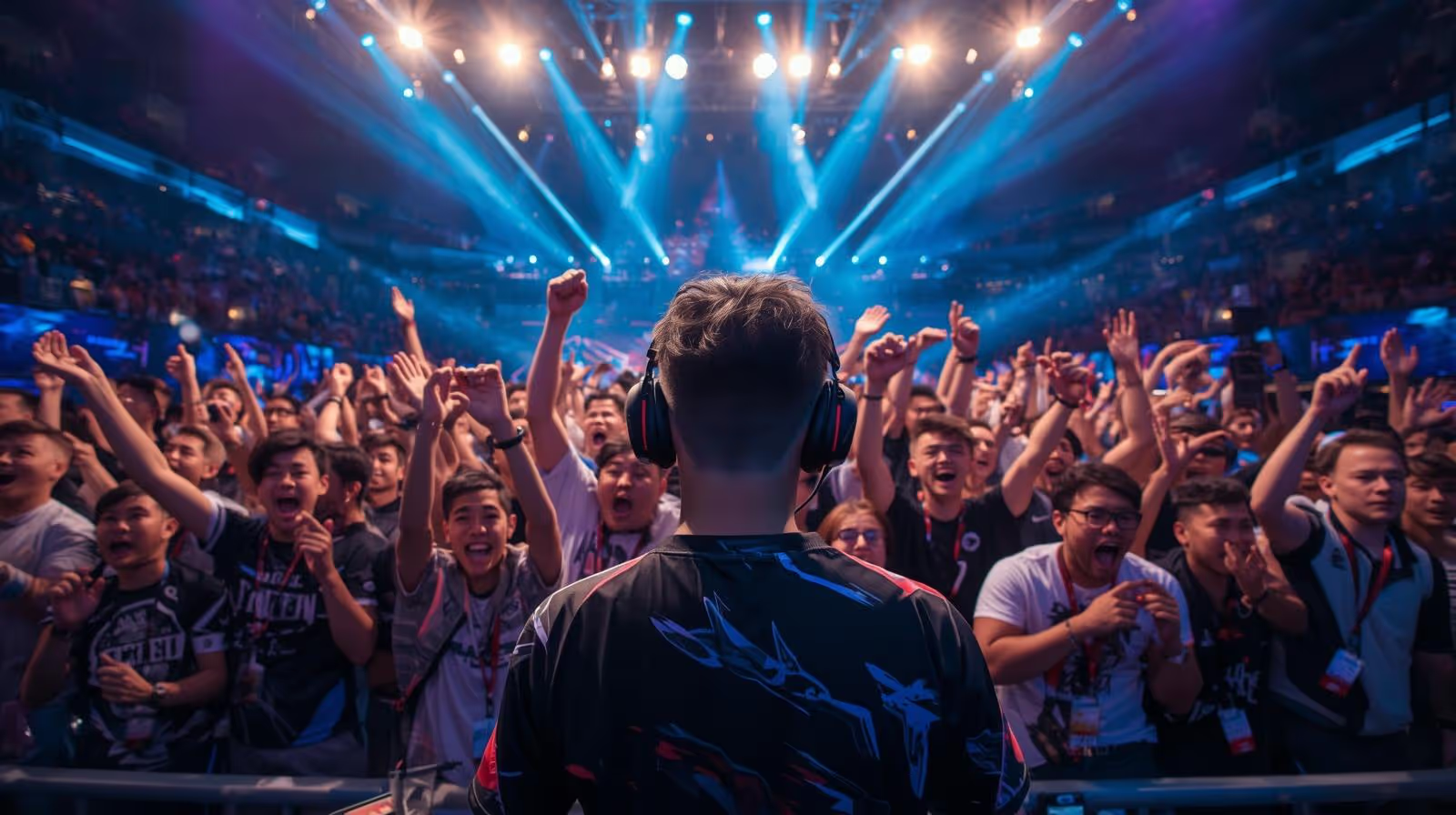
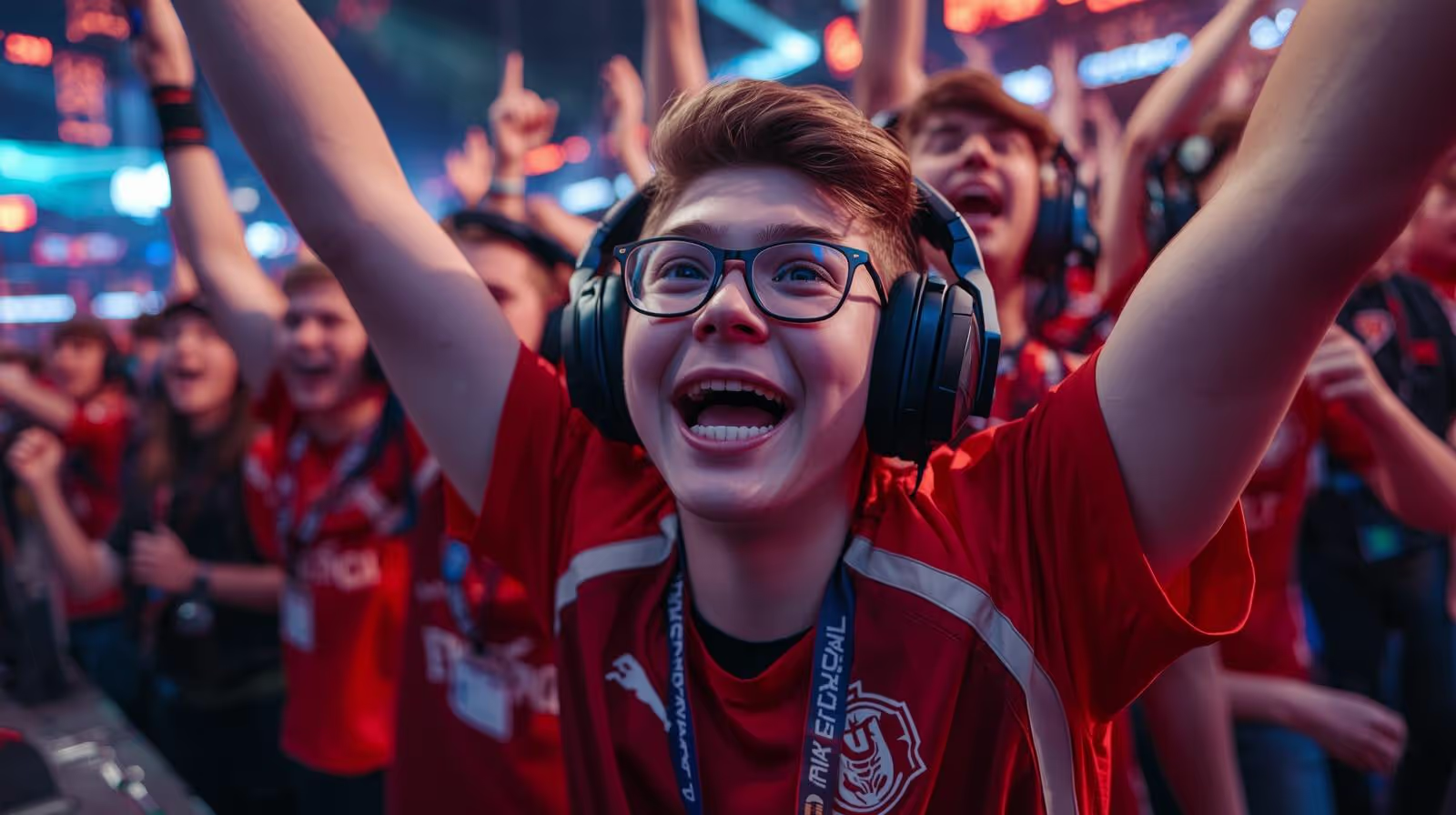
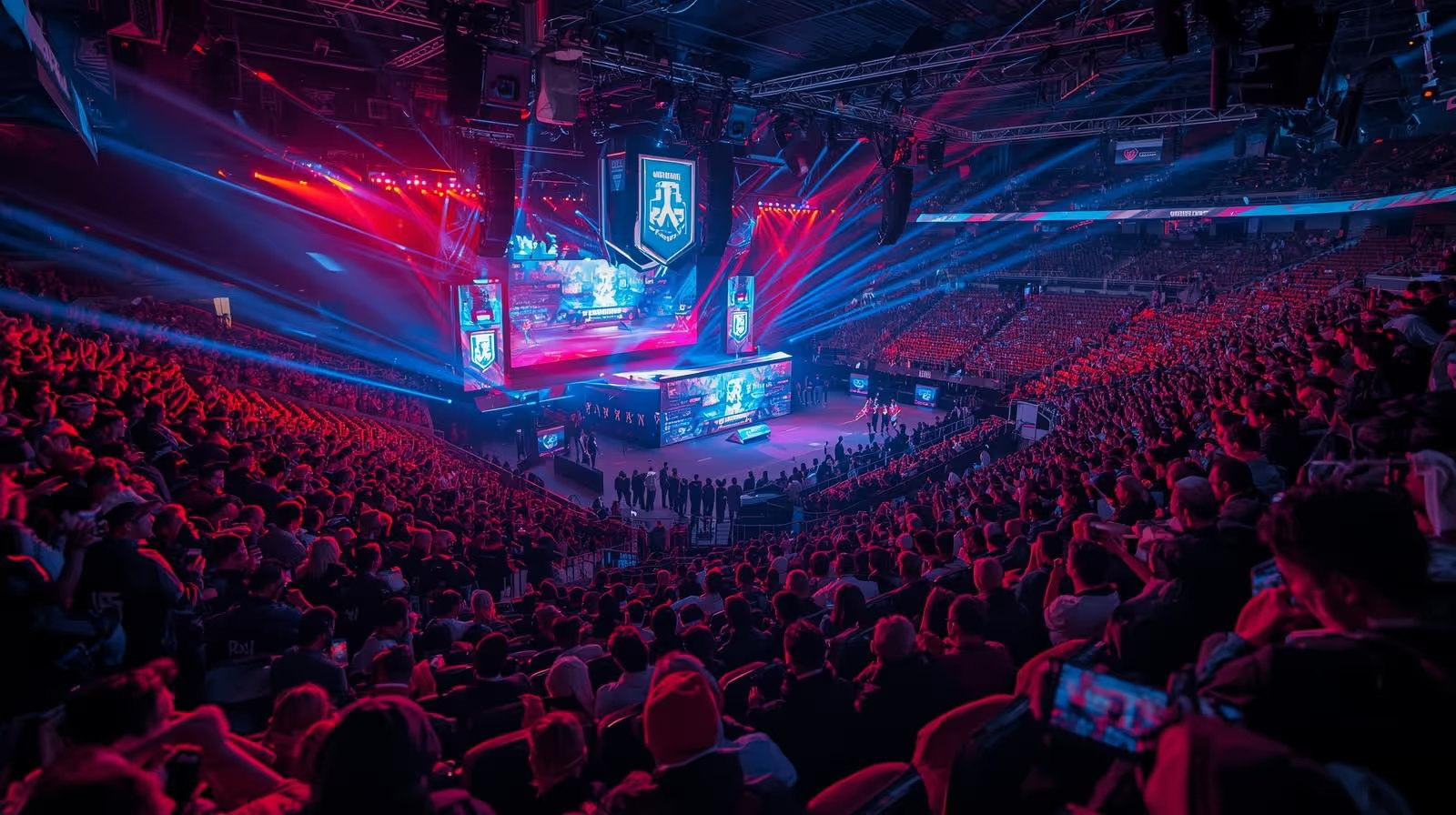
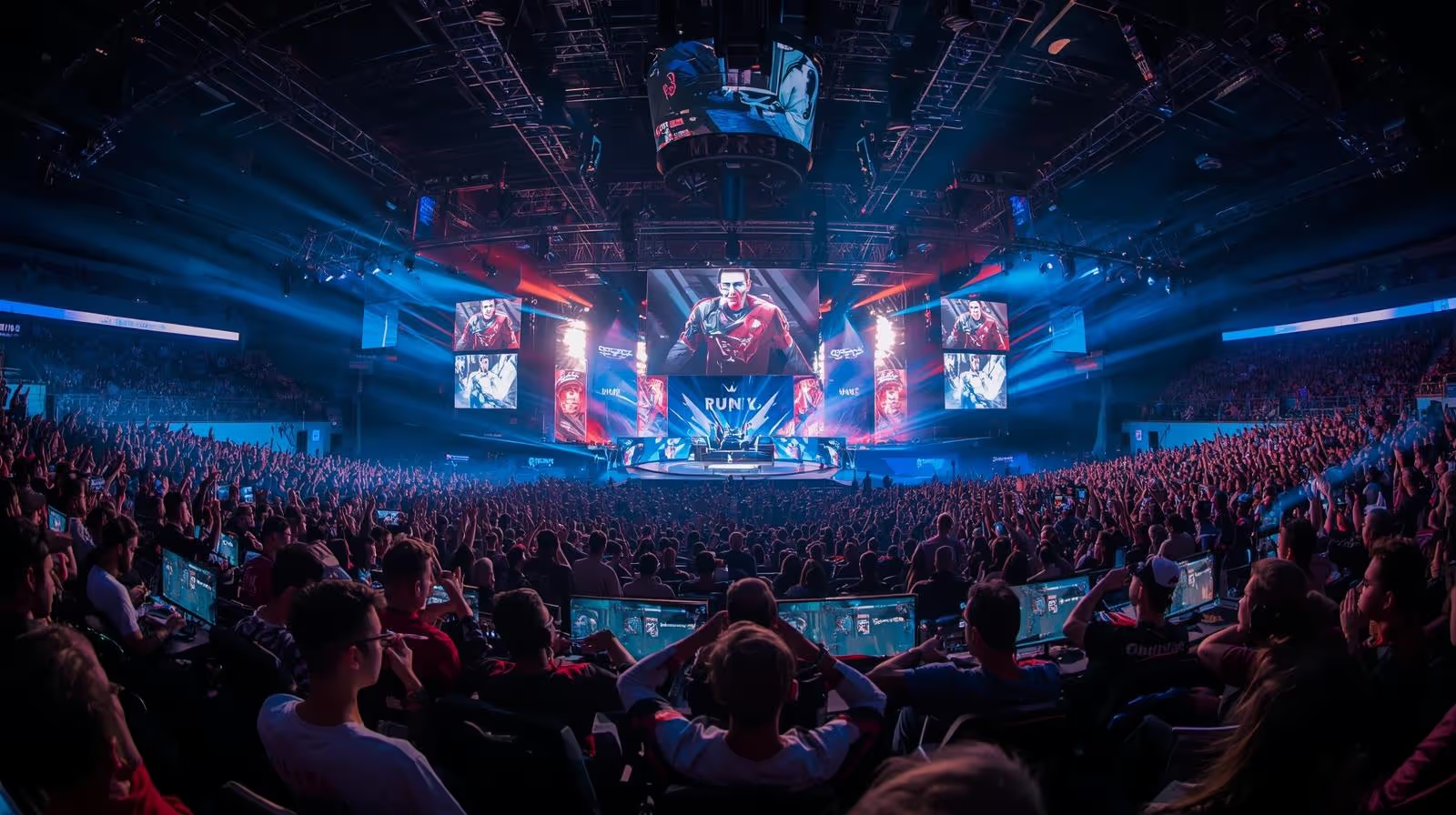
One standout example is the Finnish Gran Turismo Championship. Finals have been held as live events at gaming festivals such as Tubecon Games, with drivers sitting on identical rigs facing giant screens. There are casters on stage, lights, music, and a crowd that reacts to every overtake.
That kind of LAN final feels very different from a quiet race at home. For fans, it proves that simracing belongs next to other esports on big stages. For the KymiRing region, it adds weight when they market the area as a serious racing center, not just a place where a few people play games.
From Bedroom Rigs to World Stages: How Local Talent Broke Through
Behind every “simracing capital” you will find players who turn local passion into big results.
Take drivers like Johannes Karhapää, one of the best-known Finnish Gran Turismo racers. His path looks familiar to many young simracing fans. It starts with a basic wheel on a desk and long nights learning tracks. Then come local leagues, national championships, and invitations to larger international events.
For drivers near KymiRing, there is an extra twist. That huge circuit becomes their reference point. They talk about it in interviews, test there in real cars when chances appear, and post content that ties back to the region.
When fans abroad follow those careers, they start to link Finnish sim talent, the national structure, and that track in the forest into one story.
Rigs, Gear, and Local Companies Powering the Scene
Hardware matters a lot in simracing. A stable rig, a strong wheelbase, and precise pedals can make the difference between control and chaos in a long race.
Finland has spawned its own small cluster of sim hardware makers. Brands like OverPower and other local engineering shops build heavy-duty rigs, frames, and pedal sets tested by competitive drivers. People associate them with simple design and tough build quality that suits long stints in cold garages or small apartments.
Having those companies close to the KymiRing area helps events. Organizers can:
- Rent identical rigs for finals.
- Get custom frames sized for specific venues.
- Fix or swap parts quickly during live shows.
Instead of shipping everything from far away, the region feels like a real industry hub. There is a track, there are players, and there is gear built by people who understand what long sim races feel like.
Grassroots Simracing: How Public Sims and Small Venues Turned Locals Into Esports Fans
No esports scene survives on professionals alone. It needs casual fans, kids, and curious parents who are willing to try something new.
Across Finland, public simulators in malls, entertainment centers, and theme parks feed that pipeline. They let anyone sit down and feel what a racing rig is like, often for the price of a movie ticket or less.
That wider culture supports what happens around KymiRing, because it keeps new people flowing toward organized leagues.
First Taste of Racing: Public Simulators and Family Centers
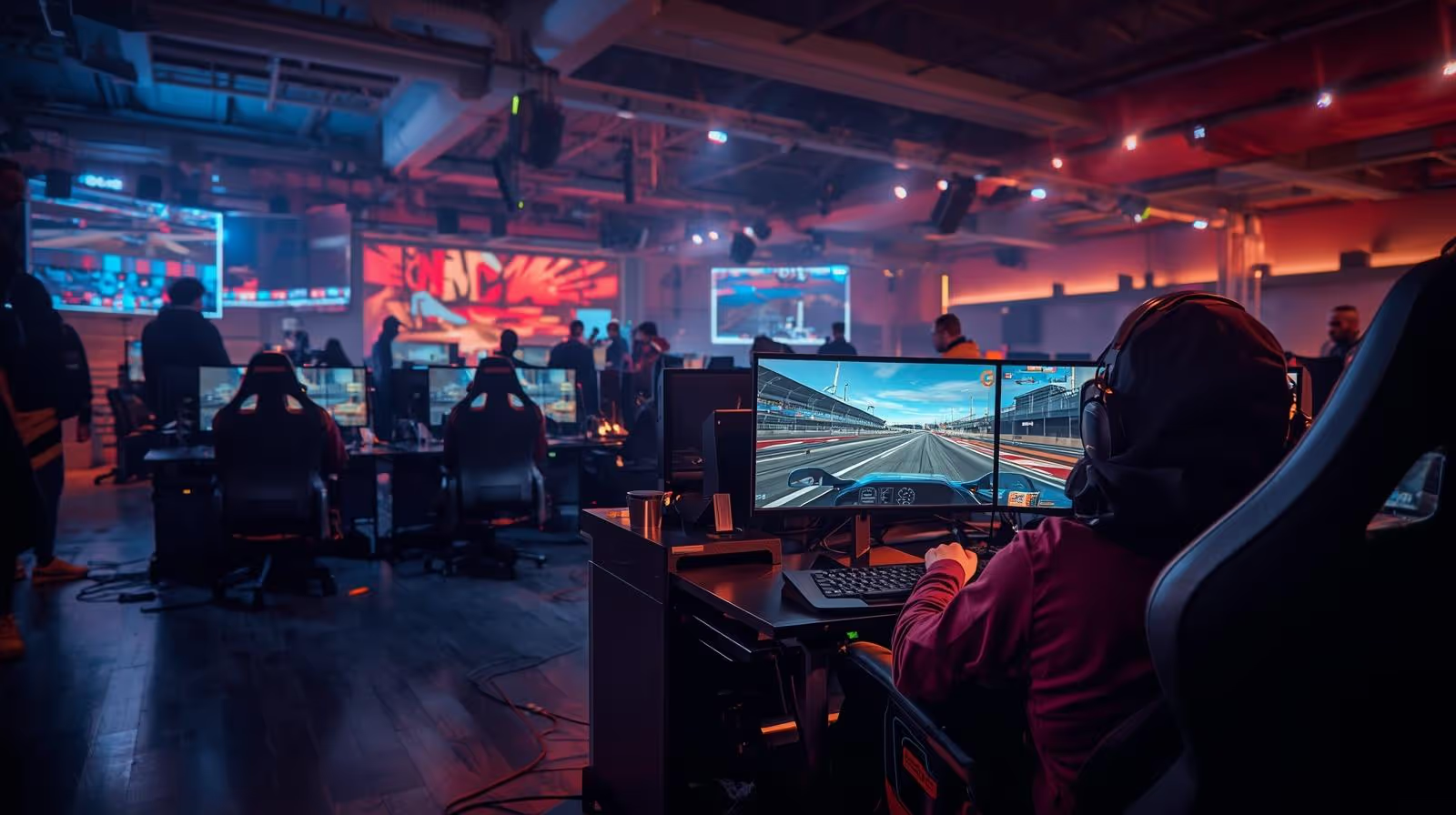
Picture a corner of a shopping center. Two motion rigs sit under bright lights, each with a racing seat, triple screens, and a wheel that fights your hands when you turn. A leaderboard on the wall shows the fastest lap of the day.
Kids tug on their parents’ sleeves and say, “Just one race, please.” Friends challenge each other. Staff members explain basic controls, then watch as drivers realize how hard late braking really is.
Those first tries are more than simple rides. They are soft introductions to simracing. Some centers hand out cards or QR codes that link to beginner leagues or local community Discord servers. From there, organizers tied to the KymiRing region can invite interested players to join online rookie races or track-specific challenges.
From Casual Hot Laps to Ranked Leagues and Official Esports
How does a kid who discovers a sim rig on a rainy weekend turn into a driver on a national esports stream?
The path usually looks like this:
- They join a public or school-based fun race night.
- Someone points them toward a beginner-friendly online league.
- They race weekly, learn etiquette, and climb from rookie splits.
- Organizers notice pace and invite them to national qualifiers.
- Strong results open doors to official championships or LAN finals.
The KymiRing area gives that path a physical destination. When a young driver earns a place in a bigger event linked to the track, it feels like a hometown call-up. Families might travel there, see the circuit in person, and watch their kid race on a big screen only a few kilometers away from the real corners.
That mix of online progression and local pride is what turns esports into part of daily life, not just something on Twitch.
Conclusion: What Other Towns Can Learn From Finland’s Simracing Capital
KymiRing, Iitti, and Kausala did not become a simracing capital by copying big cities. They did it by doubling down on what they had and who they were.
There is a modern real track that attracts cameras, teams, and fans. There is a national simracing structure through groups like F.A.S.T. and the Finnish Esports Federation that treats online racing as serious competition. There are local hardware companies that build the rigs people race on. There are public simulators and small venues that keep new players coming in.
Together, those pieces turn a small town into a place where real racing and esports blend into one story.
For other regions, the takeaway is simple. You do not need to build everything. Pick one strong venue, support organizers who care, create a fair ladder from casual play to pro events, and tie your esports identity to the place people live.
If a quiet Finnish town surrounded by forest can end up on simracing broadcasts around the world, who says the next big esports hotspot is not hiding in your own backyard?