
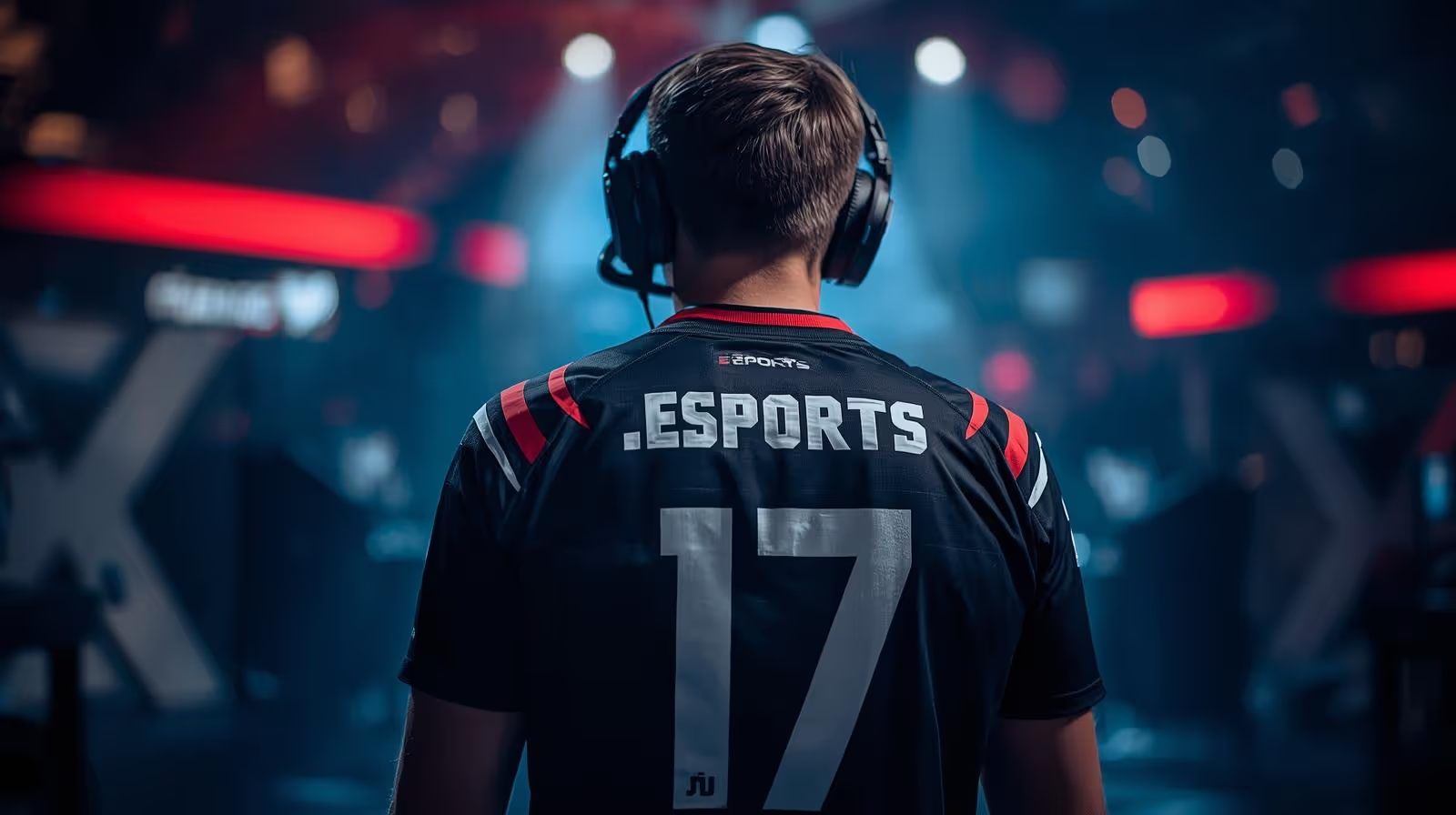

He was nobody. At least, that is how it felt.
Queue after queue, late nights in voice chat, the same worn-out headset, the same tiny desk wedged between a bed and a closet. He was just another name in the lobby list, another aim kid trying to climb.
Then one night, he did something different. He did not change his crosshair or his sens. He grabbed something bigger: his own .esports name.
That was the moment he realized he could claim his gamer tag as a real internet address, with a .esports ending, even though he did not have a team or a contract. A .esports domain is just a web address that ends in “.esports”, a top-level domain made for competitive gaming. Instead of some random extension, it tells people right away, “this is about esports.”
Owning that address meant his name could finally belong to him. Not to an org. Not to a scammer. Not to a random fan account. Just him.
It looked like a small move, a late-night impulse buy. In reality, it quietly changed how everyone saw him, and how he saw himself.
Who Is This Rookie, And Why Did His .esports Name Matter So Much?
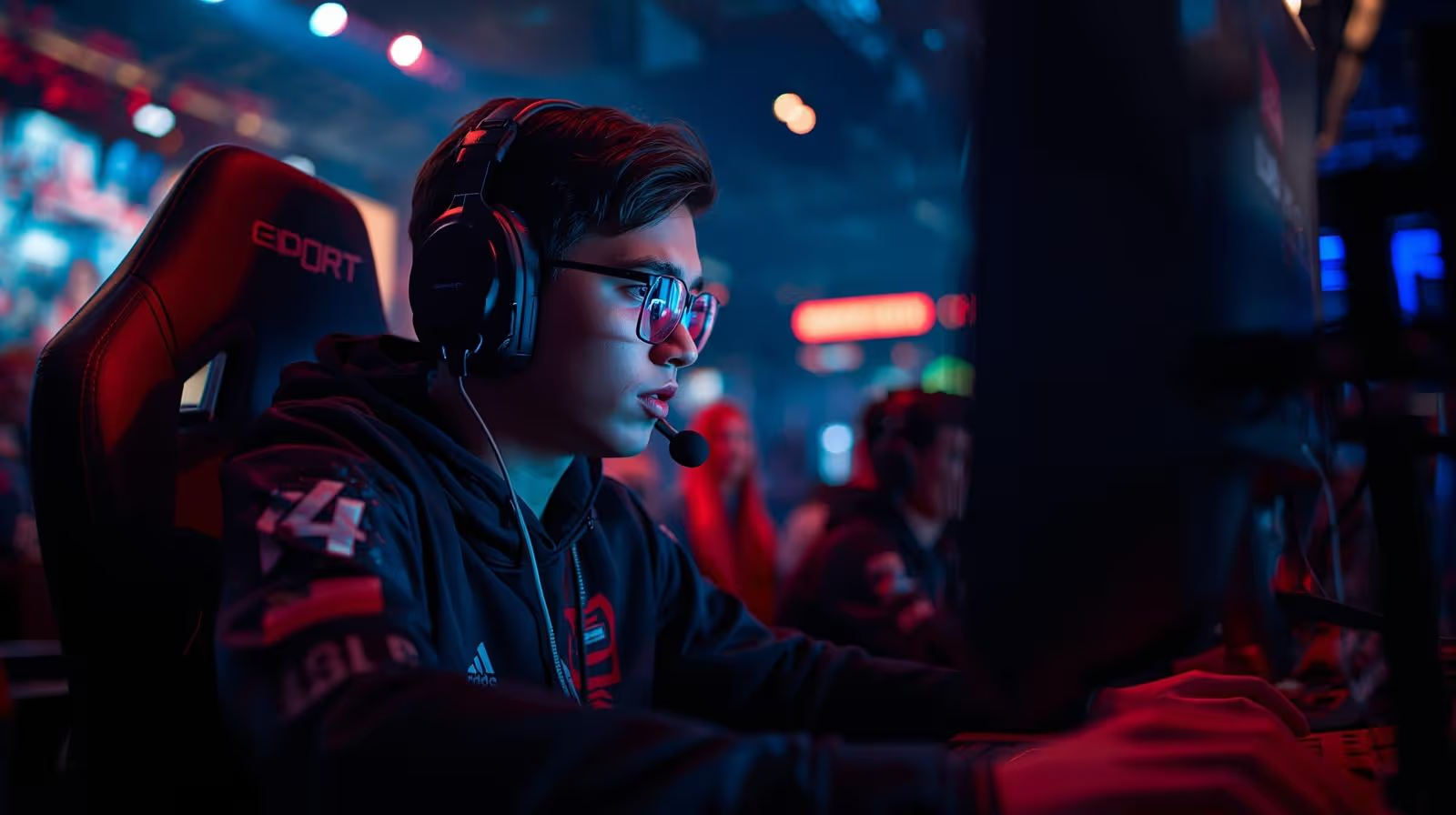
Picture a 17-year-old flex DPS player in an online FPS, or maybe a cracked jungler in a MOBA. Rank: high enough that people in Discord servers recognize his tag. Not a star, not yet, but in every lobby someone says, “Oh, that guy again.”
His dream is simple: join a real org, travel for events, play on stage. But most days he feels replaceable. There is always another kid with godlike aim in the next lobby, another grinder in the next open qualifier.
When you feel that replaceable, your name starts to matter more than your KD. Your tag is the one thing people remember when the scoreboard disappears. So when he learned he could lock that tag as a .esports domain, it felt like a way to stop being invisible and start being someone.
From Ranked Grinder To Almost Pro: The Rookie’s Backstory
His life runs on a strange schedule. Classes or a part-time job during the day, scrims and ranked at night, VOD reviews squeezed in between. Discord pings fill his phone. Calendar reminders for weekly tournaments keep him from missing call times.
He lives in scrim channels, custom lobbies, and late-night team talks. Every small edge counts. Better aim routine, smarter warmup, cleaner comms.
Older players and coaches keep dropping the same words in passing: “brand,” “name recognition,” “content.” He nods along, but it sounds like stuff for streamers and tier-one pros.
He is focused on winning scrims, not building a brand page. Still, the idea sticks in the back of his head. If every edge matters, what if this “brand” thing is another edge?
The Gamer Tag That Everyone Starts To Notice
Then his tag starts to pop up.
First it shows on friends’ leaderboard screenshots. Then he sees it in Discord brackets for small online cups. A community account posts a clip of his clutch round, and his name is right there in the caption.
He starts to notice his own name from the outside. The same spelling, the same capitalization, over and over. He realizes this tag is not just a random username anymore. It is slowly becoming an identity people can point to.
He has a quick thought that hits hard: if your name is finally getting attention, what happens if someone else locks it down online before you?
That question sticks. It is the seed that leads to his biggest off-server play.
The Day He Discovered .esports Domains And Locked In His Name
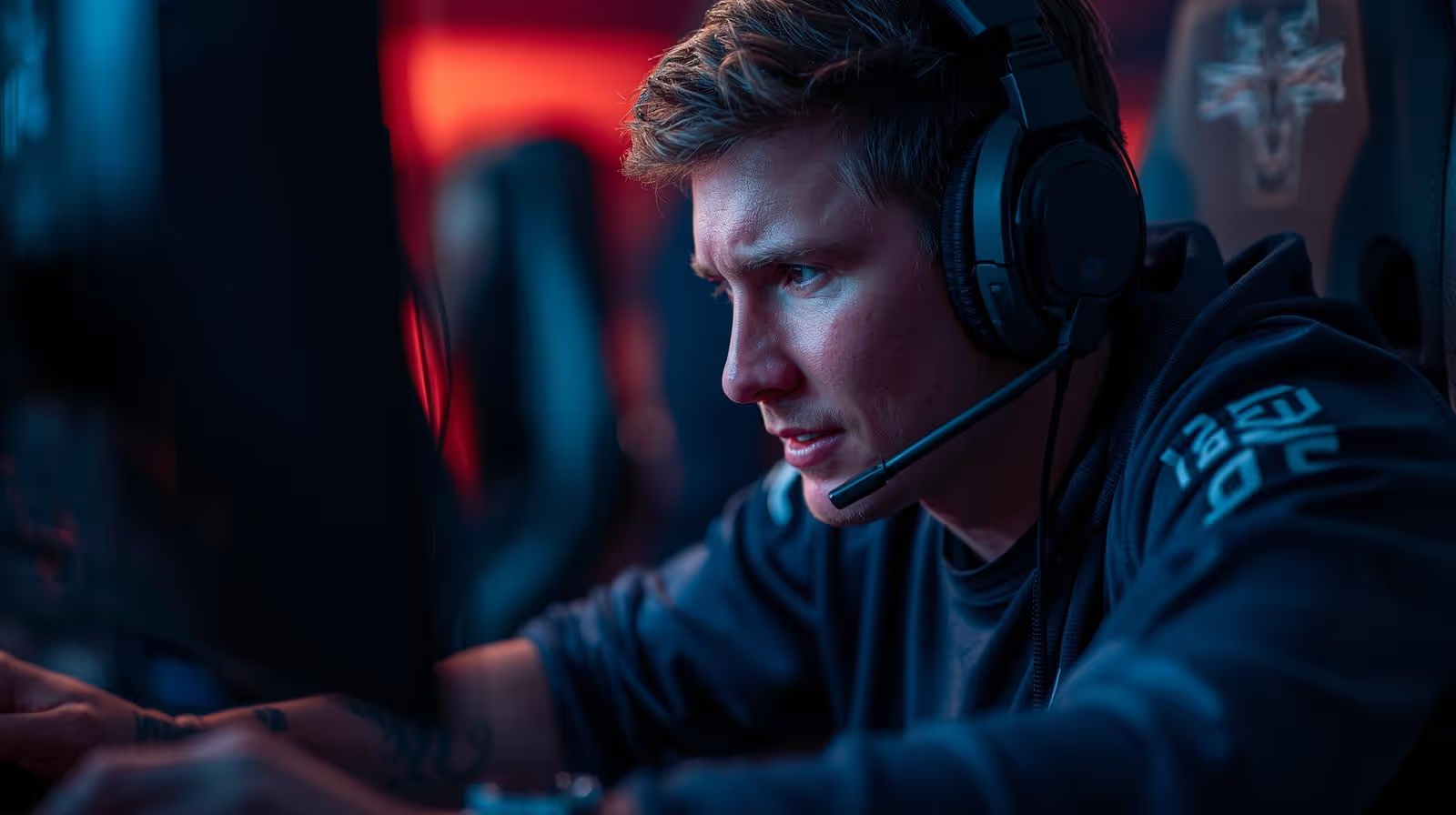
The turning point comes after a rough scrim block. His team lost three maps in a row. Everyone mutes for a bit, then slowly drifts out of voice.
He stays at his desk, room lit only by the monitor glow. He pulls up VODs, checks his mistakes, then flips over to social media to clear his head. A coach he follows shares a link: a playername.esports site.
He clicks out of boredom. What he finds does not look like a huge brand site. It is simple, just a personal hub. But something about that .esports ending hooks him.
A Late-Night Search That Changed His Esports Future
Curious, he googles his in-game name plus the word “esports.” Then he starts typing his tag with “.esports” at the end into a domain search.
He reads a short description: a domain is basically your home field on the internet. A place you control, where you can put clips, socials, team info, and contact details in one clean spot.
It is the first time the idea clicks. Twitter can hide his posts. Algorithms can bury clips. But a domain is his ground. His name, his rules.
He hits enter, waits a second, and sees it.
His exact gamer tag, with .esports at the end, is still available.
He stares at the screen, half shocked. How has nobody grabbed it yet?
Why He Chose A .esports Name Instead Of A Generic Domain
He could pick a normal extension, but it feels wrong. Those domain endings could be about anything. Personal blog, school site, random store.
He wants something that screams “competitive gaming” before the site even loads. A .esports address does that. Fans, casters, and scouts know what they are clicking just from the link.
It also sticks in your head. His tag + .esports is short, easy to say out loud, and easy to drop in chat. That kind of clarity helps with search and trust. People can check it and feel more sure they have found the real him, not a fake or a copycat.
For a kid still waiting on a first contract, that feels powerful.
Click, Confirm, Owned: The Moment His Name Became Truly His
He adds the domain to his cart. The room is quiet except for his keyboard clicks. A cold drink sweats next to his mousepad. His heart beats faster than in his last overtime map.
He types his info, hits confirm, and waits for the email. The confirmation pops up: that .esports domain now belongs to him.
It feels weirdly like signing something, even though no org is involved. No jersey, no stage, no salary. Just a quiet moment where a rookie claims his own name before anyone else can touch it.
For the first time, his identity feels like an asset, not just a line in the kill feed.
How Owning A .esports Domain Helped Him Look Pro Before He Was Pro
The next days, nothing changes in his aim or his rank. He still grinds, still reviews, still scrims. But something around him shifts.
He is no longer just “that guy from ranked.” He is the person with a real address that looks like it belongs to a pro. That small detail changes how teams, brands, and even friends see him.
Turning A Simple Domain Into A Clean Player Page
He starts simple. No fancy design, no huge budget.
On his new .esports domain, he drops a short intro, his role and main game, past teams, and highlight videos. He adds links to Twitch, YouTube, Twitter, and a clean contact email.
He includes a small section for scrim requests and tournament availability. Anyone clicking the link can tell who he is, what he plays, and how to reach him in under a minute.
That link becomes his go-to. He puts it in his social bios, sends it with team applications, and drops it into DMs when someone asks for clips. Instead of spamming random links, he sends one clear address that does the talking for him.
First Impressions With Scouts And Orgs: Looking Ready On Day One
During a community event, he pops off. A small org’s general manager hears his name from a caster, then sees it again in a highlight posted later.
The manager clicks the link in the clip description: his tag with .esports.
What loads is a clean, focused page. No messy memes, no old usernames, no broken links. Just a clear view of the player behind the tag.
Compared to other rookies with only random clips and scattered profiles, he feels like a safe bet. Someone who takes his path seriously, not just a cracked aim kid with zero structure.
That first impression matters. It nudges him ahead in the mental list of “players to watch.”
Building Trust With Fans, Teammates, And Coaches
Word spreads slowly. Teammates start sharing his .esports link when they recommend him for mix teams or scrims. Fans who saw his clutch clip post the same domain when people ask, “Who is this guy?”
A simple, stable hub makes him feel real. People are more likely to follow and support someone who looks like they are sticking around.
Ask yourself this: who would you trust more, a player with a random file link and three different usernames, or someone with their own esports name locked in and easy to find?
Control over that name sends a quiet message. It says, “I am serious about this. I plan to be here for a while.”
Avoiding Name Theft And Confusion Before Fame Hits
There is another benefit he almost forgets about: protection.
He has heard stories about domain squatters and fake accounts using rising players’ names. Someone grabs a domain early, then tries to sell it back. Or a scammer builds a fake site using a player’s tag to fool fans and sponsors.
By claiming his .esports domain early, he cuts off a whole branch of future drama. If anyone searches his tag with “esports” attached, they are far more likely to land on his real hub, not a copy.
He has not hit superstar status, but when his name grows, his domain is already in his hands.
From Rookie To Pro Contract: How His .esports Move Paid Off
Months pass. Scrims get tougher, tourneys get bigger, and his name shows up deeper in brackets. He still has to grind harder than ever.
His mechanics, game sense, and teamwork are what open the door. The .esports domain does not aim for him or hit his shots.
But when the right people notice him, that quiet decision to act like a pro before he became one gives him something extra. It adds visibility, trust, and stability at the exact moment he needs it.
The Trial Offer That Started With A Single Click On His Domain
The real break comes from a staff member browsing clips after an open event. They watch one of his highlight reels on social media, then look for more.
In his bio, there it is: his name with .esports.
They click, skim his page, and find everything they need. Role, region, schedule, socials, and contact details are all laid out in one place. No digging through old tweets, no guessing at time zones, no hunting for a Discord tag.
Because the information is so clear, they reach out. First a message, then a trial block, then a serious talk.
If that link had not been there, would they have clicked away to the next player instead?
How His Personal Brand Helped With Contract Talks
When he finally sits down to talk contract terms, he is still a rookie. He does not have a massive fanbase or years of results.
But he has something many rookies skip: a clean, consistent personal brand centered on his .esports name.
He already has a hub for team announcements, sponsor shoutouts, and media. His socials match his domain. Any press or partner can find him and verify him fast.
That makes him look easier to promote and easier to trust. The org sees a player who brings more than aim. He brings a ready-made identity that fits straight into their plans.
He might not control every detail of the contract, but he no longer feels like a random name with no pull at all.
What Other Rookies Can Learn From His Story
This story is not magic. The domain did not carry him up the rankings. His grind did that.
But the move to act like a pro early made his path smoother.
If you are on the same path, you can copy his steps:
- Pick a stable gamer tag you are proud to keep long term.
- Check if your tag is available as a .esports domain.
- Claim it before you get big, not after.
- Build a simple page with who you are, what you play, and how to reach you.
- Drop that link in your bios, team apps, and DMs, then keep it updated.
If you want a pro future, why would you wait for a contract before you start acting like a pro online?
Conclusion
A nameless rookie grabbed his .esports domain before he had any jersey, and that quiet move changed how people viewed him. He stopped being just a ladder warrior and started looking like a real prospect with a stable identity.
His story shows a simple truth: in esports, your name is your asset. You can treat it like something that might matter “later,” or you can protect and present it early.
You do not need an org’s permission to take that step. You can lock in your identity, build your own hub, and be ready when someone important finally clicks your link.
When that day comes, will they find a random profile, or a name that already looks ready for the big stage?