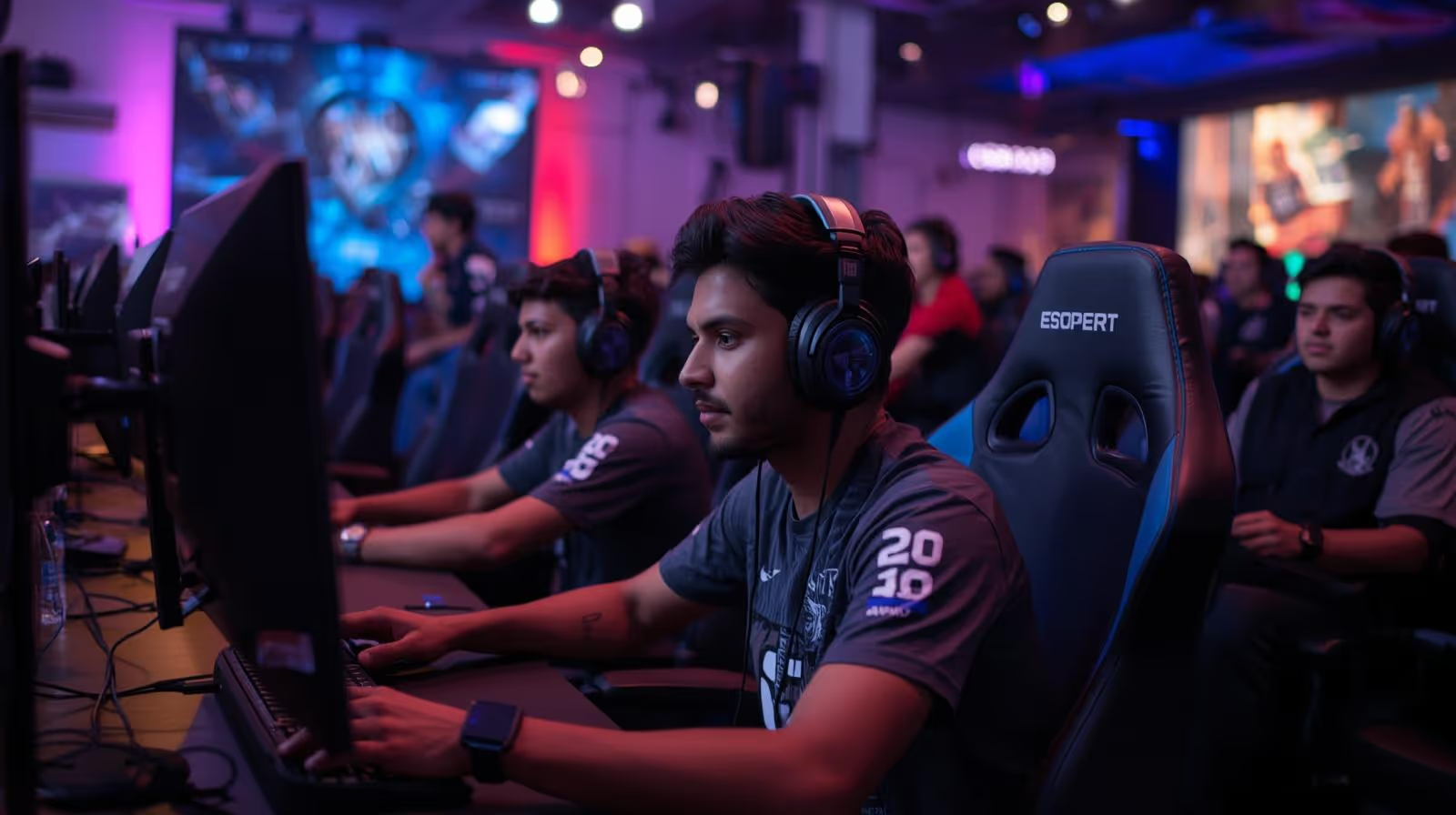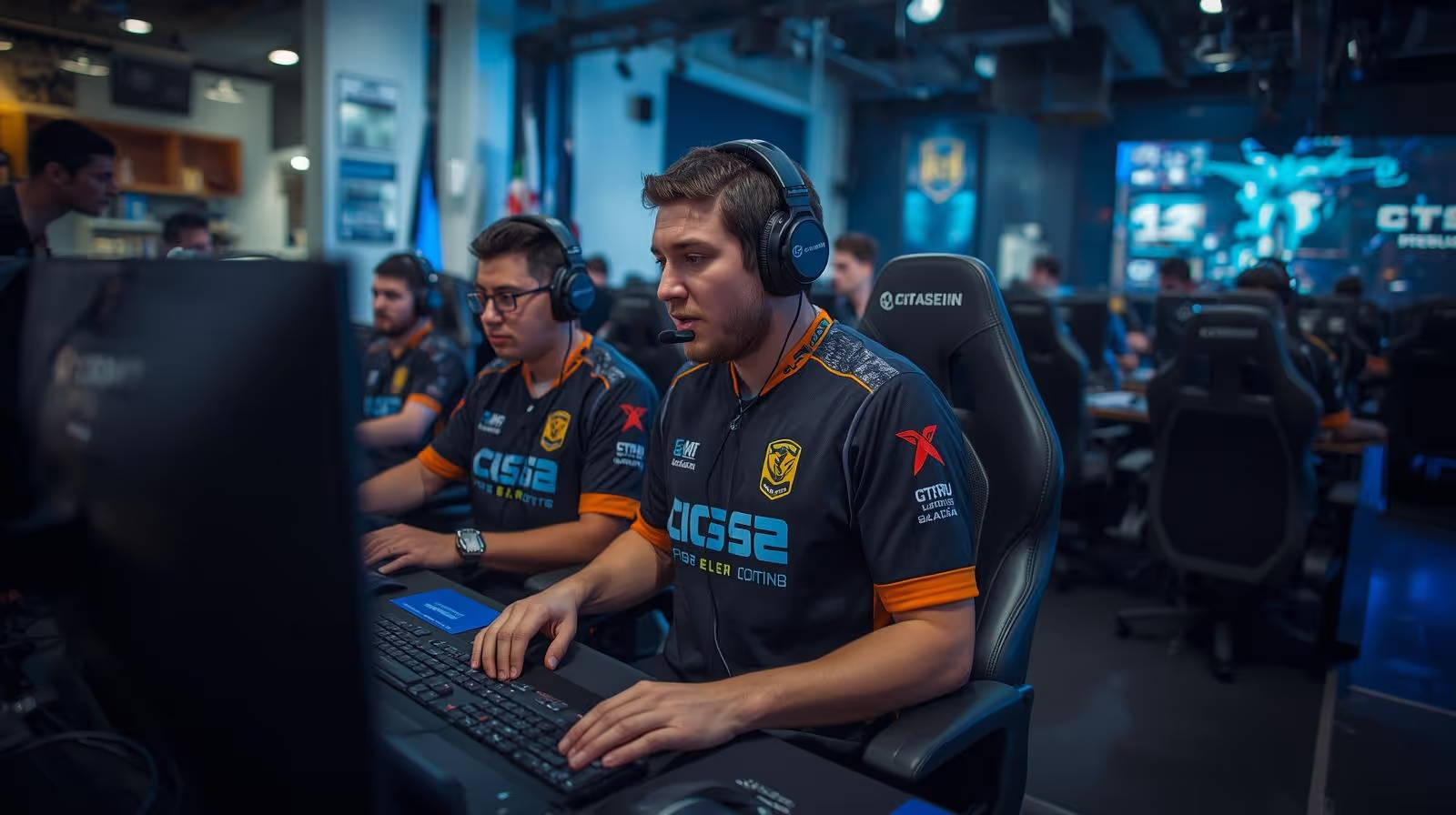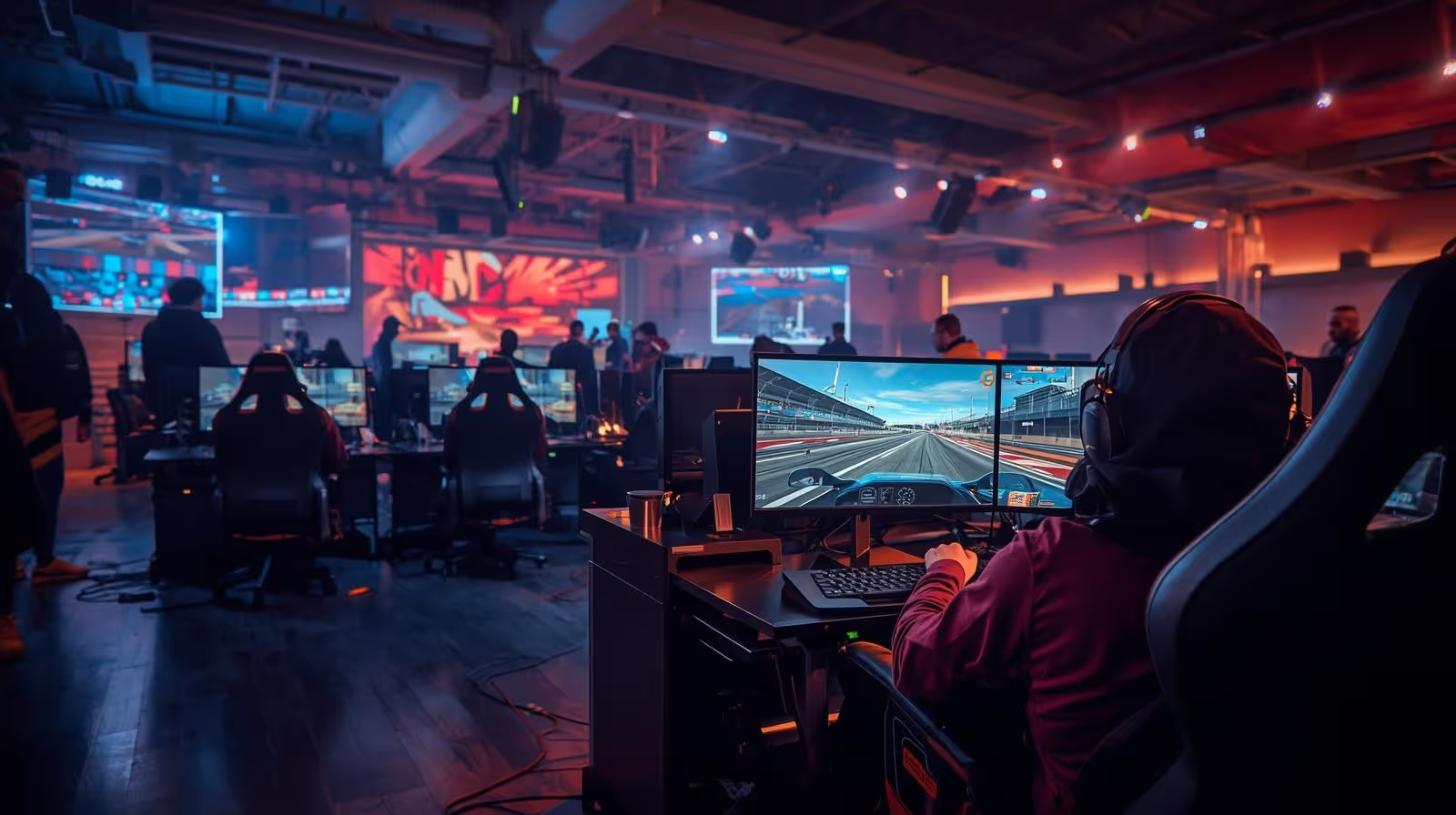

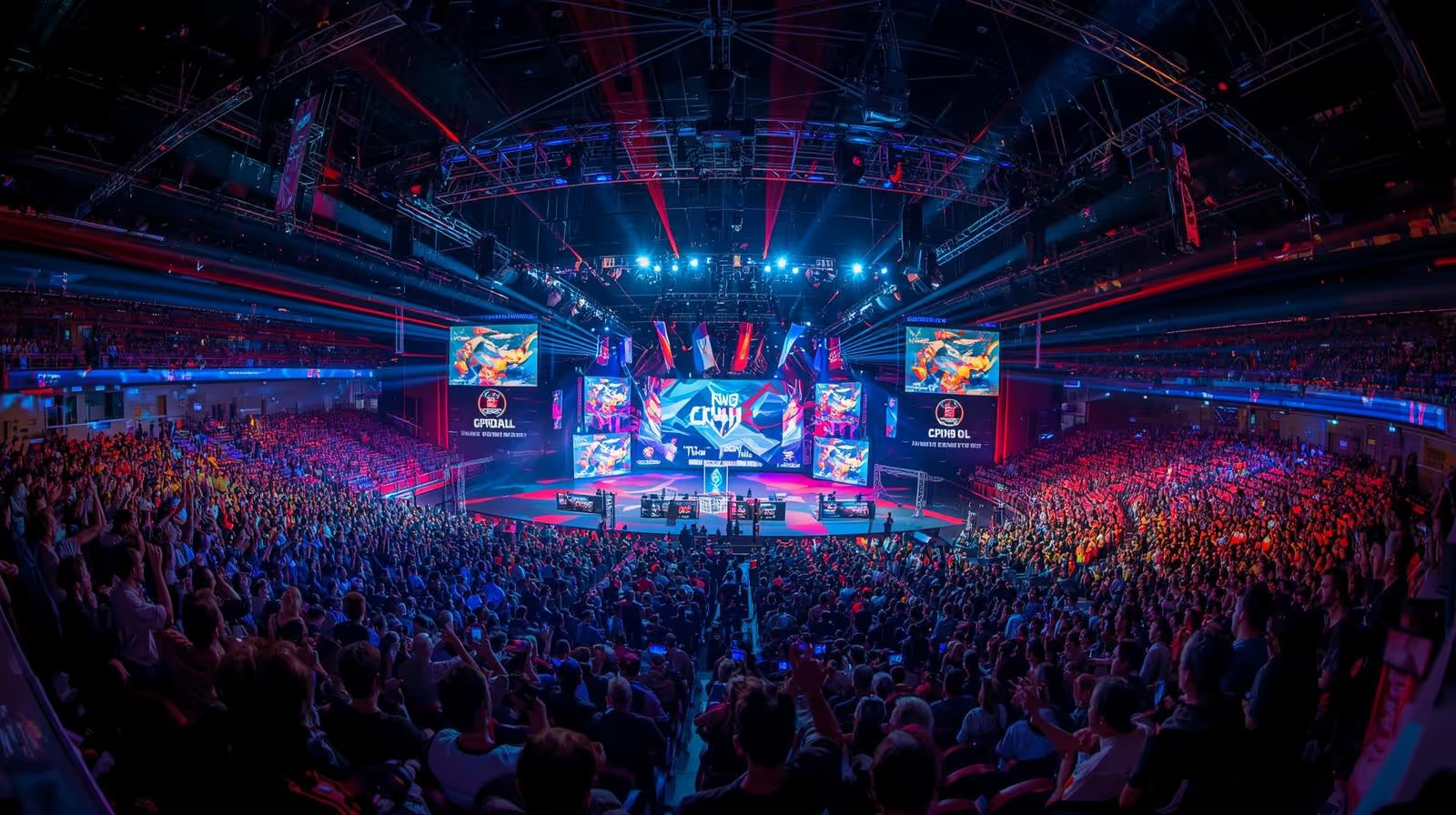

You log in, put on your headset, and open the lobby. The chat is flying by, not with trash talk, but with flags. Tiny icons from places you have never visited fill the screen. Kenya. Peru. Vietnam. Iceland. A tiny island you have to Google. For a second, it feels less like a game and more like an airport departure board for the whole planet.
This is not a pro league, not a publisher event, not some invite-only showcase. It is a fictional but realistic story of a community-built esports night, powered by Discord mods, student captains, and small streamers. No big budget, no stadium, only servers, spreadsheets, and a lot of stubborn energy.
People on that night would later call it the community tournament that united 128 countries in one single night. It was a wild idea that somehow worked and changed how many players think about grassroots esports, cross region play, and what a “local” scene can be when the lobby is global.
The Big Idea: A Global Esports Night Built By the Community
At its core, the tournament was simple. It was an open sign-up esports event for a popular free-to-play team shooter, the type of title that lives next to games like Valorant or Counter-Strike 2. Anyone could join. Solo players, student teams, friends from a net cafe, or small community stacks that usually only played weekend scrims.
The twist was the scope. The organizers picked one long night, set a single shared bracket, and aimed to bring in players from as many countries as they could. No long group stage, no weeks of qualifiers, just one intense global sprint toward a champion.
The point was not to replace pro leagues. The point was to let casual and semi-pro players feel a little bit of that “world stage” feeling, even if they were sitting in a bedroom with a cheap headset. The one-night format made everything feel urgent and special. If you missed it, you missed it. If you played, those memories stuck.
Players knew they would not have to commit to a long schedule or track endless updates. You showed up, checked in, played your heart out, then crashed into bed with your ears still buzzing from comms and spectator hype.
From Discord Dream To Global Tournament Concept
It started in a mid-sized Discord server that had grown around weekly scrims and community nights. A few players kept joking that their regular custom lobbies felt more organized than some “real” tournaments they had tried. A mod typed it out one afternoon: “What if we tried to pull in teams from every region for one giant night?”
At first, it sounded like meme talk. But the idea kept coming back. They tossed around questions in voice chat. How many regions could they reach if they pushed hard? Would anyone from smaller scenes care to join? Could they track countries just for fun and see how far they could go?
They posted polls:
“Would you play in an all-night global bracket?”
“Would you get up at a weird hour if it meant facing teams from another continent?”
Replies poured in. People tagged friends, shared it in other servers, and spun up small debates. Some thought it was impossible. Others said, “Let’s just try, even if we only get 20 countries.”
Those small conversations turned into planning threads. Mods split into teams for sign-ups, broadcast, competitive rules, and outreach. They built a simple goal that everyone could repeat in one sentence: one open bracket, one night, as many countries as we can possibly squeeze in.
Choosing The Right Game And Format For A One-Night Global Event
Picking the game was the first big choice. It had to be free-to-play, with solid servers and easy access in most regions. It needed strong custom lobby tools, spectator support, and stable performance on mid-range PCs. The team looked at what worked in games like League of Legends or Rocket League and copied the best parts for their own title of choice.
They also had to pick a format that respected people’s time. A full league or deep group stage was not possible. Matches had to be short enough to keep things moving, but long enough to feel worth it.
They settled on a structure like this:
- Regional opening rounds, single-elimination, best-of-one
- Mid rounds, where regions started to mix, best-of-one
- Final rounds, best-of-three, to give the end of the bracket more weight
Every decision came back to one question: can we fit all of this inside a single long night, while most players are awake in their own time zones?
They trimmed round timers, capped team counts for late sign-ups, and used auto-generated lobbies where they could. They built a simple rule, if a match could not reasonably finish before sunrise in most regions, it did not belong in this event.
How Do You Unite 128 Countries In One Night?
The idea sounded romantic. The execution looked more like a spreadsheet war. Getting sign-ups from 128 countries, handling ping, keeping lobbies calm, and running fair brackets all at once took careful planning.
Organizers leaned on tools every community leader knows well: Discord, Google Sheets, public bracket sites, and basic streaming platforms. No custom apps, no paid software, just tools that thousands of gaming servers use every day.
Finding Players Across The World With Zero Big Budget
The event had no marketing spend. Promotion started with one pinned message in the home Discord and a short announcement video. From there, the team went where gamers already hang out.
They posted in game forums, subreddits, and fan Discords. They dropped short TikTok clips with the core hook: “Global open tournament, one night, help your country get on the map.” They asked small streamers to co-host watch parties if they liked the idea.
The smartest move was asking for local ambassadors. These were student club leaders, community captains, and small content creators who could say, “I’ve got my region, you focus on yours.” Ambassadors translated posts, answered sign-up questions, and helped players who were nervous about time zones or rules.
The organizers kept a simple country tracker in a spreadsheet. Every time a new team registered, they logged the country. When they hit milestones like 40, 75, or 100 countries, they posted updates to hype people up.
They put extra effort into regions that rarely see spotlight time. They hunted for university clubs in underrepresented countries, dug through old forum threads, and replied to anyone who showed even a little interest. Event pages used clear keywords like “global community esports tournament” so people searching for small online cups had a chance to find it.
And the sign-up form was short. Name, contact, team info, country, rank bracket. That was it. No walls of text, no complicated entry steps.
Solving The Time Zone Puzzle Without Burning Players Out
Time zones were the next boss fight. You had players in North America, Europe, Africa, Asia, and Oceania, all trying to play “in one night”. But whose night?
The team chose one main tournament window in Coordinated Universal Time, then converted it for every major city they expected players from. Every graphic showed local times beside the global one, so nobody had to do mental math before bed.
They split the bracket into waves:
- Wave A, good hours for Asia and Oceania
- Wave B, good hours for Europe and Africa
- Wave C, good hours for the Americas
Early rounds kept teams inside waves when possible, so most people played during normal evening or late-night hours. Only in the final mixed rounds did some players end up in awkward time slots, and those players went in with eyes open.
Organizers tested this schedule with a smaller “mini night” a few weeks before the main event. That rehearsal caught issues with overlaps, slow reporting, and players not reading start times closely enough. By the time the real night arrived, they had a clear, simple schedule pinned in multiple languages.
Keeping Servers Stable And Matches Fair Across Continents
Global esports always runs into net problems. High ping, random lag spikes, unstable routes. The community crew could not fix the internet, but they could create rules that kept things as fair as possible.
They used regional servers for early waves, keeping most matches within reasonable ping range. For cross region rounds, they set neutral server locations, usually in between both teams. They wrote clear rules for how to handle disconnects, remakes, and repeated lag spikes.
Mods acted as refs inside Discord. Each region had its own support channel with at least one mod who spoke the main local language. Teams reported scores with screenshots. In tight situations, both captains had to agree or the match would be replayed.
Basic anti-cheat checks were in place. Players recorded clips or kept replays on for review. Any serious reports got escalated to a small review group, who could throw out a match, replay it, or ban a team outright.
It was not perfect, but it felt fair enough that most players accepted the outcome, even when they lost to ping disadvantage in a late-round match.
Inside The Night That Brought 128 Countries Into One Bracket
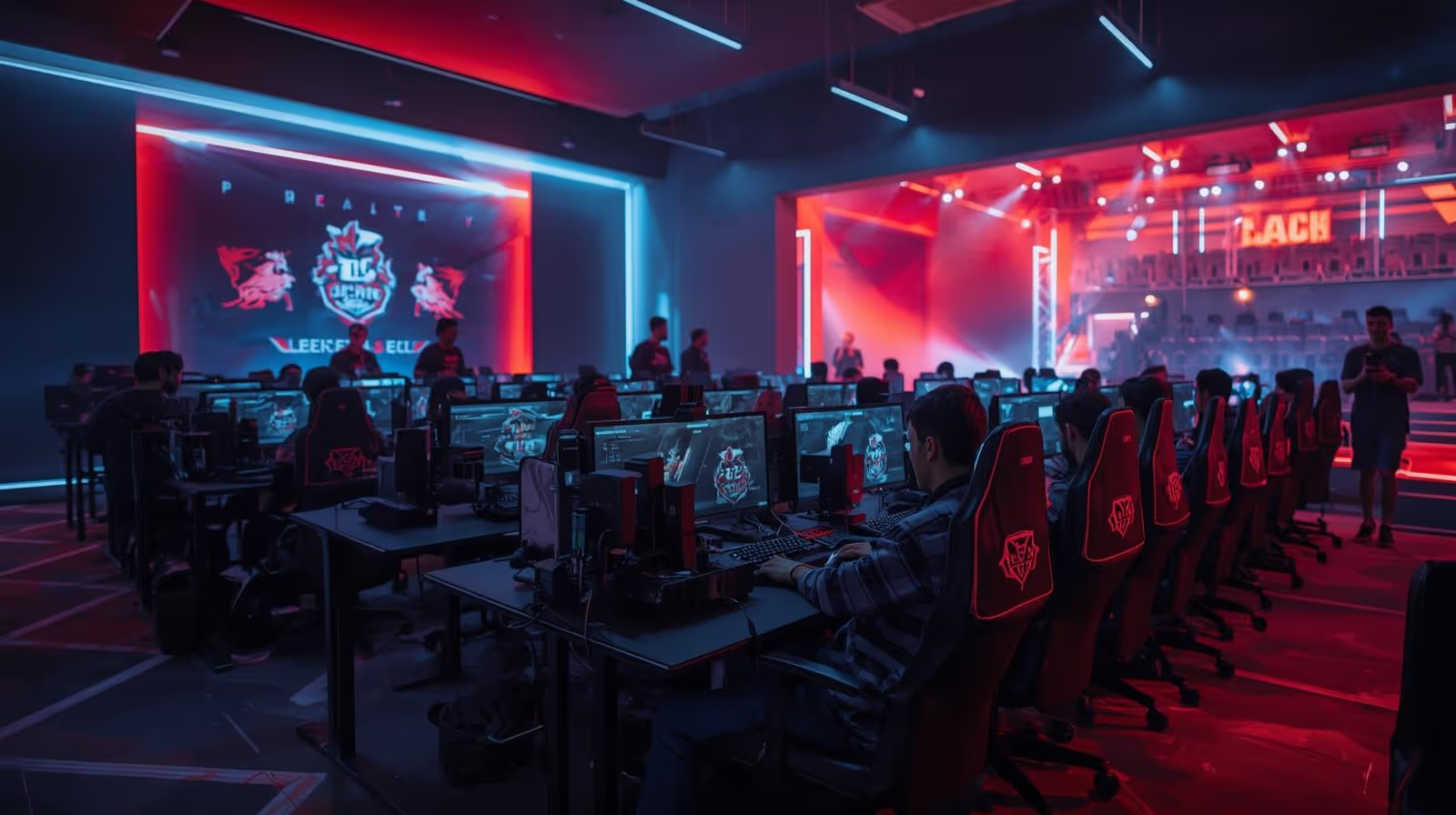
Tournament night started before the first match launched. Players joined Discord voice rooms, tested mics, double-checked times, and posted selfies with their setups. Some streamed from bedrooms, others from crowded net cafes with rows of PCs glowing in the dark.
A central broadcast went live on a community Twitch channel. No fancy stage, only two casters, a scuffed overlay, and a map graphic with tiny dots for each confirmed country. The chat was already bouncing as teams checked in and ambassadors spammed their flags.
What did it feel like to log in that night? For many players, it felt like walking into a stadium built out of pings, usernames, and voice chat.
Opening Ceremony: Player Roll Call From Every Region
The “opening ceremony” was short, low-budget, and surprisingly emotional. The stream started with a one-minute hype clip made from community replays and fan art. Then the host switched to a big world map overlay and began the roll call.
They listed regions one by one. North, Central, and South America. Europe and the Middle East. Africa. South and Southeast Asia. East Asia. Oceania. As each area appeared, players from those places spammed flags and country codes in chat.
A scrolling bar on the side showed teams as they checked in, grouped by country. Seeing small flags next to tiny, unknown towns made solo players feel like they were part of something bigger. You could be the only player from your country, yet you still saw your flag drift across the stream like it belonged there.
When the staff confirmed the 128th country, chat exploded. People spammed “128” with flags around it. Casters paused, laughed, and let the moment breathe. It was a silent record set in a busy Discord, proof that a grassroots event could be truly worldwide for one night.
Early Rounds: Chaos, Surprises, And Cross-Culture Friendships
The first rounds were beautiful chaos. Thousands of players jumped into lobbies. A few brackets bugged out and had to be fixed by hand. One region had a power cut. Another had a flood of late sign-ups that broke the form for a few minutes.
But the matches started. A student team from a country most people never think about during esports broadcasts took out a well-known community stack in the second round. Screenshots of the scoreboard raced across servers. People started saying, “Yo, watch these guys, they’re cracked.”
Mixed-language squads faced extra challenges. One team with players from three continents relied almost only on pings, short callouts, and a few shared words. They built a simple system: colors for map areas, numbers for set plays. It worked well enough that they made it far, and their comms clip later went viral in the tournament Discord.
After matches, many players stayed in the lobby to chat. They compared schools, talked about food, and swapped stories about their local scenes. Someone from a small African university club traded scrim times with a group from a South American campus. Another group decided to run weekly cross region stacks just to keep the vibe going.
Final Matches: One Chat, Many Flags, Shared Hype
By the time the bracket reached the final rounds, the stream felt like a watch party with flags. The last teams came from very different parts of the world, and viewers started picking favorites, often rooting for the underdog region that rarely sees spotlight time.
Co-streamers in different languages ran their own coverage, watching the main feed and adding local flavor. They clipped big plays and passed them back to the main Discord. One play, a clutch defense on the final map, got translated into three languages within an hour.
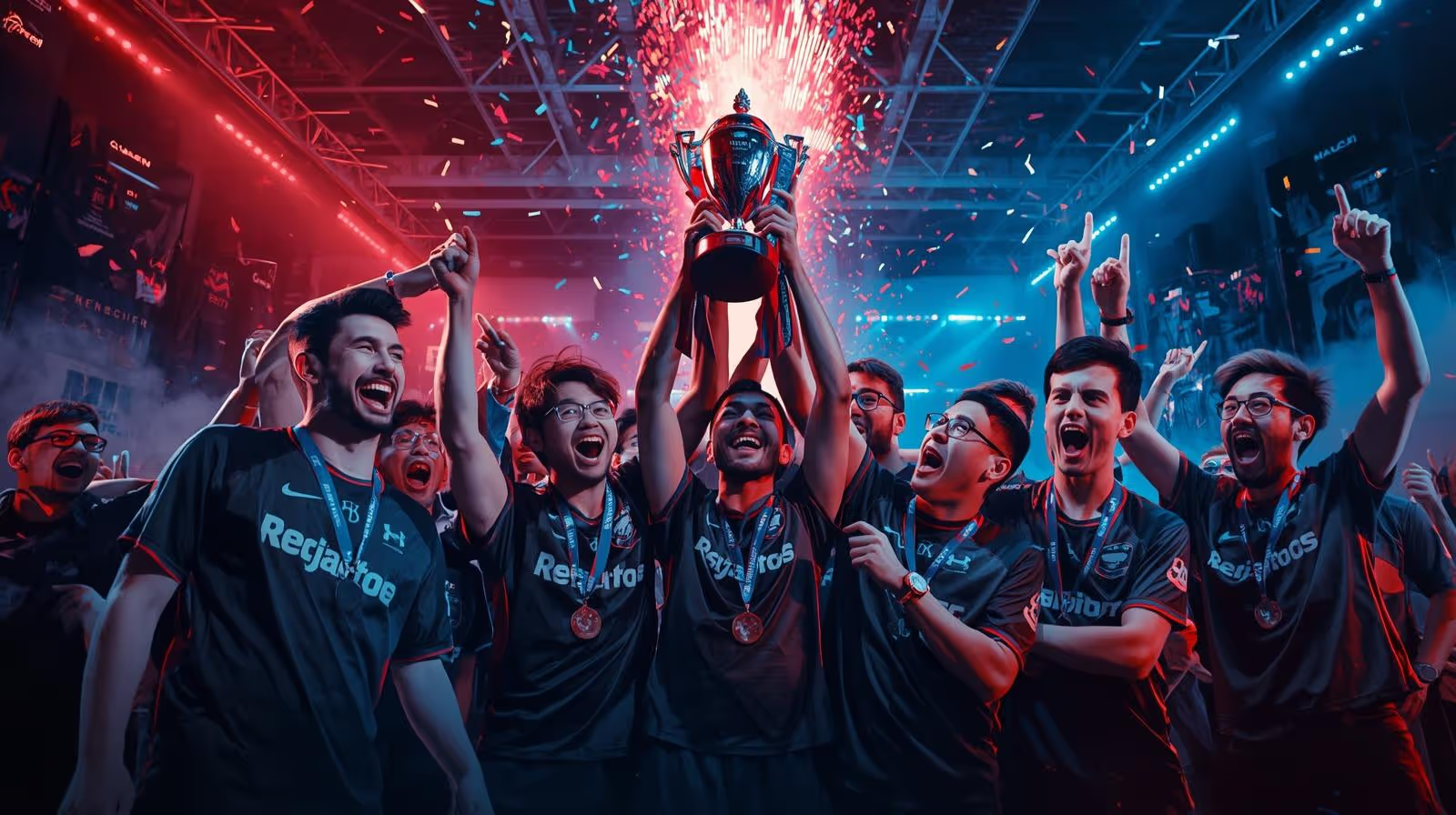
Chat became a mix of memes, flag spam, and respectful banter. People cheered for clean plays even when their own region lost. When the final round ended and a champion was crowned, the prize announcement almost felt like a side note.
What stuck deepest was the feeling that, for one night, players who usually lived in separate bubbles shared the same stage. Even after the trophy graphic faded, hundreds stayed online. They traded Discord tags, set up scrims, and started talking half-jokingly about “next time”.
Why This One-Night Community Tournament Mattered For Esports
On paper, it was “just” a community event. No huge prize pools, no studio analysts, no broadcast trucks. But the impact reached far beyond a single bracket page.
Community growth was instant. The main server exploded in size, but more important, small regional servers connected with each other. New friend groups formed that cared less about rank and more about finding people who loved the same game even if they lived across the planet.
For semi-pro players, it became unpaid scouting. Coaches and team managers lurked in chat, watching how players handled pressure on stream. A few standouts who had never played a major tournament brought attention to their tiny local scenes.
Most of all, the night proved something simple. You do not need a big publisher event to create a global esports moment. Open brackets, clear rules, and a shared story can carry a long way when the community owns the idea.
Building Real Connections That Last Beyond Tournament Night
In the weeks after, the story did not fade. Teams kept scheduling cross region scrims using the same Discord they had used for check-in. Some groups formed mixed rosters just for fun, with players from different continents learning each other’s slang and strats.
Language exchange channels popped up, half meme and half useful. Players traded phrases they could shout in-game. A creator from one region teamed up with a student editor from another to cut highlight reels. They would never have met without that bracket.
Players from newer regions gained steady partners to practice against. That helped them raise their level and feel less isolated. Suddenly their nightly lobbies were not just the same few teams recycling matchups. They had a wider pool and a better path to long-term improvement.
Those slow, steady ties were the real prize. The trophy sat in someone’s bedroom. The friendships lived on across time zones.
What Esports Can Learn From A Grassroots Global Event
There are clear lessons for organizers, brands, and game studios who watched from the sidelines.
Keep sign-ups short and clear. Players do not want to fight long forms just to enter a bracket. Use plain language, show exact times in local zones, and cut as much friction as you can.
Give community casters room to shine. They understand their local jokes, their slang, and how to keep viewers relaxed between matches. Supporting them with assets and shout-outs can create stronger regional buy-in than any polished studio show.
Support regional leaders. Ambassadors, student captains, and fan server admins already know their people. If you give them tools, graphics, and some freedom, they can carry outreach deeper than a single global tweet.
Celebrate every region, not only the champions. Feature stories from small scenes. Show highlight clips from underdog countries. Share maps of where sign-ups came from. When players feel seen, they stick around.
Future events could mix pro and community brackets in parallel, letting everyday players share a schedule and broadcast window with pros. Other nights could focus on rank-based brackets so bronze and gold players get their own version of the big show.
Global community nights like this can grow the whole esports ecosystem, from casual viewers to top-tier talent, if more people are brave enough to try.
Conclusion
All of this started with a simple thought: what if one bracket, on one night, could bring together players from across the planet? The answer turned into a living story of 128 countries, countless lobbies, and a flood of flags racing up a chat window.
The event ran on common community tools and shared passion, not huge investments. It showed that with a bit of structure and a lot of belief, regular players can create a stage that feels global in every sense.
If a handful of mods and students can pull this off, what could your own server, school club, or local scene build if you aimed beyond your usual region for one special night? The next great cross region community tournament might already be sitting in someone’s “ideas” channel, waiting for a team that is ready to press “go” and see who logs in.