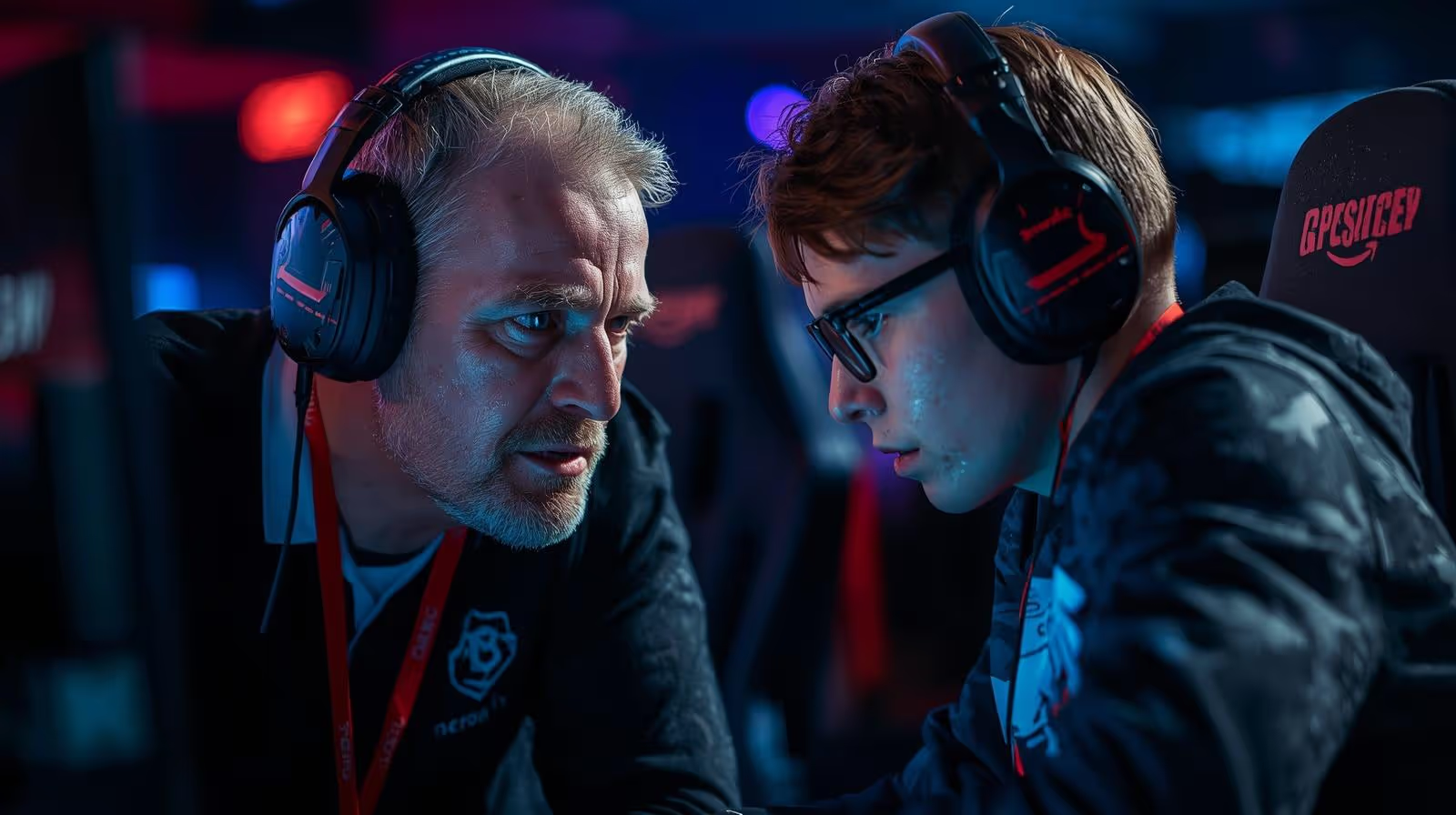

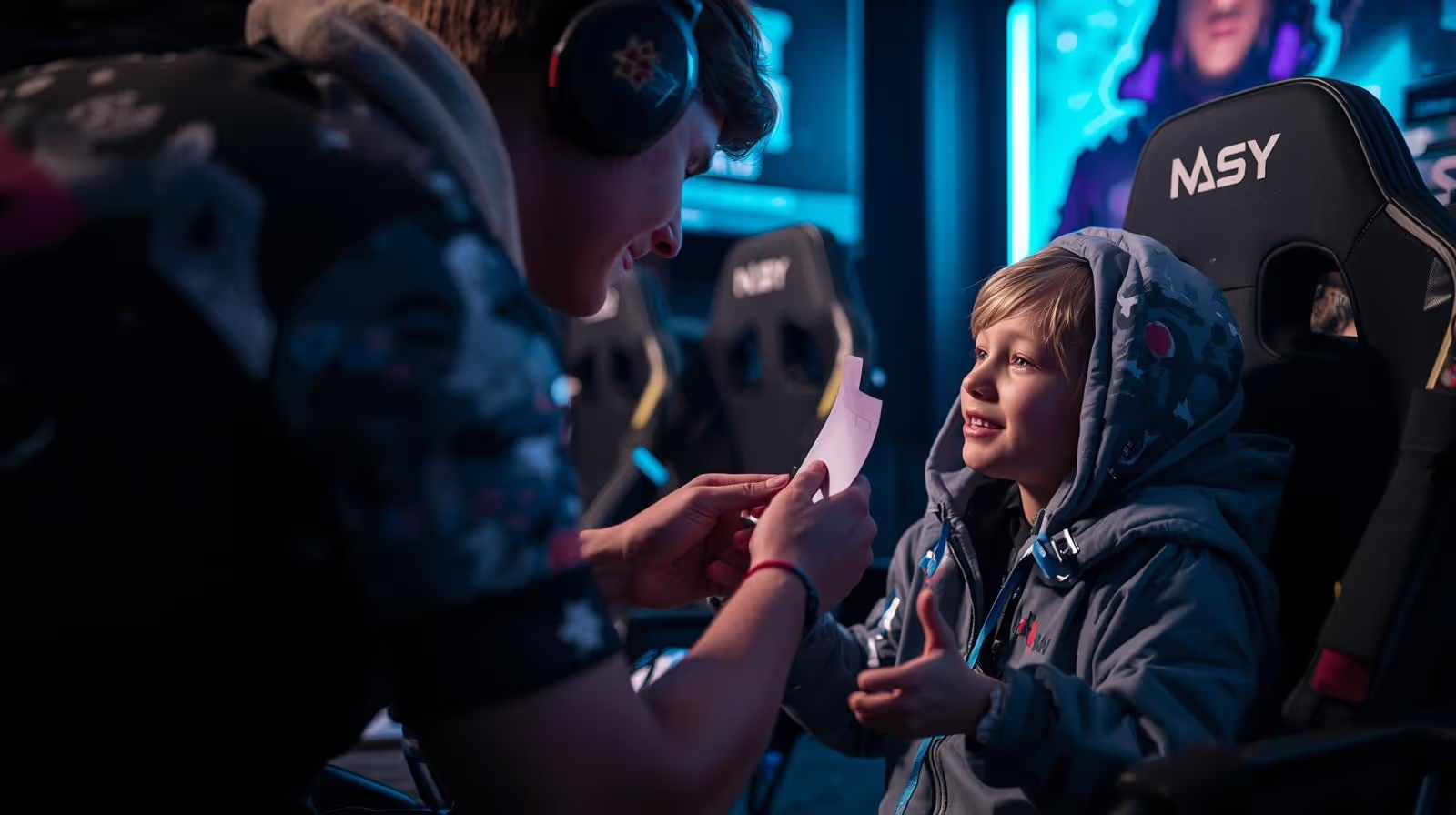

Picture a small hospital room, or a quiet bedroom at home. A young League of Legends fan is stuck in bed, weak from treatment, phone in hand, VODs running in the background. Mid lane clips, Worlds highlights, T1 teamfights. On the screen, one name keeps coming up.
Faker.
Then, one day, the phone buzzes. A parent presses play on a short audio file. A calm voice, slightly shy, speaks the kid’s name, wishes them strength, tells them to rest well and keep smiling. It is Faker’s voice, recorded just for them.
The clip gets shared with friends, then posted online with the family’s blessing. Fans translate it, add subtitles, cut it into TikToks and Twitter clips. Before long, people across different regions are crying, smiling, and writing long comments about how much it moved them.
Is this exact voice note real? As far as public records go, no. There is no confirmed viral recording like this tied to Faker and a named sick fan. What follows is a fan-style, hypothetical story built from the kind of moments esports people talk about and wish were true. The goal is not fake news. It is to capture the emotional truth of why stories like this feel so believable in League of Legends culture.
In this article, we will walk through that imagined story, look at why it hit the community so hard, explore what it says about the bond between pros and fans, and highlight what players, teams, and regular viewers can learn from it.
The Story: How Faker’s Short Voice Note Reached A Sick Young Fan
This is a story that could happen any day in esports. It fits how fans, teams, and players already act online, and it reflects the way people talk about Faker as a person.
A Young League Fan Fighting Illness And Holding Onto Esports
Our fan is young, maybe in middle school or early high school. They had to stop going to class for a while because of a serious illness. Friends keep playing League, but now most of their time is spent in bed, hooked up to wires, scrolling on their phone.
They watch T1 games on loop. They spam mid lane in normals and ranked when they feel well enough to sit at a desk. They pick control mages or maybe a flashy champion like LeBlanc or Ahri. In their head, they pretend they are on stage next to Faker, holding lane, waiting for the perfect teamfight.
Why does this matter so much to them? When real life feels scary and out of control, pro games are simple. There is a map, clear goals, and a hero in mid who always seems calm. For a kid fighting something they did not choose, seeing Faker stay cool in big matches can feel like a kind of anchor.
So when a doctor visit goes badly, or treatment wipes them out, they put on a Faker highlights playlist and let it run. The sounds of casters screaming his name fill the room. It is not a cure, but it is a small light.
For a fan like this, even a tiny sign that their hero knows they exist would feel unreal.
From Family Message To Pro Player: How A Voice Note Request Can Travel
One day, a parent or sibling decides to try something. They post on social media about the kid’s love for T1 and Faker. The post has a photo of the fan in a team jersey, or maybe holding a mouse and keyboard on the hospital table. The caption asks if anyone knows how to send a message to T1 or to Faker.
At first, a few friends like it. Then someone tags a small League streamer. That streamer talks about the post on a live broadcast. Their chat starts spamming the link, tagging bigger creators, fan pages, and staff accounts related to the regional League scene.
A community translator picks it up and writes a short summary in Korean and English. They tag a couple of fan-run T1 accounts. Those accounts have followers inside staff circles, and some of those followers share the post in private group chats.
On the team side, a community manager spots it. They send it to someone who works directly with the players. That person screens it to check if it looks genuine, then offers to help set up a short response, if the schedule allows.
All of this can happen in a day or two. Esports networks are fast and personal. Fans are used to signal boosting charity streams, emergency fundraisers, or mental health posts. When a story touches them, they share it without being asked.
Faker’s Simple Voice Note: Short Words With Big Meaning
Between scrims and VOD review, someone from staff brings the story to Faker. By now, he has heard many stories from fans, from happy ones about rank climbs to sad ones about loss. He is not loud about it, but people who follow him closely see he takes fans seriously.
He agrees to record a short message. It might sound something like this:
“Hello, this is Faker. I heard you are having a hard time right now. Thank you for cheering for me and for T1. Please rest well and focus on your health. When you feel better, I hope you can enjoy mid lane again. I will do my best too, so let’s both not give up.”
Maybe he adds a small in-joke. He could mention a favorite champion, or tease that real mid lane players never dodge skillshots from life. His voice is quiet, but firm. There is no big speech, no dramatic music, just a person talking to another person.
The message takes less than a minute to record, but for the kid, it is a once-in-a-lifetime moment. They listen to it again and again. They play it for nurses, teachers, and anyone who will listen. It becomes part of their daily routine, almost like a buff they can trigger every time things feel too heavy.
From Private Message To Viral Story Across Regions
With the family’s clear consent, the parent uploads a part of the voice note. Names are blurred if they want privacy. People add subtitles in multiple languages. Someone cuts it together with clips of Faker hitting insane outplays and then fading back into his quiet player cam.
League and T1 fan accounts start to push it out. Bigger esports pages repost it. Comment sections flood with reactions.
Some fans write long posts about their own time in hospitals with Twitch open in the background. Others say that Faker’s words helped them remember why they started following competitive League in the first place. A few share that they beat depression or a rough patch in life while watching his games.
People cry. People meme. People joke about “doctor Faker” giving buffs through voice notes. Even with jokes, the core feeling is real: this tiny exchange between a superstar and a kid holds so much emotion that it crosses language and region walls.
At that point, the story does not belong to a single server. It becomes part of a global esports culture that sees Faker not only as a god-tier mid laner, but as a steady figure who stands for effort, patience, and kindness.
Why This Faker Voice Note Hit So Hard For The Esports Community
Why do millions of people care when one pro player sends one short message to one fan? In esports, the answer has a lot to do with how we watch and connect.
Faker As More Than A Mid Laner: Symbol Of Hard Work And Calm Strength
Faker has played at the top level for a long time. He stayed with one team, T1, through roster swaps, meta shifts, and intense pressure. He does not chase drama or loud social media fights. He speaks carefully, smiles a little, and returns to practice.
That track record turned him into more than a good player. For many fans, he is a symbol of focused work, loyalty, and calm strength. When he looks nervous on stage, they know the moment is huge. When he keeps his cool, they feel calmer too.
So when someone like that takes time to speak to a single kid, it feels heavy in the best way. The message is not just “get well soon.” It is “the person you watch to feel brave sees you, even a little, and wants you to keep going.”
Esports Heroes And The Power Of Small, Human Moments
In esports, tiny actions often become huge memories. A small wave to the camera after a win. A signed jersey handed to a crying fan. A quick reply on Twitter. A headset tossed into the crowd at the end of a series.
Why do a few seconds of attention stay with a fan for years? Fans put hours into watching streams, qualifiers, and interviews. They learn players’ habits, jokes, and style. When that energy gets returned in any direct way, it feels deeply personal.
It is like meeting a favorite football star or musician on the street, but closer. Pro gamers stream scrims, ranked, and solo queue almost daily. They sit in our rooms through screens while we eat, study, or chill. When they speak to one person by name, the gap between “celebrity” and “viewer” suddenly shrinks.
Community Reactions: From Meme Posts To Real Tears
Esports reactions rarely look one way. When a story like this pops up, you will see:
- Meme posts with edited thumbnails and bait titles
- Emotional threads where people share hard times and how games helped
- Short replies like “I am crying in ranked right now”
Even the memes keep the moment alive. Jokes spread the clip to people who might skip a serious post. Underneath the sillier comments, a lot of fans feel a real shift in mood. They see that others share their experiences with sickness, loneliness, or burnout, and that brings a strange kind of comfort.
This mix of humor and honest emotion is very normal in gaming culture. People laugh to cope, but the respect is still there.
How A Single Story Reminds Fans Why They Fell In Love With Esports
Most of us came to esports for the plays. Perfect outplays at 1 HP. Crazy teamfights around Baron. Clean macro that blows your mind on replay.
Over time, something else keeps us hooked. Stories like this voice note remind us that it is not just about who wins a trophy. It is about feeling part of a huge, loose family that cares when someone is hurting.
A kind act from a legend can wake up burned out fans who stopped watching for a while. It can draw in people who never cared about League but see the story in their feed. It can remind players themselves that what they do matters far beyond gold leads and KDA.
What Faker’s Message Teaches Players, Teams, And Fans In Esports
The imagined voice note is touching, but it also carries some clear lessons. You don’t have to be Faker, or even a pro, to learn from it.
For Pro Players: How To Give Back Without Burning Out
Pros live under a constant storm of messages. Some are kind, some are harsh, some are straight up toxic. No one can answer every DM, and trying to do that would destroy any chance at balance.
A healthier path looks more like this:
- Let team staff help filter special cases and serious requests
- Choose a few moments, once in a while, that feel right to respond to
- Keep messages short, honest, and real, not scripted
- Protect off days and personal time without guilt
Faker offers a good model. He is not replying to random chat all day. He picks rare, meaningful actions. That makes those actions stronger and helps him stay mentally stable.
You can care for fans and still say “no” often. Boundaries are part of long-term kindness.
For Esports Teams And Orgs: Building Real Community, Not Just Brand Hype
Teams hold a lot of power in how these moments happen. When they invest in real community systems, kind stories come more naturally.
Helpful steps include:
- Hiring community managers who actually read and understand fan culture
- Setting up clear channels for serious fan requests and make sure they are checked
- Partnering with hospitals or charities for controlled visits or online messages
- Giving players support staff so they are never alone with sensitive stories
When a team helps a fan, the spotlight should stay on that person, not on some logo. Turning every sad story into a loud PR push feels gross and fans can sense it.
Privacy, consent, and respect must come first. If a family wants to keep a message private, that should be the end of the conversation.
For Fans: Supporting Each Other And Sharing Hope Through Games
Most readers are not pros, org staff, or famous streamers. You might wonder what you can do if you are just another ranked grinder or VOD watcher.
The answer is simple: help the people near you.
- Check in on a friend in Discord who has gone quiet
- Invite someone new to your stack when they sound shy or alone
- Share a funny clip or uplifting story when someone posts about a rough day
Not everyone can get a shoutout from Faker, but everyone can offer a friendly message or a low-pressure invite to play. Small acts in a Discord server often mean more than a random like from a big name.
Online spaces can be harsh. The only way they stay healthy is if regular fans put effort into kindness, not just content.
Why Stories Like This Matter For The Future Of Esports
Esports keeps getting bigger. Arenas sell out, prize pools climb, sponsors line the stage. That growth is exciting, but it carries a risk. The scene can start to feel cold and corporate.
Stories like this voice note keep it grounded. They remind everyone that behind every nickname is a person, behind every summoner icon is a life with ups and downs.
The scenes and teams that stay loved over time will likely be the ones that protect that human side. They will treat kindness, safety, and community trust as long-term priorities, not afterthoughts. They will support players who want to help fans while guarding their mental health.
Winning matters. So does the way people feel when the stream ends.
Conclusion
In the end, the image is simple: Faker, sitting in a quiet room, recording a short, steady message on a phone; somewhere else, a young fan putting on headphones, hitting play, and hearing their hero speak to them by name.
Even as a hypothetical story, it captures something deeply true about esports. A few sincere words from a legend can carry huge emotional weight. Fans, translators, and team staff help those moments happen, carry them across regions, and keep their hopeful core alive.
The lesson is not that every pro needs to answer every request. It is that when people at every level of the scene choose kindness in small ways, those choices spread. They become the stories we tell years later when we talk about why we stayed.
No matter your rank, job, or follower count, you control a small corner of the gaming community. Filling that space with patience, care, and support is one quiet way to honor the kind of story so many fans wish were real.