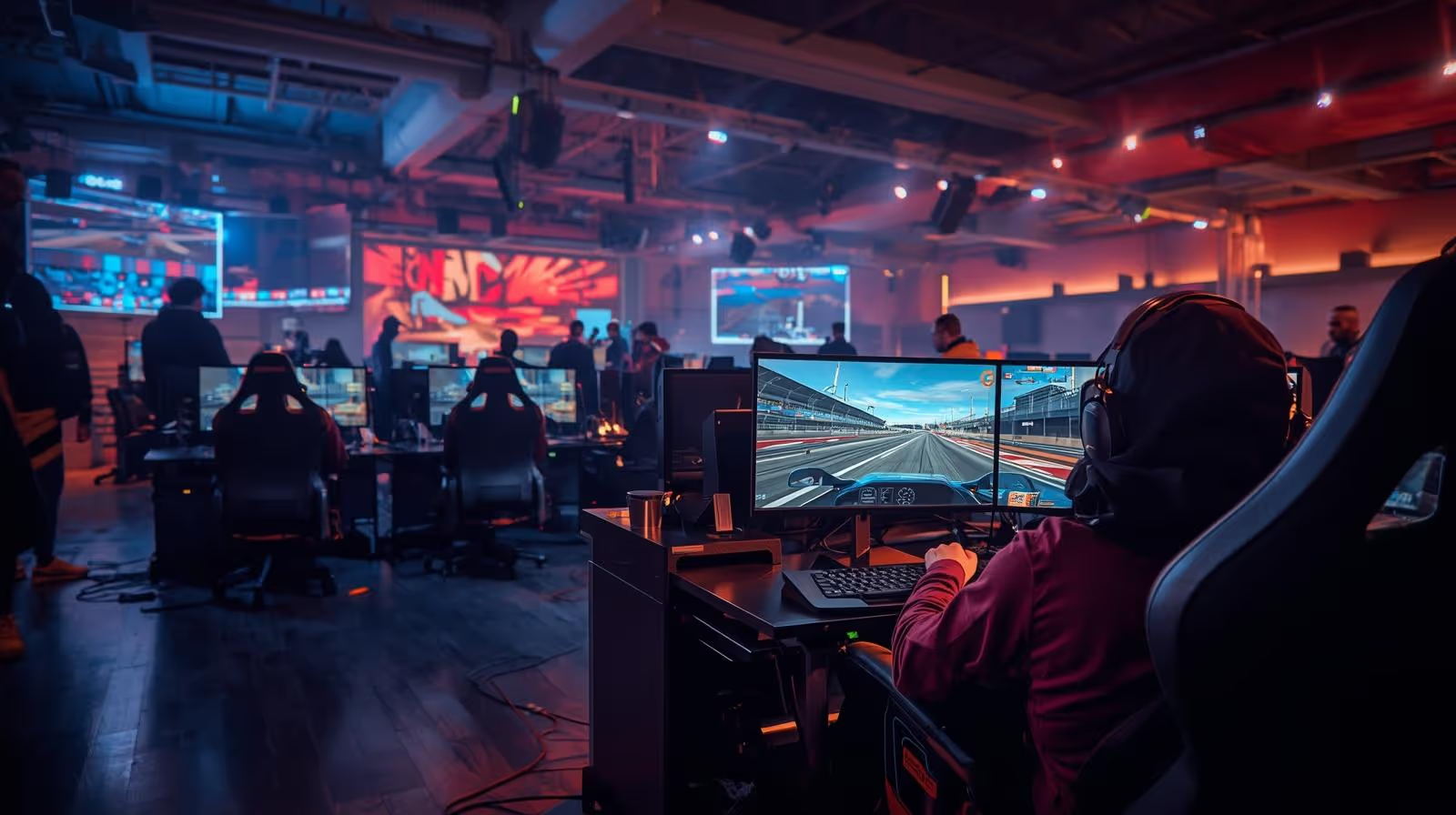


The Esports World Cup 2026 is shaping up to be the main stage for competitive gaming once again. For early July through late August, Riyadh will host a marathon of tournaments, live shows, and fan events that pull in players and viewers from every major region.
This next edition will feature 24 titles in total, with 20 games already confirmed to return. Those games cover almost every major genre, from shooters and MOBAs to battle royales, fighting games, football sims, strategy, and even chess. If you follow esports at all, odds are your favorite title is either already on the list or waiting in the last few reveals.
Last season showed what this festival can look like at full power. More than 2,000 players and 200 clubs from about 100 countries played 25 tournaments across 24 games, chasing a prize pool north of 70 million dollars. Streams reached around 140 countries, racking up about 750 million online viewers and hundreds of millions of watch hours, while roughly 3 million people visited the venue.
On top of that, a unique cross-game club format turned all those tournaments into one huge points race. Clubs scored across different titles to chase an overall trophy and a life-changing payout. This article breaks down which games are back, why they matter, and what players, teams, and fans should expect when the event returns to Riyadh.
Esports World Cup 2026: Dates, Location, And What Is New
The Esports World Cup returns to Riyadh, Saudi Arabia, across a long summer window from early July to late August. It is not a single weekend, it is a full festival that runs for weeks, with different titles rotating through the spotlight.
The event packs many separate tournaments into one venue. Fans in Riyadh can move from stage to stage, while viewers at home jump between streams and languages. Broadcasts go out to over a hundred countries on major platforms, so you can follow your favorite game without staying up all night for every match, unless you want to.
The core idea stays the same. Clubs and players compete across a shared schedule of games for one of the biggest combined prize pools in esports. No single-title event can match that total, because the money and attention are spread across dozens of competitions.
This edition is planned to feature 24 titles in total. Organizers have already confirmed 20 returning games across PC, console, and mobile, with a few more titles still to be announced. That mix keeps loyal fans happy and leaves room for fresh stories and possible new genres.
How The Cross-Game Club Format Works
The cross-game club format is what separates the Esports World Cup from a normal world championship. Top esports clubs do not send only one team. They send full squads across many titles, from shooters to MOBAs to mobile games.
Each tournament awards points based on how well a club performs. A team that wins in VALORANT, places high in League of Legends, and scores in PUBG Mobile can outshine a rival that dominates only one title. That structure rewards depth, planning, and smart roster moves across the year.
In the previous season, around 2,000 players and 200 clubs from about 100 countries took part. They played dozens of tournaments under one banner, all feeding into overall club standings. Every upset in a group stage, every clutch map in a semifinal, added or removed points from that club race.
For returning games, this format raises the pressure. A poor result in Apex Legends or Mobile Legends does not just hurt that one roster. It can decide whether an entire club falls short of the club trophy.
Record-Breaking Growth And Prize Money
The Esports World Cup is already operating at a scale that rivals major traditional sports events. Last season, the combined prize pool passed 70 million dollars across 25 tournaments. That total included both per-game prizes and bonus rewards linked to club standings.
Viewership kept pace with the money. Roughly 750 million online viewers tuned in at some point during the schedule, watching about 350 million hours of matches, desk segments, and content. On-site, around 3 million visitors came through the venue, from hardcore fans to families checking out esports for the first time.
Organizers have been clear that they want to push those records higher. A separate club support program from the Esports World Cup Foundation adds another multi-million dollar package on top, with around 20 million dollars set aside to support roughly 40 partner clubs. That money helps teams invest in staff, bootcamps, and long-term rosters across several games.
This level of backing explains why publishers and players are eager to see 20 titles confirmed to return. Stable prize money plus growing reach is a strong pitch for any competitive scene.
Full List Of The 20 Returning Games At Esports World Cup 2026
The heart of the update is simple: 20 titles are already locked in to return, with four more still to be revealed. To make it easy to scan, we will group them by genre and platform instead of listing them alphabetically.
Shooters And Battle Royales Returning To Riyadh
Shooters and battle royales have been some of the biggest draws in previous Riyadh events, often filling the arena for finals. The confirmed list for the next edition is stacked.
Apex Legends brings fast-paced squad fights and high-mobility plays. Third-party tournaments in Riyadh have already produced highlight reels, and its mix of legends and movement suits a festival crowd that loves clutch moments.
Call of Duty: Black Ops 7 continues the long-running tactical shooter series. Expect tight 4v4 or 5v5 maps, quick decision-making, and storylines built on classic rivalries from the Call of Duty scene.
Call of Duty: Warzone adds a large-scale battle royale flavor to that brand. Massive lobbies, constant rotations, and chaotic late circles make it a very different viewing experience from the arena format.
Counter-Strike 2 is still the reference point for tactical FPS fans. Clean gunplay, simple objectives, and best-of series structure make it perfect for long playoff runs and deep strategic debates.
Crossfire keeps its regional base engaged, especially in parts of Asia where it has long been a staple online shooter. Its presence gives those fans a title to rally behind.
Free Fire represents the mobile battle royale crowd. Matches are quick, rely on sharp aim and smart positioning on smaller maps, and draw big numbers from regions where mobile gaming is the main entry point.
PUBG BATTLEGROUNDS delivers slower, methodical battle royale action on PC. The pacing rewards map knowledge and coordination, and late-game circles often turn into nerve-wracking standoffs.
PUBG Mobile mirrors that formula on phones, with its own star players and club rivalries. In past seasons, PUBG Mobile events in Riyadh attracted some of the loudest crowds and highest concurrent viewership in the schedule.
Tom Clancy’s Rainbow Six Siege X offers tight tactical play built around destructible maps and operator abilities. Rounds are short but packed with planning, making it a favorite for fans who enjoy careful strategy in their shooters.
Overwatch 2 adds a hero shooter layer to the lineup. Abilities, ultimates, and composition swaps create clear visual moments that even casual viewers can follow, especially during big team fights around objectives.
VALORANT blends tactical shooting with distinct agents and abilities. It has already built a huge global competitive scene, and its return to Riyadh continues that story with another chance for new regions to challenge long-time powerhouses.
These shooters delivered some of the most watched finals in the previous season. With the cross-game club format, every upset in these brackets can swing the entire club race, not just a single trophy.
MOBA, Strategy, And Auto Battler Favorites
For fans who prefer deep team play and layered strategy, the Esports World Cup keeps a strong group of MOBAs and a fan-favorite auto battler.
League of Legends remains one of the global pillars of esports. Five-player teams clash on a three-lane map, aiming to control objectives and push into the enemy base. International events already pull in peak viewership records, and Riyadh gives clubs a rare extra global title run inside the same summer.
Dota 2 offers its own spin on the MOBA format, with a different hero pool, economy system, and pacing. Its biggest tournaments are famous for massive prize pools, and its presence in Riyadh lets mixed-genre clubs stack points in another top-tier PC title.
Honor of Kings brings MOBA action to mobile, with shorter match times and touch controls. It dominates in several Asian markets, and its return keeps those fans invested in the event.
Mobile Legends: Bang Bang is another mobile MOBA giant, especially across Southeast Asia. In the previous Esports World Cup season, it featured multiple tournaments, including a main event and a women’s invitational, which helped broaden both the player base and audience.
Teamfight Tactics rounds out this group as a strategy-focused auto battler. Players draft and place units on a board, then watch them fight automatically, trying to build the best combinations. It offers a calmer viewing experience compared to nonstop shooters, but still rewards game knowledge and creativity.
These titles give PC and mobile fans a deep schedule of team-focused matches across the summer. They also give clubs extra chances to earn points in games that reward long-term teamwork and drafting depth.
Fighting Games, Sports Titles, And Chess On The Big Stage
The Esports World Cup would feel incomplete without fighting games, a football sim, and the classic mind sport of chess.
FATAL FURY: City of the Wolves marks the return of a legendary fighting franchise. One-on-one matches, tight combos, and clutch reads create instant drama. Fighting game fans often form some of the most vocal sections in the arena.
Street Fighter 6 continues its strong competitive run with high-skill play, creative mix-ups, and characters that casual viewers recognize at a glance. Sets are short but intense, which makes them perfect for live crowds and highlight reels.
EA Sports FC 26 serves as the main football (soccer) title. It mirrors club rivalries from the real pitch and translates them into one-on-one matches on stage. For many sports fans, this is the easiest entry point into esports during the event.
Chess acts as a bridge between traditional board games and digital esports. With strong communities on streaming platforms, rapid and blitz formats, and charismatic grandmasters, chess events in Riyadh have already shown that a quiet board can pull big online numbers.
Together, these games add variety to the schedule. They keep different fanbases involved and prove that the Esports World Cup is about more than just shooters or MOBAs.
Why These Same 20 Games Are Coming Back
The returning list is not a random selection. Organizers and publishers are leaning on three clear signals: strong performance last season, fan demand across regions and platforms, and long-term agreements between the Esports World Cup Foundation and major game companies.
Many of these titles were responsible for packed arenas and top concurrent viewership in the last edition. When Apex Legends, VALORANT, or Mobile Legends hit playoff stages, chat activity and social media posts surged. Those trends are hard to ignore when planning the new lineup.
At the same time, keeping the core of the lineup steady helps clubs and players plan their year. Long-running stories, like a club’s chase for a back-to-back club trophy or a player’s move from one title to another, only work if the same games return.
Multi-Year Deals With Top Publishers And Platforms
Behind the scenes, stability comes from multi-year partnerships between the Esports World Cup Foundation and leading publishers. These agreements lock in fan-favorite titles and give all sides time to refine formats and broadcasts.
Riot Games supports League of Legends, VALORANT, and Teamfight Tactics. Valve is aligned on Counter-Strike 2 and Dota 2. Activision Blizzard is involved through Call of Duty: Black Ops 7, Call of Duty: Warzone, and Overwatch 2.
Tencent-linked titles such as Honor of Kings stay on the card. Free Fire appears through cooperation with Garena. EA Sports FC 26 reflects EA’s commitment to football esports at the event. Ubisoft comes in with Tom Clancy’s Rainbow Six Siege X. Moonton’s Mobile Legends: Bang Bang keeps its large mobile base inside the festival. Capcom and SNK bring Street Fighter 6 and FATAL FURY: City of the Wolves, while Smilegate backs Crossfire.
These deals give fans confidence that their favorite games will not vanish after one year. Clubs get time to build systems and rosters. Players can treat the Esports World Cup as a stable anchor on their competitive calendar.
Fan Demand, Viewership Data, And Club Success Stories
The decision to bring back these 20 games follows clear viewer data and fan feedback. Titles that filled arenas, spiked concurrent viewers, or trended on social platforms naturally climbed the priority list.
Some clubs put together historic runs across multiple genres. A champion club could score big points in a shooter like VALORANT, a MOBA like League of Legends, and a mobile title like Free Fire in one summer. Those cross-game stories helped casual sports fans understand the format, since it felt like a multi-discipline competition.
Keeping most of the same titles allows those stories to continue. Clubs can refine rosters instead of starting from scratch. Players can chase revenge against rivals who knocked them out in earlier seasons. Which club do you think can turn last year’s near-miss into a complete points run this time?
What Players, Teams, And Fans Can Expect From Esports World Cup 2026
With 20 titles confirmed, everyone in the scene can start planning. Pro players set scrim schedules, coaches review past tournaments, and managers look at visas and travel dates. Fans can start daydreaming about which finals they want to see live or which weeks they need to block on their calendars.
For many teams, the Esports World Cup is becoming the center of the competitive year, rather than a side event. That shift changes how they train and how they build squads.
How Clubs And Players Can Prepare For The Returning Titles
Because many games are returning, clubs can move early. They can lock in players and coaches for Apex Legends, Counter-Strike 2, or Dota 2 months ahead of time. They can hire analysts who already know how those titles were played in Riyadh last season and what worked on stage.
The long summer schedule rewards consistency. Teams must handle travel, constant scrims, and long days under studio lights. Mental coaches, nutrition plans, and smart rest days matter as much as raw mechanics.
The Esports World Cup Foundation’s club program helps with that. A dedicated multi-million dollar fund supports around 40 partner clubs, giving them extra budget for salaries, bootcamps, and support staff. That backing turns the Esports World Cup into a season-long project, not just a single trip.
For individual players, this event can be a career changer. A breakout run on a side-streamed match in Teamfight Tactics or a huge map on the VALORANT main stage can lead to new contracts and global recognition.
Viewer Experience: Streams, Live Arena Hype, And Global Coverage
For fans at home, the coming edition will again feel like a full esports season compressed into one summer. Multi-language streams, co-streams with creators, and constant highlight packages will help fans follow the schedule without burning out.
Last season’s hundreds of millions of watch hours set a clear baseline. Expect main broadcasts in several languages, with local partners carrying the signal in regions where certain games, like Mobile Legends or Honor of Kings, have massive followings.
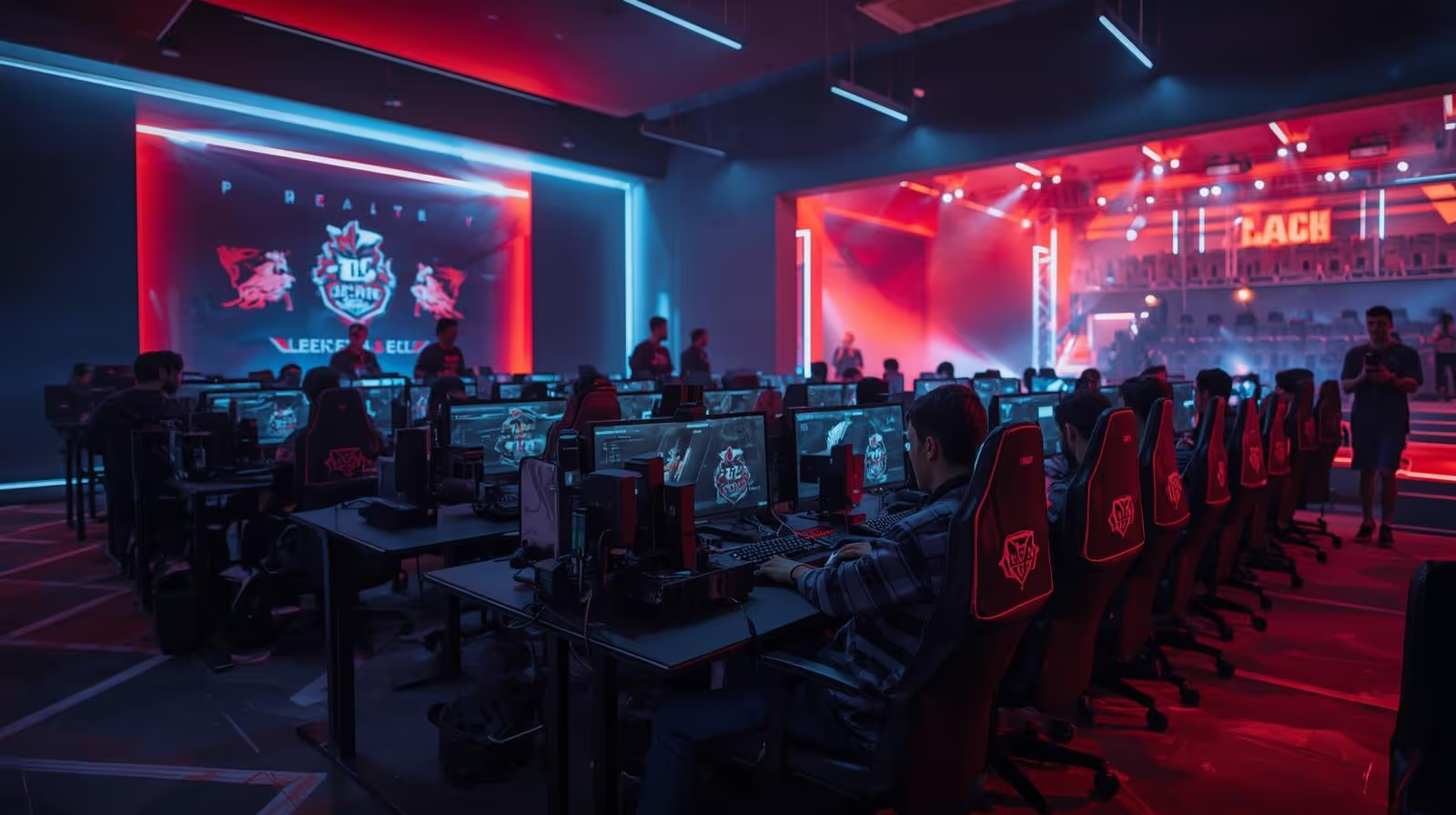
On-site in Riyadh, the event functions like a gaming city. Fans can walk between stages to catch a League of Legends series, then move to a shooter stage for VALORANT, then finish the night with a Street Fighter 6 top 8. Creator meet-and-greets, sponsor booths, and fan tournaments round out the day.
Which grand final would you travel for if you had to pick only one: a Counter-Strike 2 decider, a Mobile Legends showdown, or a Call of Duty: Warzone endgame on the big screen?
Conclusion
The next Esports World Cup in Riyadh brings back a packed summer festival with 20 confirmed returning titles and four more still to be revealed. Shooters, MOBAs, battle royales, fighting games, sports titles, and chess all share one stage, tied together by a cross-game club format that turns every match into part of a larger story.
Backed by record prize pools, a growing club support program, and stable partnerships with top publishers, the event is set to build on last season’s massive audience and on-site turnout. For players and teams, it is the centerpiece of the competitive year. For fans, it is a chance to see all their favorite games in one place.
Keep an eye on the official Esports World Cup channels for the final game reveals, full schedules, and ticket or stream details. Until then, the main question is simple: which returning game or storyline are you most excited to watch when the action starts again in Riyadh?