Blogs and Insights
Read other blogs
A value-first ecosystem shaped for purpose, use, and long-term asset strength.

.svg)
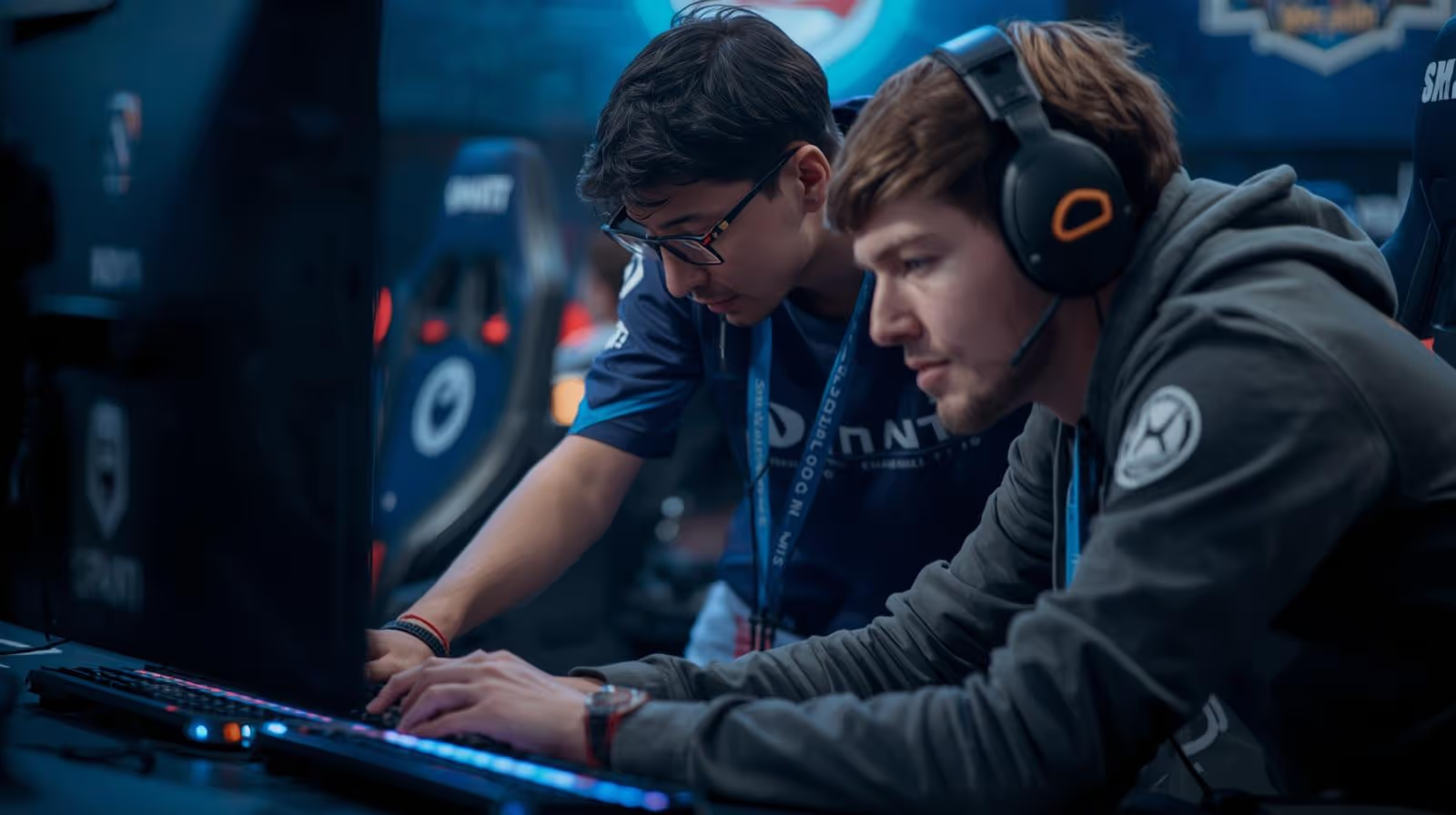
The arena was loud, the player cams were tight, and the next round felt like it could swing the whole series. Then it happened, the kind of pause that usually sets chat on fire.
A top pro raised a hand for a tech pause, not to argue a call or ice the other side, but to help his opponent fix a broken setup. For a moment, the match stopped being about clutch shots and became about something rarer under stage lights, respect under pressure.
Anyone who’s played or coached esports knows the usual suspects: a mouse that won’t track, a headset that loses one channel, a monitor stuck on the wrong refresh rate, settings that reset, or a LAN client acting strange. Still, what kind of player risks momentum to do the right thing when the easiest move is to stay quiet and take the free edge?
From the viewer’s seat, it starts as a small tell.
An opponent takes an early duel and whiffs in a way that looks off, not nervous, off. The crosshair drifts like it’s on ice. A snap that should be crisp turns into a slow drag. Then comes a second clue, a late reaction to a sound cue, like footsteps arrived a half-second behind reality.
The camera cuts to the player’s face. He’s not tilted in the normal way, not angry at himself, more confused. He taps a key, checks his mouse hand, and looks to the side of the monitor as if something changed without permission.
On stage, there’s a rhythm to these moments. Players try to play through it first because nobody wants to be “that guy” who pauses. But when the issue keeps showing up, it starts to threaten competitive integrity. A match decided by a misbehaving setup feels like a coin flip with extra steps.
That’s when the pro on the other team notices. You can see it in the body language. He leans forward, watches the opponent’s next movement, and seems to connect the dots. Instead of pushing the advantage, he signals for a pause and gets the referee’s attention.
The best part is how ordinary it looks up close.
No shouting. No sarcasm. Just quick words, a hand gesture toward the opponent’s station, and a glance at the admin. The pro doesn’t touch anything. He points, explains what he saw (the aim drift, the missed sound cue), and asks the official to check.
The opponent nods, relieved that someone else saw it too. The admin steps in, the match stays paused under event rules, and the pro waits with his hands off the desk. It’s a small scene, but it lands hard because it cuts against what people expect on a big stage.
Most “my setup is broken” problems aren’t dramatic. They’re tiny mismatches that turn muscle memory into guesswork. Here are realistic culprits that can wreck a round in seconds.
Wrong DPI or in-game sensitivity: If a profile resets, the same hand movement can swing too far or not far enough. Aim practice becomes useless because your brain is sending commands to a different steering wheel.
Mouse polling rate changed: A drop from a high polling rate to a low one can make aiming feel muddy. It can also create weird micro-stutters, which players often describe as “my mouse is skipping.”
Monitor refresh rate stuck: If a display gets set to a lower refresh rate, motion looks less smooth. Tracking targets feels harder, and it can mess with timing on flicks, counter-strafes, and recoil control.
Audio channels reversed or wrong device selected: If left and right channels flip, you’ll turn the wrong way on footsteps. If the game outputs to the wrong device, you’ll miss cues or hear them late.
Focus or overlay issues: If the game loses focus or an overlay pops up, inputs can feel delayed. Even a tiny hitch can decide a duel.
Keybinds reset: Losing a push-to-talk key or a utility bind creates panic. Players waste time hunting for the right key, and comms fall apart.
Controller or driver conflict: A stray driver or device can cause input fights in the background. You get phantom movement, stuck keys, or weird aim behavior that looks like nerves, but isn’t.
None of these mean a player is “making excuses.” On a stage, the difference between a clean setup and a broken one is the difference between playing your game and surviving your gear.
Tournament rules exist for a reason. You want fair play, and you also want to prevent “help” from turning into coaching or mind games.
Most events handle tech problems with a simple structure:
The line is simple. Helping someone get back to their normal setup is fair. Telling them how to hold a site or when to rotate is not. The reason this story stands out is that it stayed on the right side of that line, with a ref present and no funny business.
On paper, it sounds backwards. Competition is harsh. Contracts, seeding, and prize pools don’t reward kindness.
But pros live in a small world, and they think long-term. They also know that esports is built on trust. If fans believe matches are decided by who had fewer tech problems, the whole scene looks weaker.
There’s also the inner logic of elite players. They want to beat the best version of you. When you win because the other guy’s setup failed, you don’t get the same satisfaction. The clip might go viral, but the comments turn toxic fast, and the win feels like it came with an asterisk.
And if money and rankings are on the line, what does a fair win mean when you know the other player couldn’t hear footsteps or couldn’t aim the way he practiced? That question sits in the back of a lot of pros’ minds, even when they never say it out loud.
A clean win protects your name.
Fans remember how you act when it’s easiest to be selfish. Sponsors notice it too, because brands don’t just buy skill, they buy the image that comes with it. Teams talk about culture all the time, and moments like this are what culture looks like in real life.
It also reduces drama. If you win after helping fix a setup problem, there’s less room for excuses, fewer angry posts, and fewer “replay the match” arguments. You get to hold your head high because you know the result came from play, not from a broken mouse.
Over time, that adds up. Clips last forever. So do reputations.
Helping an opponent isn’t a trick, but it can show a mental advantage.
Tech pauses are stressful. Players get stuck in their own heads. They start replaying mistakes, predicting the next round, or worrying about what the crowd thinks. One person who stays calm can change the whole mood on stage.
Top players use pauses for simple routines:
By choosing sportsmanship, the pro also chose control. He didn’t let frustration run the room. That kind of steady leadership can keep teammates from spiraling, which matters as much as any single clutch.
Most readers won’t play under arena lights, but the lesson still lands in ranked, scrims, and local events.
First, protect your own game. Second, protect the match. The goal isn’t to be soft, it’s to keep competition honest so practice means something.
A good baseline is to show up prepared, then handle problems in a way that keeps everyone safe and respected. The moment you turn a tech issue into trash talk, you’ve already lost something, even if the scoreboard says you won.
You don’t need a long ritual. You need a repeatable one. Here’s a tight checklist that covers most setup disasters.
This is the unglamorous side of esports, but it wins matches. A reliable setup is like a good pair of shoes, you only notice it when it fails.
When the other side is struggling with a setup issue, you can keep it clean without acting like a hero.
Do pause through the ref or the proper system, and keep your hands visible.
Do speak in short, neutral phrases so nobody thinks you’re coaching.
Do let admins handle the PC, cables, and settings changes.
Do point out obvious checks if allowed, like refresh rate or wrong audio device.
Don’t touch their mouse, keyboard, headset, or monitor.
Don’t give “help” that sounds like strategy.
Don’t argue on stage or in all-chat, even if you think they’re faking it.
Don’t use the pause to run a team meeting unless the rules allow it.
A respectful line that works in most environments is simple: “I think his settings might’ve reset, can we get an admin to check?” It signals fairness without turning into a speech.
That mid-game pause wasn’t soft, it was strong. The pro protected the match so the result meant something, and that’s the kind of sportsmanship in esports people don’t forget.
Skill shows up in highlights, but character shows up in the messy parts, the tech pauses, the pressure, the moments where nobody would blame you for staying quiet. Build a pre-match routine that keeps your setup steady, and choose clean wins whenever you can. If you’ve seen a tech pause change a match, share the story with your team or community so the next event runs better for everyone.
Blogs and Insights
A value-first ecosystem shaped for purpose, use, and long-term asset strength.


.svg)