Blogs and Insights
Read other blogs
A value-first ecosystem shaped for purpose, use, and long-term asset strength.

.svg)
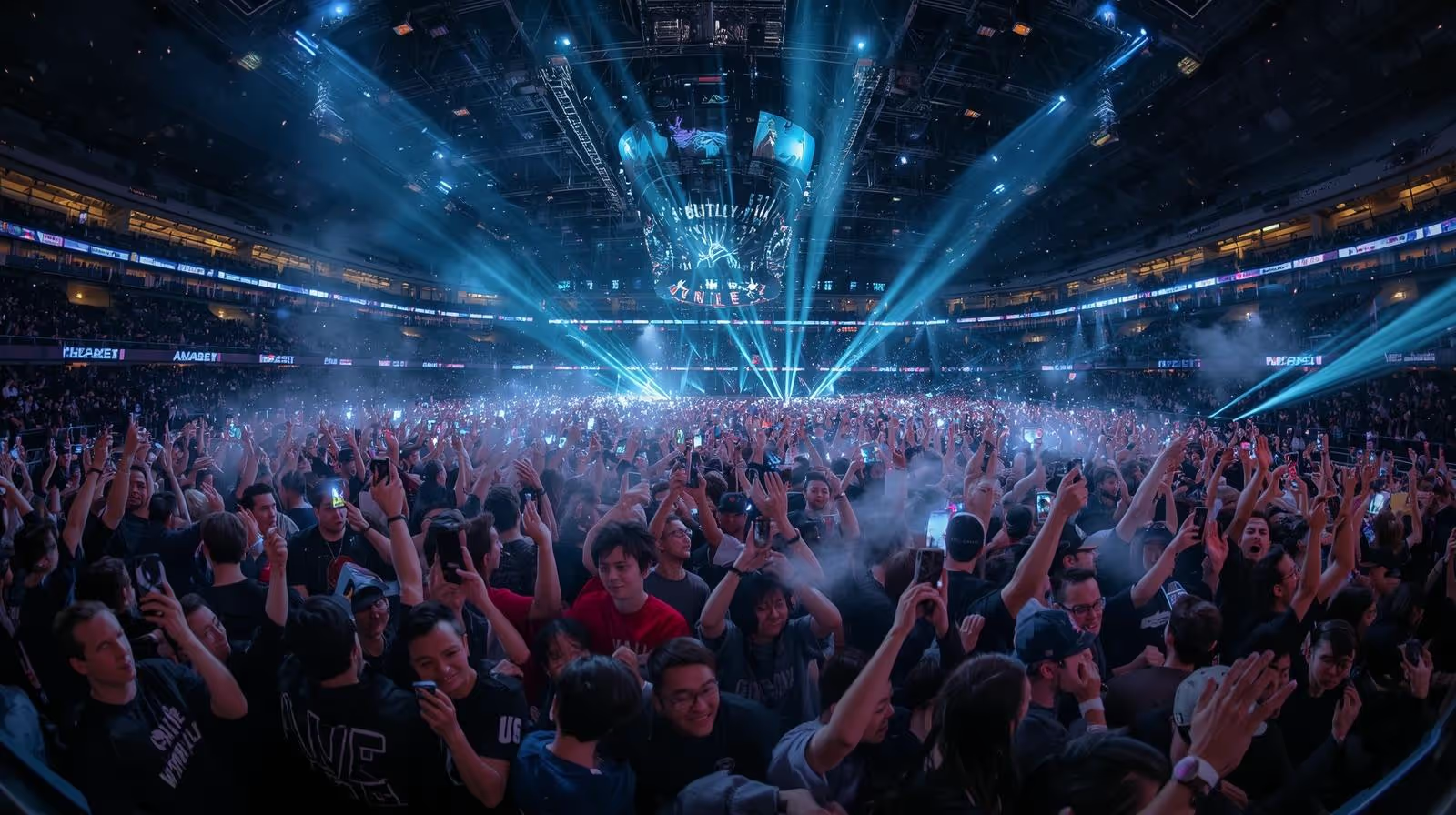
The best esports finals feel like a power surge. Bass in your chest, chants bouncing off concrete, LEDs flashing across the stage like a storm. Everyone’s there for the same reason, to watch five players turn a match into a memory.
Then, in the middle of that noise, something changes. A front-row fan slumps forward. Someone waves frantically at an usher. A few seats back, a stranger drops their drink and kneels, not for an autograph, but to help.
In the seconds that follow, the arena becomes something else. Thousands of screens lift into the air, not to record a clutch play, but to guide medics to the right row. What makes thousands of strangers act like a team in seconds? This story matters because it shows how esports crowds can protect each other, and what fans and organizers can learn from a moment when hype turned into help.
It rarely looks dramatic at first. A person goes pale. Their breathing changes. Their head dips like they’re just tired, until it becomes clear they’re not okay.
In a packed esports arena, the first response usually comes from the nearest seats. Someone asks, “Are you with them?” Another person signals to staff with both hands, the way you do when you need to be seen over a crowd. The shift is fast and unmistakable, people stop treating it like part of the show.
The safest help in those first moments is simple and practical. Fans clear a little space so the person can breathe, and so staff can reach them. Someone cushions the person’s head with a hoodie, keeping it from knocking against a seat base. If the person looks like they might vomit or can’t sit up, bystanders may help them roll gently onto their side, but only if it’s safe and they’re not forcing movement. Mostly, people do the most important thing: they get an usher or security guard involved right away.
That last part is what makes the rest possible. Esports venues are loud, dark, and tight, and medical staff need a clean signal that something’s wrong. When fans stop yelling and start pointing staff to the exact row, the response becomes organized instead of chaotic.
The hush doesn’t always come from an announcement. Sometimes it starts like a ripple. The closest section quiets first, then the silence spreads as people realize it’s not a skit, not a prank, not someone fainting for attention.
Lower volume helps in a few concrete ways.
First, it improves communication. Staff can ask quick questions and actually hear answers. Medics can call out directions, and people can follow them. Second, it reduces physical pressure. When the crowd is calm, fewer people push forward to look, which keeps the air around the sick fan clearer and gives responders room to kneel.
There’s also a social effect that’s hard to fake. When an esports crowd quiets down, it sends a message: this person is a human being, not a distraction. Esports fans can go from chanting to caring in a heartbeat, and calm is contagious in the same way hype is.
Arena seating is built for spectacle, not for finding one seat in a hurry. The stands are dim so the stage can shine. Moving lights sweep across faces. Tight rows turn into bottlenecks the moment someone stands up. Even trained staff can lose precious time trying to locate “Row 12, seat 8” when every row looks the same from the aisle.
That’s where the phone lights changed everything.
Instead of random flashes, people held their screens steady. Dozens became hundreds, and suddenly there was a visible trail leading to one spot in the crowd. From a medic’s point of view, it’s like someone turned on runway lights in a dark room. The lights didn’t just show where the fan was, they showed the cleanest path to reach them.
In many venues, staff will ask spectators to open a single continuous aisle and keep it open, so a stretcher and responders can pass without shoving. Phone lights can support that request. When lights point toward the correct section, medics don’t have to fight their way through the wrong row first. They get to the right person faster, with less pushing and less risk of someone else getting hurt.
One detail matters here. The most helpful lights are the steady ones. A waving phone or strobing flash can confuse people and distract players on stage. A still, consistent glow works better, like a streetlight instead of a camera flash.
Phones usually come out at esports events for highlight clips, walkout shots, and crowd pans. That night, they meant something else. The lights became a shared signal that said, “Help needed here,” and also, “Stay back, stay calm.”
That signal did more than guide medics. It changed how people behaved.
When a whole section lifts lights for one purpose, it discourages crowding. It tells the curious few that this isn’t a moment to push forward. It gives social cover to the people doing the right thing, the ones keeping a lane open, the ones waving staff over, the ones telling others to step back without starting an argument.
It also reduced the urge to turn a medical scare into a piece of content. In any live crowd, a few people will film first and think later. But when the lights became a “help beacon,” the focus shifted from recording to assisting.
A respectful crowd also protects privacy. If someone is sick, they don’t need thousands of faces watching them like it’s a side show. Phone lights can be a way to help without pointing a camera at the person. It’s a small choice that protects dignity, and in a public space, that matters.
Most fans aren’t medics, and they shouldn’t try to play one. The best support is basic, safe, and cooperative, and it starts with understanding the venue.
In the seconds after someone collapses, here’s what tends to help the most:
Have you ever tried to move through a sold-out section when everyone is standing, and there’s barely room for your knees? That’s what medics face, except they’re carrying gear, and they’re racing the clock. Fans who sit down, shift their legs in, and keep the aisle clean can save time without touching the sick person at all.
If you’re with the person who got sick, the most useful thing you can do is provide simple facts to staff if they ask. What happened right before? Did they hit their head? Do they have a known condition? Even then, keep it short and let medics lead. In a live arena, too many voices at once can slow the response.
The crowd deserves credit, but the bigger lesson is for event operations. Esports is no longer “small.” Finals pack arenas, run long days, and draw fans who’ve been lined up outside for hours. When something goes wrong, minutes matter, and the venue should be ready for a medical response that’s as rehearsed as the show itself.
A few realistic improvements fit almost any esports event:
Clearer medical wayfinding in dark seating
Venues can display a simple medical icon on screens during breaks, with arrows to first-aid stations and a reminder to contact ushers. In a dim arena, signs that work in daylight don’t always work at show lighting.
A pre-show reminder that doesn’t feel preachy
A short line from the host can set expectations: keep aisles clear, find your nearest usher, and don’t crowd around medical incidents. If fans hear it early, they’re less likely to argue when asked to move later.
A “hush protocol” for emergencies
Casters and stage hosts can coordinate with security so that when a medical response is underway, the room volume drops. It can be as simple as lowering music, pausing hype prompts, and making a calm announcement. Quiet isn’t just respectful, it’s functional.
Smarter aisle access and staff positioning
High-density sections, like floor seating or the closest lower bowl, need staff nearby who can open a corridor quickly. Some venues already do this with roving teams and radios. The goal is a continuous route wide enough for responders and a stretcher, without forcing staff to push through a wall of people.
Visible AED locations and trained staff
Many venues already have AEDs, but fans rarely know where they are. Marking them clearly and training event staff in CPR and AED use can shorten the gap until medical teams arrive. The point isn’t for fans to do more, it’s for the building to be prepared.
None of these ideas ruins the show. They protect it. A safe crowd is a crowd that comes back, and trust is part of what makes live esports feel like community instead of just entertainment.
When medics finally reached the right row, the arena didn’t erupt, it steadied. People held their lights still, kept the aisle open, and let trained staff do their work. Later, when the fan was guided out for care, the relief sounded like a different kind of cheer.
That’s the part many people remember more than the final score. Esports is loud by design, but it can also be kind and coordinated, especially when a simple signal, a phone light, turns strangers into helpers.
If you’re going to a live event soon, keep it basic: know where staff are, keep aisles open, and be ready to help in small, safe ways. The next time a section goes quiet, will your first move support the people who need space to act, and will you choose care over curiosity?
Blogs and Insights
A value-first ecosystem shaped for purpose, use, and long-term asset strength.


.svg)