Blogs and Insights
Read other blogs
A value-first ecosystem shaped for purpose, use, and long-term asset strength.

.svg)
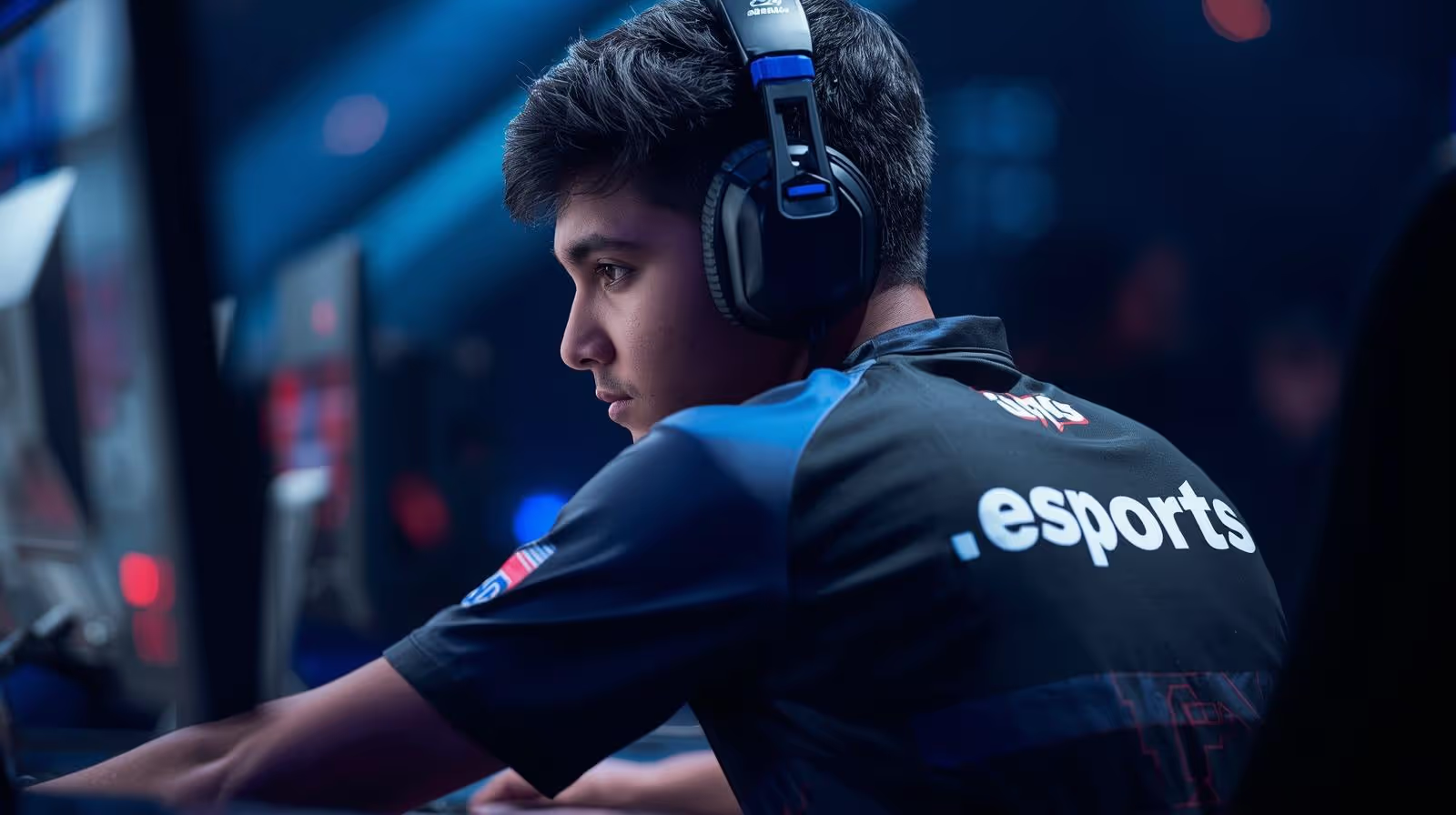
In esports, it’s common to see teams “buy” a title run on paper. They sign talent from different countries, stack star names, and hope the firepower solves everything. Fans call those lineups international stacks, and they often look unfair before the server even loads.
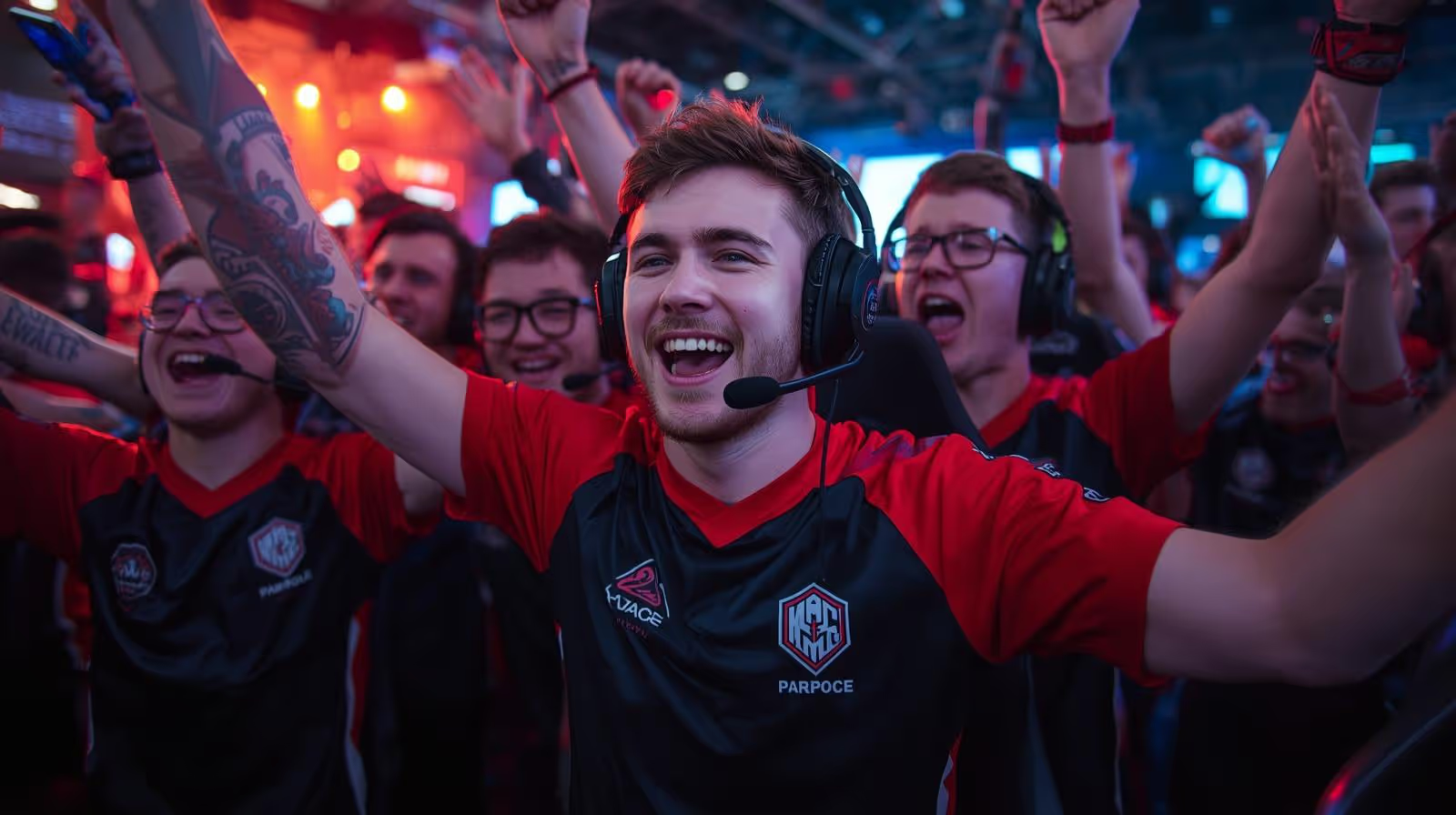
A local roster is the opposite. It’s a team built mostly from the same country or the same league region, with shared language, shared habits, and usually a longer runway to grow. And at the Esports World Cup in VALORANT, Team Heretics turned that simple idea into a trophy, not by chasing the biggest global shopping list, but by trusting a regional core that already knew how to play together.
So how did a local roster pull it off when the scene rewards “dream rosters” so often?
Fans throw these terms around every roster window, but they’re not complicated.
A local roster usually means one of two things:
An international stack is a team built by importing across regions or mixing nationalities and languages on purpose, often to cram the best possible roles into one lineup. In VALORANT, that might look like a duelist from one region, an initiator from another, a controller from somewhere else, and an in-game leader who has led teams on multiple continents.
When people say a roster is “stacked,” they mean it has a high ceiling on skill. It’s about raw aim, proven LAN experience, clutch history, and highlight reels. It’s also about reputation. A stacked team forces respect in vetoes and gets fans talking before the first match.
But esports isn’t played on spreadsheets. It’s played in seconds, under stress, with limited information and loud consequences.
International stacks sell a clean story: take elite pieces, fit them together, win fast.
On paper, they bring real advantages:
Talent pooling: You’re no longer limited by one region’s player supply. If you want a world-class sentinel and your local options aren’t there, you import.
Role coverage: Strong orgs can build a perfect “role map,” where every agent pool is deep and every position has a specialist.
More styles in the toolbox: A player raised on one region’s meta might bring ideas that others don’t see. That can create fresh defaults, new mid-round looks, and better reads.
Brand pressure and sponsor pull: Big names attract attention. More attention means more content, more sponsor value, and usually more patience from the outside, at least at first.
In VALORANT, it’s easy to understand why orgs chase this. If a team is one entry-fragger away from contention, why wait a season to develop someone when you can sign a known star?
International stacks also come with bills that don’t show up in the announcement graphic.
Comms get messy when rounds get hot. Players can speak the same language and still mean different things. “Play slow,” “contact,” and “default” can be interpreted in ways that change a round.
Playbooks clash. Some teams drill set pieces with strict timing. Others prefer looser reads and heavy mid-round calling. When you mix those habits, practice time gets spent on basic alignment instead of growth.
Practice standards aren’t always equal. That doesn’t mean anyone is lazy. It means players come from systems with different review habits, different expectations, and different ideas of what “a good scrim” looks like.
Trust takes time, and esports is impatient. When a new stack loses early, the outside noise starts fast. The same roster then scrims under tension, and tension makes people play smaller.
This isn’t an argument against imports. Plenty of mixed rosters win big. It’s just the part fans forget when they assume five great players equals a great team.
Team Heretics arrived at the Esports World Cup as a team that looked like a team. That sounds obvious, but it’s rare. They were not a last-minute mix of famous pieces. They leaned on a core built within their region, kept together long enough to build habits, and trusted their coaching to shape the details.
The run became unforgettable in the final, where Heretics faced Fnatic in a best-of-five and fell behind 0 to 2. For most teams, that’s where the “we tried” story begins. For Heretics, it became the start of the comeback.
They reversed the series 3 to 2, winning three straight maps when the pressure was at its highest. And Mert “Wo0t” Alkan finished the event as tournament MVP, the kind of individual performance that still fit inside a team plan instead of replacing it.
That combination is what made the win feel real to viewers. It wasn’t perfect Valorant. It was survival Valorant, the kind where one bad peek can end your season, and one good timeout can save it.
In VALORANT, “team identity” isn’t a motto. You can see it in the small stuff:
Heretics looked prepared in the way that matters most: they knew what a good round looked like, even when they were losing. Down 0 to 2, they didn’t start inventing new players mid-series. They tightened decisions and trusted the structure they’d built.
Map three was the pivot. After falling behind, they steadied the pace, matched the half, and then found the second-half answers that kept the series alive. That’s not just aim. That’s a group that understands its win conditions.
What happens when every player knows the next move without a long call? The round feels quieter. Utility lands on time. Peeks happen in pairs. And when the other side makes a play, the response is faster because the baseline plan is already shared.
It also helps that regional cores often share more than language. They share scrim circles, similar reads on how teams fake, and a common sense of timing. That doesn’t win a trophy alone, but it reduces friction, and friction is what kills good rosters.
A reverse sweep isn’t magic. It’s a stack of small choices made while your hands are shaking.
Heretics showed the kind of calm that wins finals:
They reset between rounds. You could feel it in the pace. They didn’t chase the last mistake. They played the next one.
They took smart risks, not desperate ones. There’s a difference between an aggressive info play with a trade behind it and a solo hero peek because you’re frustrated.
They used momentum without rushing it. Some teams win two rounds and sprint into a third. The better teams still respect economy, ult cycles, and map control.
Map four told the story in one number swing. Fnatic led 9 to 3 at the half, a lead that usually ends finals. Heretics flipped the map in the second half and forced the decider, showing stronger late-round choices and better mid-round execution when the pressure peaked.
That’s the part fans often miss when they talk only about mechanics. Raw aim wins duels. Staying calm wins series.
Heretics’ win is a useful case because it answers a question orgs wrestle with every season: should we buy bigger names, or build better habits?
Local teams can win at the top level because they often get the basics right sooner. And in VALORANT, basics decide a painful number of rounds.
Great comms aren’t loud. They’re short, shared, and trusted.
In a clutch moment, a local roster often has an edge because:
A clean “three rotating, hold” beats a long speech that arrives late. A quick “flash on contact” beats a debate about timing. When the round is down to seconds, clarity is damage.
This matters most on retakes and post-plants. Utility timing has to be tight. If a stun is late by one beat, the swing dies. If the smoke drops early, the spike gets stuck behind a wall of bullets.
Practice is where titles are built, not in highlight clips. Local or regional rosters often improve quicker because feedback lands cleanly.
During VOD review, players can talk through the same moment without translating meaning. They can disagree without misunderstanding. They can fix a pattern in one session, then drill it the next day.
That creates a compounding effect:
Better set-piece drilling: entries, utility layers, and post-plant spacing become automatic.
Cleaner defaults: map control is taken with purpose, not just habit.
Less blame: when mistakes happen, the team can label the issue and move on, instead of turning it into a personal fight.
You can see this in how teams handle anti-strats. If a rival counters your favorite hit, the answer isn’t “aim harder.” The answer is a new look, a delayed timing, or a mid-round pivot everyone recognizes.
Local rosters carry a different kind of energy. Fans don’t only cheer the org logo. They cheer the idea that their region can produce winners.
That pride can lift a team when rounds get ugly. It can also soften the outside expectations. A superteam is expected to win now, and anything else is labeled failure. A local roster often gets a longer emotional leash, and that can help players stay loose.
Local pressure can be heavy too, especially if you’re the “home hope.” But it’s a pressure that can turn into fuel, because it feels shared instead of demanded.
Heretics benefited from that feeling. They weren’t trying to prove a transfer fee was worth it. They were trying to prove the group was worth trusting.
Most teams can’t copy a championship run. They can copy the choices that made it possible.
If you’re an org building a lineup, or a player trying to form a serious roster, start here.
First, decide what you’re building toward. If the answer changes every month, the roster will feel that.
A simple checklist-style flow helps in real life: define roles first, trial communication next, set practice rules, then test the team under pressure conditions, then decide if the group can grow.
Are you building a team for highlights, or for wins? That question should sit inside every trial week, because it changes who you keep.
Stats matter, but they lie without context. A player can top-frag because they bait well. Another can look average while doing the dirty work that wins rounds.
When scouting, prioritize:
Role fit: does the player’s agent pool match how you want to play, or will they need months to re-learn comfort?
Decision quality: do they take fights with a reason, or because they’re bored?
Temper under stress: do they stay useful when they’re 5 and 15?
Coachability: do they accept feedback without turning it personal?
Highlight clips don’t always equal round wins. Most trophies are built on boring rounds where everyone does their job.
A strong team has structure that holds even when plans fail.
In simple terms:
Teams that rely on “feel” alone get exposed on stage. Teams with systems can lose pistol, lose a bonus, and still know how to win the next gun round.
Pressure-proof systems also include timeout habits. A good timeout isn’t a lecture. It’s one clear adjustment, one reminder of win conditions, and one calm breath that stops the spiral.
Heretics’ final showed why this matters. When the series went against them early, they didn’t look lost. They looked like a team that had practiced being uncomfortable.
International stacks will keep coming, and sometimes they’ll win fast. But Team Heretics proved a local or regional core can take the biggest stage when it has trust, clear roles, and repeatable habits under pressure. Their Esports World Cup title, sealed by a reverse sweep in the final and an MVP-level event from Wo0t, is the kind of result that forces orgs to rethink what “best roster” really means.
If you’re a fan, it’s worth asking what you value more, chemistry or star power, because your answer explains which teams you believe in early. Share your favorite moment where a local lineup beat the expectations, and what you think mattered most, comms, prep, or pure nerve.
Blogs and Insights
A value-first ecosystem shaped for purpose, use, and long-term asset strength.


.svg)