Blogs and Insights
Read other blogs
A value-first ecosystem shaped for purpose, use, and long-term asset strength.

.svg)
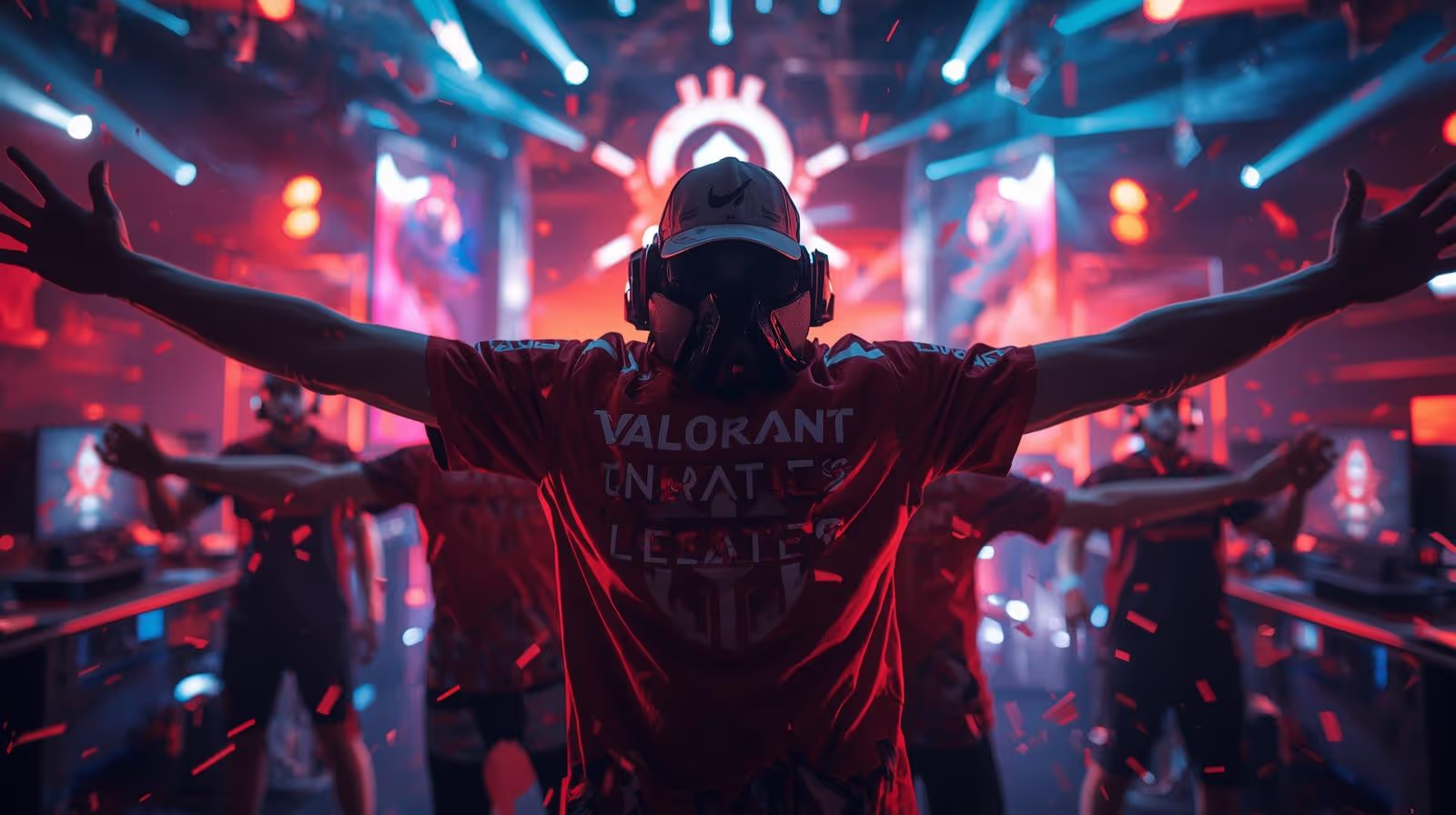
Turkey didn’t suddenly “appear” in Valorant. The aim has always been there, the confidence too. What changed is simpler and more impressive: Turkey started winning as a system, not just sending out gifted players for other regions to polish.
If you follow VCT EMEA, you’ve felt the shift. Upsets don’t look like flukes anymore. More Turkish teams show up prepared, calm in late rounds, and ready for long series. And for fans, that means more storylines, more breakouts, and more stars worth learning early.
You might wonder how a country can build winners so fast, and the answer sits in three places at once: stronger Challengers results, real coaching upgrades, and teams proving on stage that pressure doesn’t scare them.
For a long time, Turkey was treated like a highlight factory. Scouts looked for raw mechanics, then expected the region to fall apart when matches slowed down and plans mattered.
That label doesn’t hold anymore. Turkish teams still take fights with confidence, but now they also show structure: cleaner mid-round decisions, better utility layering, and fewer “coin-flip” rounds that swing on one ego peek. The big change is credibility, because results in EMEA started to match the eye test.
The turning point wasn’t a single crazy clip. It was repeatable pressure play.
When a team proves it can close tight maps, win anti-eco rounds, and recover after a timeout, analysts stop calling it “momentum” and start calling it preparation. That’s the kind of respect Turkish teams began earning this season across EMEA events and playoff environments.
What makes this type of win matter is the opponent. Beating disciplined teams is different from beating chaotic ones. Disciplined teams trade well, punish bad utility, and don’t gift rounds. If you beat them anyway, it tells everyone you can handle prep, nerves, and mid-round calling when the plan breaks.
The clearest proof Turkey isn’t a one-team story came through the Challengers and Ascension path.
Two Turkish squads, ULF Esports and BBL PCIFIC, qualified out of Ascension EMEA and earned spots in the next VCT league season. That outcome matters because Ascension is designed to stress-test teams. It’s LAN, it’s high stakes, and it punishes shallow map pools.
Their run wasn’t vague hype. Results were decisive in the matches that mattered most: ULF beat Mandatory 3 to 0 in the series that secured qualification, and BBL PCIFIC beat DNSTY 3 to 1. The event took place in Berlin in October, with a €100,000 prize pool, and the format demanded consistency across multiple opponents.
When two teams from the same country take the available Ascension slots, the message is blunt. Turkey didn’t just produce a good roster. It produced depth.
“Talent” is the spark. A pipeline is the engine.
Turkey’s rise makes sense when you look at repeatable habits: scouting that finds hungry players early, coaching that improves decision-making, and rosters that stay together long enough to grow. Add frequent high-pressure officials, and teams stop playing ranked Valorant on stage.
This is why the Challengers and Ascension route matters so much. It doesn’t hand out reputation. It forces teams to earn every round in formats that punish weak prep.
Challengers titles don’t automatically translate to VCT wins, but they build the right muscles.
Regional dominance forces teams to solve the same problems top teams solve: expanding map pools, building pistol packages, planning anti-strats, and keeping discipline against weaker opponents. Then Ascension adds the stress test, because every match carries consequence.
ULF Esports won a later Challengers stage and turned that into an Ascension spot, and BBL PCIFIC won an earlier Challengers stage, reached another stage final, and also made it through Ascension. That kind of season doesn’t happen if a team only knows one style or one comfort map.
If you’re quietly asking whether this means Turkey will keep showing up next season, the most honest answer is yes, because systems repeat better than hot streaks.
Better coaching in Valorant doesn’t mean long speeches. It shows up in small, measurable things:
Timeouts that fix the next two rounds, not just the mood. Cleaner role clarity, so players stop overlapping space. Planned utility that creates simple fights instead of hopeful swings. And mid-round protocols, so when the entry dies, the round doesn’t die with them.
Another shift has been roster stability. Constant changes can hide problems, because every loss gets blamed on “not enough time.” Stable lineups remove that excuse. They also sharpen trust, which is the hidden currency of late-round Valorant.
When Turkish teams began keeping cores together longer, you could see it in how they traded, how they cleared corners, and how quickly they snapped into post-plant positions without someone begging on comms.
The old stereotype of Turkish Valorant was simple: take every duel, win or lose. The newer version is more interesting. Top Turkish players still take space with confidence, but now they pick moments, and that patience is what turns good aim into wins.
On broadcast, it looks like this: a Jett who doesn’t dash just because the smoke is up, an anchor who doesn’t swing alone just to “see what happens,” a lurker who waits for sound cues instead of sprinting into a hero flank.
Fans have pointed to names like LewN and MAGNUM when talking about impact roles and round-swinging moments, because the best new Turkish profile isn’t only fragging. It’s fragging with a plan, then surviving long enough to win the round after the kills.
A team can have structure and still feel timid. Turkish teams that rose this season didn’t. Their style often combines early pressure with clear fallbacks, which is exactly the mix that punishes teams who rely on perfect reads.
This isn’t about playing “wild.” It’s about controlling the pace, forcing rotations, and making defenders uncomfortable with constant questions they must answer.
The best Turkish teams take space early, then slow down at the right time. That sounds basic, but it’s rare to execute under pressure.
Early space creates information. It also pulls defensive utility. Then the round shifts into a calm posture, where the attacking side has options instead of a single scripted execute.
When they take A main that early, what options does the defense even have, and the answer is usually unpleasant: fight without support, rotate and risk giving mid for free, or hold and bleed utility while the clock runs down.
Controlled aggression wins because it forces defenders to make the first mistake. And in EMEA, where many teams pride themselves on structure, being the one who cracks first often decides the map.
People call it “clutch factor” like it’s a personality trait. In pro Valorant, it’s usually repetition.
Teams that play many officials build shared rules for chaos. Who speaks in a 2v2. When to tap the spike. When to save. When to swing together. A clutch looks magical when you don’t hear the comms, but it often comes from simple agreements practiced for months.
Ascension matches are a perfect place to build this habit because every round has weight. In that environment, Turkish teams showed they could close series cleanly, even when opponents adjusted. That’s the type of mental stability that carries into league play.
Anti-stratting sounds fancy, but it’s just studying patterns and punishing them.
If a team always defaults the same way, you change your early utility to deny it. If their controller likes a certain one-way, you break it with a planned flash. If they overload one site on defense, you hit the other site with a set piece that clears the common anchor angles.
Turkish teams have gotten better at these details, and that’s why “upsets” started to look normal. When you come in with answers, you don’t need the other team to choke. You just need them to play like themselves.
That’s also why Turkish teams tend to improve quickly across a series. If map one is rough, map two often looks cleaner, because the staff and IGLs adjust with purpose.
The immediate impact is simple: EMEA gets harder.
More teams with real structure means fewer free maps in qualifiers, fewer comfortable lower-bracket runs, and more stress on big orgs that used to rely on brand power and veteran reps. When new teams arrive with confidence and prep, the old guard has to prove it again.
When two Turkish teams qualify out of Ascension, it creates a loop that feeds itself.
Winning creates exposure. Exposure attracts better scrims. Better scrims sharpen habits. Sharper habits create more wins. That cycle is how regions stop being “talent suppliers” and start being title threats.
This also changes how teams build. If Turkish orgs see a clear path from domestic dominance to league spots, they invest earlier, keep rosters stable, and treat coaching as a core piece, not an add-on.
If you want a quick watchlist, start with BBL Esports for big-match confidence, then track ULF Esports and BBL PCIFIC as the clearest proof the pipeline is real. For player storylines, keep an eye on names fans already discuss, including LewN and MAGNUM, because impact roles often signal who will translate best to league play.
When you watch, a few cues tell you if the team is “real” or just hot:
Those details are where Turkey’s growth shows up most clearly.
Turkey became a hidden superpower this season for four reasons: results that proved it on LAN, a real pipeline through Challengers and Ascension, coaching that tightened decision-making, and a style that mixes pressure with control. None of that is flashy marketing, it’s repeatable work, and that’s why it scares established teams.
For VCT EMEA fans, the takeaway is simple: Turkey is no longer a side story, it’s part of the main plot, and the next season will reflect that in every qualifier and every playoff bracket. The only question that matters now sits inside the hype, which Turkish team breaks through next when the biggest stage gets loud and the margins get thin.
Blogs and Insights
A value-first ecosystem shaped for purpose, use, and long-term asset strength.


.svg)